101st Airborne Troops Utilize Marine Ospreys for Joint Exercise Operations

Advancements in Vertical Flight: The 101st Airborne Prepares for MV-75 Integration
Innovative Training Initiatives
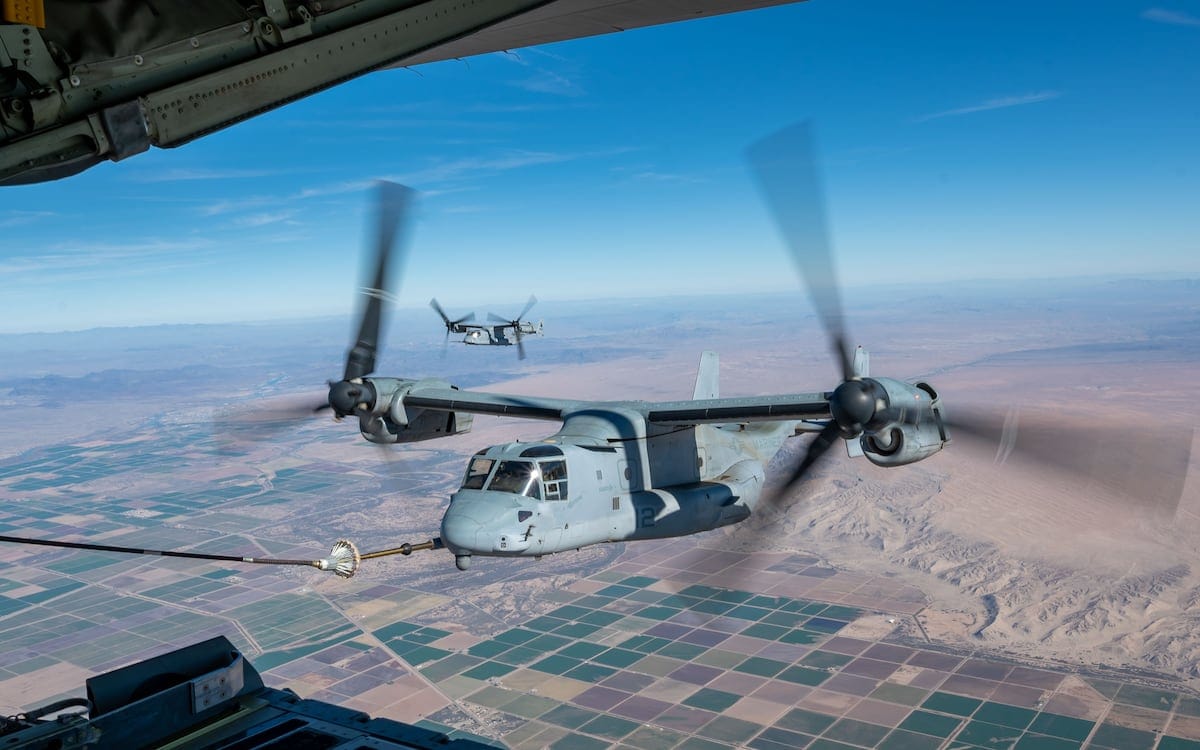
As the U.S. Army’s 101st Airborne Division approaches the integration of the Bell MV-75 tiltrotor aircraft, its personnel are actively gaining operational experience through collaborative training exercises with the U.S. Marine Corps. On January 23, the division conducted a significant training operation—Operation Lethal Eagle—at Fort Campbell, Kentucky, utilizing the capabilities of the Marine Medium Tiltrotor Squadron 744’s MV-22 Osprey.
This 21-day exercise aims to enhance the division’s proficiency in large-scale air assault missions and long-range operational capabilities. The training is designed not only to simulate real-world Army initiatives but also to prepare soldiers for the anticipated introduction of the MV-75.
Strategic Value of the MV-75
The MV-75, slated for deployment to the 101st Airborne, is a purpose-built aircraft tailored to meet the specific demands of the Army. Positioning itself as a successor to traditional rotorcraft, the MV-75 boasts a number of enhancements:
- Size and Capacity: Although smaller than its Osprey counterpart, the MV-75 can transport up to 14 soldiers.
- Adaptability: The aircraft employs an all-digital architecture, allowing for rapid modifications in both software and hardware to counter evolving enemy capabilities.
- Performance: With a cruise speed of 320 miles per hour and an impressive range of 920 miles, the MV-75 significantly outperforms the Black Hawk’s specifications of 183 miles per hour and a 367-mile range.
Army leadership, including Gen. James Mingus, has emphasized the necessity for the 101st to operate effectively in contested environments, often lacking established support infrastructure. The enhanced speed, endurance, and reliability of the MV-75 will greatly benefit the division’s strategic objectives.
Future Readiness and Training Acceleration
The 101st Airborne was chosen as the inaugural recipient of the Future Long-Range Assault Aircraft due to their operational profile and the demands of current theaters. As articulated by Army Chief of Staff Gen. Randy George, the timeline for MV-75 delivery has been notably accelerated, with training on prototypes slated to commence within the year—moving up from previous projections of 2031-2032.
- Immediate Training Initiatives: The current integration of MV-22 training is aimed at reducing any learning curve and ensuring seamless adaptation to the new aircraft.
- Operational Context: The 101st’s unique mission profile mandates rapid adaptability, and the use of tiltrotor technology is crucial in maintaining operational superiority in dynamic combat environments.
Conclusion
The advancements represented by the Bell MV-75 and the proactive training initiatives undertaken by the 101st Airborne Division highlight a pivotal moment in Army aviation capabilities. As the military advances towards adopting more versatile and technologically sophisticated aircraft, ongoing collaboration with sister services like the Marine Corps serves as a foundation for future operational excellence. The Army’s commitment to rapid integration of this next-generation aviation asset underscores its strategic necessity for maintaining an edge in both current and future combat scenarios.