U.S. Accelerates AIM-260 JATM Production with $2.9 Billion Investment for Next-Generation Air Superiority Missile

Accelerated Development of the AIM-260 Joint Advanced Tactical Missile
Lockheed Martin’s AIM-260 Joint Advanced Tactical Missile (JATM) is poised for rapid operational deployment, bolstered by a significant funding increase in the Trump administration’s latest defense budget proposal. Recent documentation reveals a dramatic rise in financial allocation for the program, escalating from $894 million in FY2026 to $2.9 billion in FY2027. This substantial augmentation highlights the Department of Defense’s intent to expedite production of a next-generation air-to-air missile system.
Strategic Imperatives
This accelerated investment reflects a growing urgency to counter China’s evolving long-range missile capabilities and restore U.S. air superiority amid contested environments. The AIM-260 is engineered to outmatch and outgun existing beyond-visual-range (BVR) systems, providing U.S. platforms with a critical first-shot advantage in confrontations with peer adversaries. The U.S. Air Force and Navy are both set to benefit from this funding surge as production ramps up, following initial manufacturing efforts that began within the last year. This magnified financial commitment signifies heightened confidence in the program’s maturity and addresses pressing operational requirements for maintaining air superiority.
Enhancements Over Existing Systems
The AIM-260 JATM is designed to replace or augment the AIM-120 Advanced Medium-Range Air-to-Air Missile (AMRAAM), which has served as the backbone of the U.S. BVR arsenal since 1993. While the latest AIM-120D variant has improved range and connectivity, it faces challenges from newer systems like China’s PL-15. The AIM-260 seeks to close this gap, offering an engagement range estimated to exceed 200 kilometers—allowing U.S. fighters to engage threats before entering the adversary’s missile envelope.
Technical Advancements
- Propulsion System: Unlike the earlier AMRAAM models utilizing single-pulse rocket motors, the AIM-260 is anticipated to adopt a dual-pulse solid rocket motor or a high-energy propellant. This configuration provides sustained thrust, enhancing range and maneuverability during terminal phases of flight, thus increasing lethality against agile targets.
- Guidance Architecture: The AIM-260 plans to incorporate a next-generation seeker with enhanced electronic counter-countermeasure (ECCM) capabilities. This may involve an advanced active electronically scanned array (AESA) radar, allowing for improved resolution, target discrimination, and resistance to jamming.
Network-Centric Warfare Integration
A hallmark feature of the AIM-260 is its capability for network-centric operations. The missile is intended to function within a distributed sensor and shooter architecture, receiving real-time updates from an array of platforms, including other aircraft and airborne early warning systems. This ability facilitates “launch-on-remote” and “engage-on-remote” engagement strategies—allowing aircraft to remain outside threat envelopes while still engaging targets effectively.
Compatibility Considerations
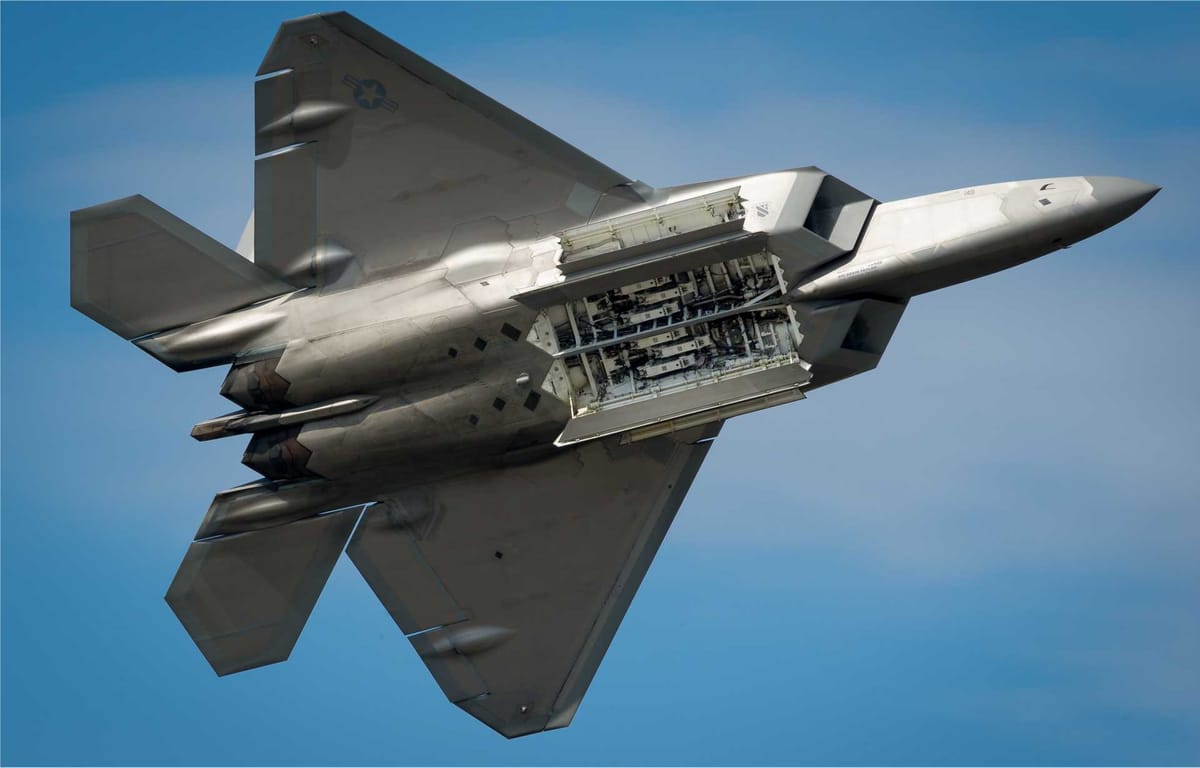
The AIM-260 retains the same external dimensions as the AIM-120, ensuring it fits within the internal weapon bays of stealth fighters like the F-22 Raptor and F-35 Lightning II. This attention to design integrity preserves low observable characteristics and allows for seamless integration without necessitating structural modifications to current platforms.
Operational Implications
The AIM-260 is set to redefine BVR combat dynamics by extending engagement ranges and decoupling detection from engagement processes. Pilots can initiate engagements earlier while relying on off-board sensor data, enabling them to disengage or reposition as necessary. With enhanced performance, the AIM-260 broadens its operational use beyond just high-performance fighters. It aims to be effective against cruise missiles, airborne early warning aircraft, and possibly advanced unmanned systems. Its capacity to operate effectively in electronically contested environments underscores its relevance in modern warfare.
Industrial and Strategic Significance
From an industrial perspective, the program underscores Lockheed Martin’s pivotal role within the U.S. missile sector. While AMRAAM remains a staple among allied forces, the AIM-260 is positioned as the primary air-to-air weapon for U.S. frontline capabilities, establishing a tiered structure within allied air operations. Strategically, the rapid funding increase and production initiatives for the AIM-260 exemplify a clear Pentagon priority—to restore and secure air dominance against near-peer competitors. By marrying extended range, advanced propulsion, resilient guidance, and comprehensive integration into networked warfare frameworks, the AIM-260 is set to enhance U.S. air combat capabilities significantly. Its anticipated deployment will reshape engagement patterns and bolster deterrence, ensuring U.S. forces can effectively contest the air domain in future high-intensity conflicts. In summary, the AIM-260 JATM represents a critical advancement in U.S. military capabilities, offering enhanced lethality, operational flexibility, and an essential counterbalance to emerging threats in the global theater. Source link