Analyzing the 2026 Budget: The Future of Drone Warfare Investment

Pentagon Budget Proposal Emphasizes Technological Advancements and Drone Development
The Department of Defense (DoD) has outlined a budget proposal for fiscal year 2026 that highlights a significant commitment to research, development, testing, and evaluation (RDT&E) of new technologies. This proposal includes an ambitious request for over $142 billion, which marks a more than 20% increase compared to previous years. However, this proposed increment largely depends on Congressional approval of a reconciliation bill stemming from the previous administration’s tax reforms. Absent this financial backing, overall funding levels may remain stagnant.
Funding Structure and Dependencies
The budget documents were submitted quietly to Congress, revealing that the DoD anticipates not just traditional appropriations, but also an additional $37.1 billion that would be contingent on the successful passage of the so-called “One, Big Beautiful Bill.” Historically, reconciliation funds are required to be allocated within a ten-year framework, adding a layer of urgency to legislative discussions.
RDT&E Allocation Across Services
In a breakdown of anticipated funding, the Air and Space Forces are set to receive the largest boosts within RDT&E, with requests of $62.2 billion and $29 billion, respectively. Should reconciliation funds be sanctioned, the Space Force could expect a remarkable $13.6 billion for technology advancements—though this would be a significant increase only if compared to last year’s budget. In stark contrast, without these additional funds, the service’s forecast for 2026 is approximately $15.5 billion, which reflects a decrease of $3 billion from the current year.
The Army and Navy are projected to receive $15.4 billion and $29.2 billion in RDT&E allocations for 2026, including the reconciliation amount. Additional defense-wide expenditures are planned at $42.8 billion, which notably includes $416 million specifically for operational testing and evaluation.
Focus Areas: Unmanned Systems and Emerging Technologies
Investment in Drone Technology
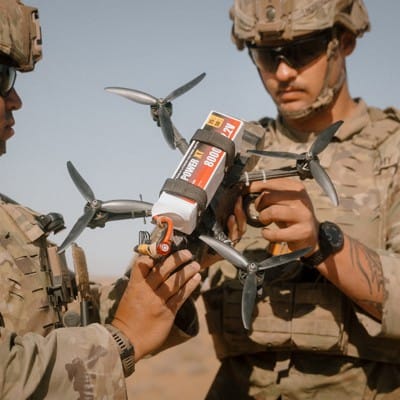
A critical area of focus in the 2026 budget is drone technology, where various categories of unmanned systems are earmarked for substantial funding. Highlights include:
Multirole Drones
- Navy’s MQ-4C Triton: A request of $376.4 million predominantly for upgrades, indicating a decrease of about $82 million from 2025.
- Unmanned Carrier Aviation (MQ-25): Set for $305.5 million, an increase of $50 million compared to the previous year.
- Air Force’s MQ-9: Expected funding of $26.7 million, a notable increase from $7.1 million in 2025.
Maritime Drones
- Large Unmanned Undersea Vehicles: An increase to $185 million due to reconciliation funds, up from only $40.5 million in 2024.
- Small and Medium Undersea Vehicles: Targeted allocation of $137.2 million from reconciliation funds, reflecting a considerable uptick from previous budgets.
Advancements in Software and Digital Technologies
In recognition of the critical nature of software and digital technologies, the Pentagon intends to elevate its investment significantly, with $233 million sourced from reconciliation funds leading to an overall projected investment of $1.07 billion. This initiative represents a more than 20% increase from 2024, underscoring the DoD’s commitment to staying at the forefront of technological innovation.
Classified Programs and Their Budgetary Implications
Classified initiatives are also anticipated to receive a modest boost, with RDT&E allocations potentially increasing to $43.9 billion—a rise from $35.5 billion in 2025. This trend signals an ongoing dedication to maintaining technological superiority in sensitive areas that are often vital for national security.
Conclusion: Strategic Implications Ahead
The proposed budget for 2026 mirrors the Pentagon’s strategic vision for modernization and technological excellence. As advancements in unmanned systems and digital technologies take center stage, the DoD faces the pressing need for Congressional approval to unlock the necessary funding. The dependency on the reconciliation process for funding highlights the intersection of legislative action and military preparedness, emphasizing the important role that policymakers play in shaping defense capabilities. This Complex financial landscape requires careful navigation, as investments today will determine the effectiveness and readiness of the U.S. military in the future.