Army Seeks AI Assistance for Vehicle Repairs

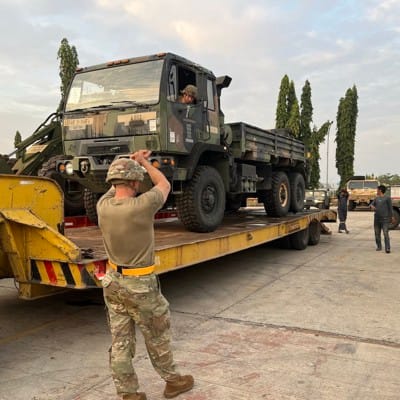
Army Utilizes AI to Enhance Infantry Vehicle Maintenance
The U.S. Army is advancing its maintenance protocols for the Infantry Squad Vehicle (ISV) through the integration of large language models (LLMs) and artificial intelligence (AI). This initiative aims to optimize repair processes, ultimately envisioning the use of AI-powered smart glasses by personnel for real-time diagnostics and repairs.
AI-Powered Maintenance Integration
Alex Miller, the Army’s Chief Technology Officer, has articulated the strategic direction of deploying LLMs in tandem with advanced wearable technology and mobile devices. He stated:
- Future Utilization: “I’m planning to run those LLMs on soldiers’ faces with smart glasses and on their mobile devices, such as the Android Tactical Assault Kit, for vehicle maintenance optimization.”
Training the AI
To facilitate this, approximately 1,000 hours of video documentation capturing the repair actions by engineers and maintenance staff is being utilized to train the AI on the ISV, a robust variant of the Chevy Colorado pickup truck. The ambition is to:
- Visual Diagnostic System: Develop a visual LLM integrated with smart glasses or devices like Microsoft HoloLens, empowering soldiers to effectively identify issues and navigate repair workflows.
Additionally, there are plans to digitize traditional support artifacts such as log books to further streamline access to maintenance information.
Multi-modal AI Capabilities
Miller elaborated on the dual approach to integrating AI:
- Smart Lookup: This will employ machine learning for quick information retrieval.
- Generative AI: A more advanced system that can interactively guide soldiers through problem-solving scenarios.
Consideration is being given to the operational environment, ensuring that any solutions, including wearable tech, maintain functionality without overheating under challenging conditions.
Response to National AI Strategies
This initiative coincides with the recent release of a White House AI Action Plan designed to accelerate military AI adoption. The Pentagon is rapidly embracing generative AI, with significant contracts—totaling $200 million—awarded to multiple firms to enhance back-office efficiency.
Broader Applications of AI
The Army is conducting experiments with generative AI for:
- Operational Enhancements: Improving daily operations and exploring AI applications for high-risk missions, including bomb disposal and complex airspace management.
- Enterprise-Level Investments: The service is pursuing a potential $10 billion contract with Palantir and has recently announced a $99.5 million research and development contract with Scale AI.
Threat Assessment via AI
Alongside maintenance and operational improvements, the Army is actively collaborating with various firms to explore how AI can assist in identifying potential threats. Miller emphasized:
- Exploring New Avenues: “We are interested in how LLM capabilities can be leveraged to comprehend threats in evolving fields such as medical technology, biological sciences, and bioterrorism.”
This engagement with private sector entities aims to foster innovative approaches to problem-solving, including unique scenarios that traditional research frameworks may not cover.
Conclusion
The Army’s strategic integration of AI technologies represents a significant shift in operational capabilities. By enhancing vehicle maintenance and expanding the use of AI in threat assessment, the military is positioning itself to lead in the effective utilization of cutting-edge technologies to ensure mission readiness.