Australian Navy Evaluates High-Risk Submarine Transitions Under AUKUS

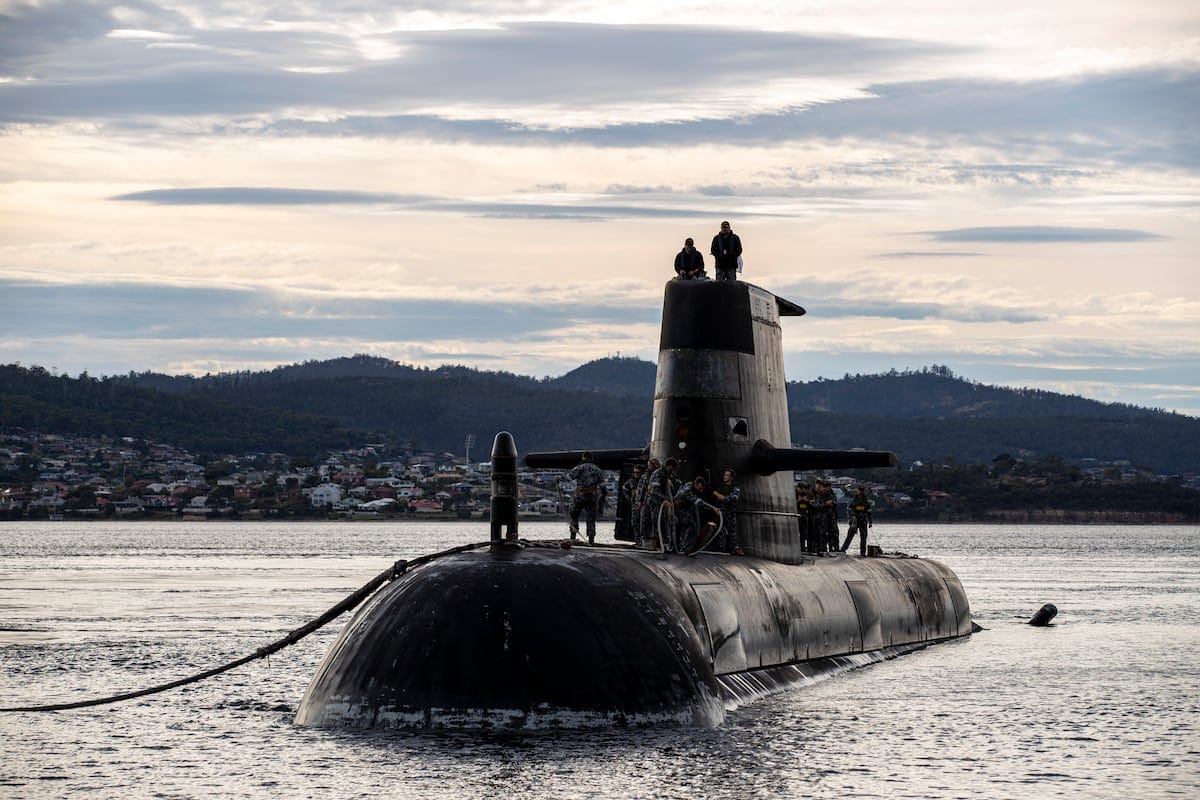
Australia’s Naval Transition: Balancing Aging Collins-class Submarines and Future SSN-AUKUS Capabilities
Strategic Overview
Australia faces significant challenges as it manages the lifecycle of its aging Collins-class diesel-electric submarines while shifting to nuclear-powered vessels. This transition includes interim acquisitions of second-hand Virginia-class submarines from the United States, ultimately leading to the development of the indigenous SSN-AUKUS class submarines, collaboratively designed with the United Kingdom.
Rear Admiral Stephen Hughes, who oversees naval capability for the Royal Australian Navy (RAN), maintains a cautiously optimistic view regarding these programs’ trajectories. During a recent discussion at the Indo-Pacific 2025 naval exhibition in Sydney, he acknowledged potential pitfalls but emphasized a robust commitment to managing risks effectively.
Managing Potential Risks
Rear Adm. Hughes characterized the path toward acquiring advanced capabilities as inherently risky. Key factors include:
- Complex schedules associated with program timelines.
- Challenging technologies required for the new submarines.
- Workforce challenges related to skilled personnel shortages.
Despite these difficulties, Hughes expressed confidence in the RAN’s proficiency in risk management, stating, “While many may highlight the risks, we are dedicated to realizing both outcomes effectively.”
Integrated Program Approach
Australian defense officials are adopting a cohesive strategy to manage the transition from the aging Collins-class fleet to the advanced SSN-AUKUS submarines. This integrated approach ensures a smooth transition and a focus on achieving operational effectiveness.
Collaborative Industry Engagement
The Indo-Pacific 2025 event showcased various collaborations geared toward enhancing Australia’s role in the SSN-AUKUS program:
- Team Formation: Four major defense contractors, including BAE Systems, General Dynamics Mission Systems, Raytheon Australia, and Thales, have announced a collaborative effort to jointly develop a combat system. This trinational command architecture will enhance interoperability between Australia and the U.K., building on General Dynamics’ existing AN/BYG-1 system, already employed on Australia’s Collins-class submarines.
- Technological Contributions: A strategic agreement was also established with South Australia’s PMB Defence to provide nickel-zinc batteries, which could be integrated into the SSN-AUKUS platform in collaboration with BAE Systems. Initial contracts are valued at over $22 million.
Industry Optimism and Supply Chain Capacity
The optimism surrounding the SSN-AUKUS program has spurred Australian industries to engage actively, aiming to secure lucrative contracts:
- AUKUS Commitment: Rear Adm. Hughes affirmed U.S. President Trump’s commitment to the AUKUS partnership, highlighting the investment in U.S. defense capabilities as a strategic advantage for Australia.
- Local Supplier Validation: Companies such as HII and Babcock have formed a joint venture, H&B Defence, to facilitate Australian supplier participation in the U.S. nuclear submarine program. Their call for expressions of interest has attracted 378 Australian firms, with several already meeting the stringent qualification criteria set by HII.
Eric Chewning, HII’s EVP for maritime systems, noted a 15% increase in shipyard throughput, attributing this surge to a distributed shipbuilding model that leverages local suppliers to alleviate production bottlenecks.
Technological Advancements
Rolls-Royce is supplying PWR3+ nuclear reactor technology for the SSN-AUKUS submarines, which boasts enhanced operational flexibility and safety features. Steve Carlier, Rolls-Royce’s Submarines President, highlighted that the preliminary design review for the SSN-AUKUS class is expected to conclude by September 2026.
Upcoming Developments
Rear Adm. Hughes confirmed that the HMAS Farncomb, the first of the Collins-class submarines, is scheduled for a two-year life-of-type extension program starting next year. This initiative aims to extend the operational lifespan of the Collins-class submarines by an additional decade, aligning with the phased introduction of the SSN fleet.
Australia’s defense landscape is poised for significant transformation as it manages existing capabilities while strategically positioning itself for future challenges through international partnerships and domestic industry engagement.