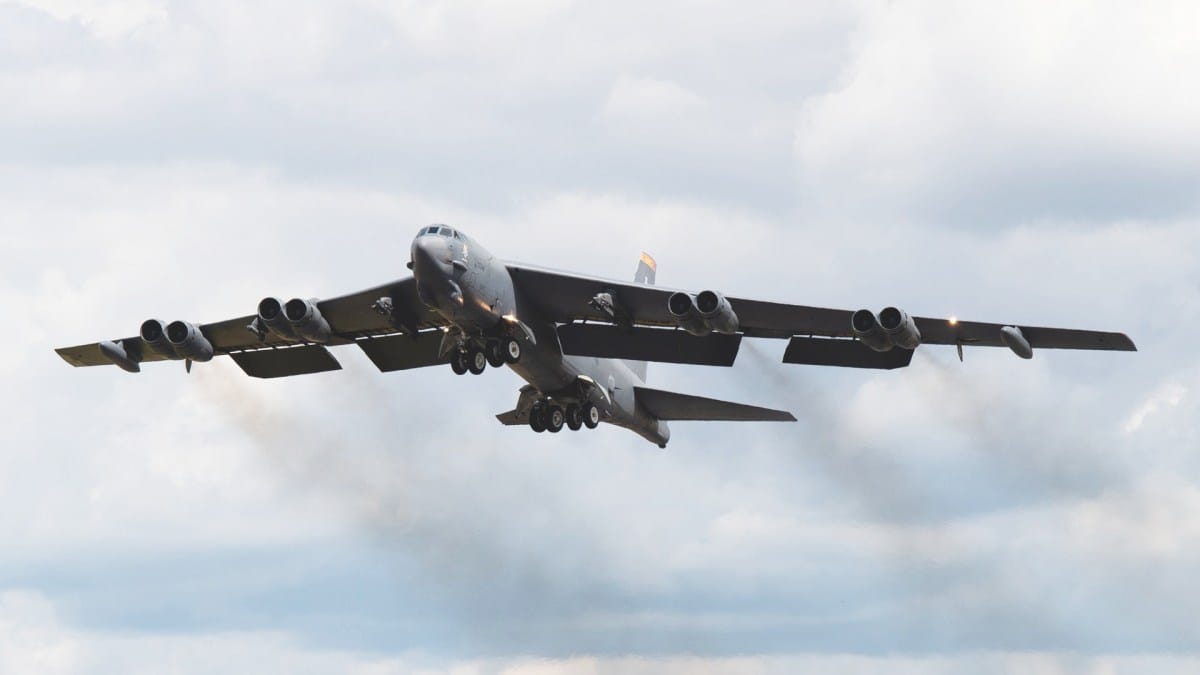
B-52 Stratofortress Bombers Depart England Amid Ongoing U.S.-Iran Tensions

Deployment and Withdrawal Context
The recent departure of B-52 Stratofortress bombers from England marks a significant moment in U.S. military operations, coinciding with heightened tensions in negotiations between the U.S. and Iran. As of now, these bombers, known for their long-range capabilities, have been part of a strategic deterrence posture aimed at showcasing American military readiness in the region. Their return home signifies a potential shift in the current operational focus, although the reasons behind this withdrawal remain unclear.
In the context of U.S.-Iran relations, this development occurs against a backdrop of ongoing negotiations. The U.S. has been actively engaged in dialogues with Iran, and the timing of the B-52 withdrawal might suggest a recalibration of military resources as diplomatic efforts intensify. The presence of these bombers in Europe and their subsequent departure could signal a response to shifting geopolitical dynamics, especially in light of Iran's recent military activities and its implications for regional stability.
Implications for U.S. Foreign Policy
This situation raises important questions regarding the future of U.S. involvement in Middle Eastern affairs. The withdrawal of such a prominent asset could indicate a strategic pivot by the Trump administration towards prioritizing diplomatic avenues over military posturing. Analysts will be watching closely to see how this decision affects negotiations with Iran and whether it reflects a broader shift in U.S. defense strategy in the region. The implications for both U.S. allies and adversaries are significant, as they may interpret this move as a sign of either reduced U.S. commitment or a tactical pause in military engagements.
As the U.S. navigates these complex negotiations, the potential for fluctuating military deployments underscores the importance of maintaining a balance between diplomacy and deterrence. The evolving situation emphasizes the need for vigilant monitoring of both U.S. military readiness and Iran's responses in the coming weeks.
Sources: Twz, The New York Times, MSN, ایران اینترنشنال, and The Times of India