Brazil initiates S+100 ballistic missile program to enhance Astros II MLRS strike capability

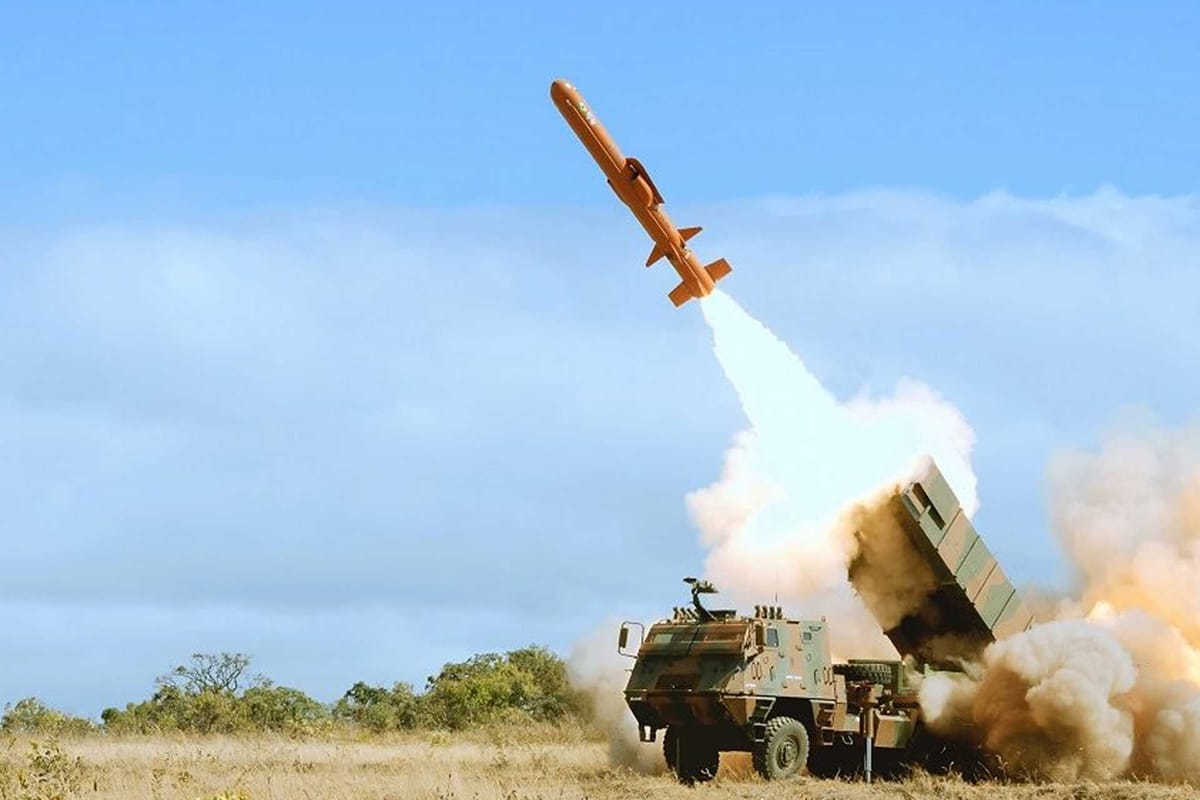
Brazil’s S+100 Tactical Ballistic Missile Program: Enhancing Long-Range Capabilities
The Brazilian Army has initiated the S+100 tactical ballistic missile program, aimed at augmenting the long-range strike capacity of its Astros II Multiple Launch Rocket System (MLRS). This development fortifies Brazil’s capacity to execute high-velocity precision strikes against critical strategic assets.
Program Development and Strategic Partnerships
Led by the Army’s Logistics Command and Department of Science and Technology, the S+100 program is being developed in collaboration with defense contractor Avibras. This initiative ensures full operational compatibility with existing Astros launchers, thereby amplifying the nation’s operational readiness and deep-strike capabilities.
Financial Restructuring and Industrial Base Recovery
Significantly, this endeavor aligns with Avibras’ financial revitalization efforts, which include recuperating Brazil’s missile industrial base. The project builds upon prior advancements made during the S-80 program. Recent reports indicate that the S+100 program was annointed during Avibras’ restructuring period, when the company faced substantial financial challenges.
- Funding Mechanism: The restructuring of Avibras has been supported by a R$300 million private investment package, spearheaded by prominent financial player Joesley Batista, along with other investors and banking stakeholders.
- Judicial Recovery: Following judicial recovery proceedings initiated in March 2022, Avibras, which reported debts totaling R$394 million, is now on a path toward operational sustainability.
Astros MLRS: The Core of Brazil’s Missile Architecture
The Astros MLRS system constitutes the backbone of Brazil’s missile framework. It features a flexible launcher capable of deploying both rockets and missiles over distances ranging from 30 km to 300 km. Key characteristics include:
- Modular Design: The system accommodates various munitions without necessitating a redesign of the launch vehicle.
- Exportation and Active Use: The Astros system has been successfully exported to several countries and continues to support domestic and international military operations.
MTC-300 and Future Capabilities
In parallel to the S+100 program, the MTC-300 cruise missile is nearing completion, with approximately 90% of its development finalized. Intended specifications include:
- Range: Up to 300 km
- Speed: Subsonic near Mach 0.85
- Warhead Capacity: Between 200 kg and 500 kg
This missile is designed for deployment on the Astros system, with considerations for air-launched and naval variants, broadening its operational applications.
Distinct Capability Focus of the S+100 Program
The S+100 program differentiates itself by emphasizing higher-speed trajectories and alternative engagement profiles compared to existing cruise missiles. Key facets include:
- Interoperability: Emphasis on compatibility with current Avibras systems and logistics chains.
- Market Intent: This program is also geared toward external markets that seek short-range ballistic missile capabilities in the 300 km class.
Funding for this initiative is bolstered by Complementary Law 221, which allows substantial defense-related expenditures to be excluded from fiscal limitations until 2031, thereby facilitating sustained financial investment.
Inter-Service Integration and Operational Readiness
Missile integration across different branches of the Brazilian Armed Forces is advancing, with ongoing examinations for potential air-launch capabilities under the MICLA-BR program for the Saab Gripen fighter jet. The Navy has already incorporated Astros within its coastal defense units, equipped with the MANSUP anti-ship missile, which currently has a range of 70 km, projected to extend to 200 km.
Layered Defense Architecture
The amalgamation of these capabilities results in a layered defense framework that maximizes operational effectiveness across maritime and land environments. Some of its advantages include:
- Shared Infrastructure: Unified launch capabilities reduce integration complexities.
- Operational Versatility: The ability to distribute missile families allows the Brazilian military to deploy effectively in various operational scenarios.
Workforce and Production Growth
The recovery and expansion of Avibras are closely intertwined with workforce metrics, indicating a strong rebound from previous financial challenges:
- Staffing Plans: The workforce is expected to grow from 80 to over 1,000 as production ramps up and new contracts emerge.
- Production Capability: Essential functions, including procurement and human resources, have been reactivated, demonstrating a commitment to align output with defense procurement needs.
The settlement of a protracted labor dispute has also facilitated a smoother operational restart, paving the way for continued production efficiency.
The ongoing developments in Brazil’s missile capabilities highlight a strategic commitment to enhancing national defense, advancing technological proficiency, and maintaining operational independence in an increasingly competitive global landscape.