China Unveils Two New Laser Weapons Designed for Targeting Low-Altitude Drones and Loitering Munitions

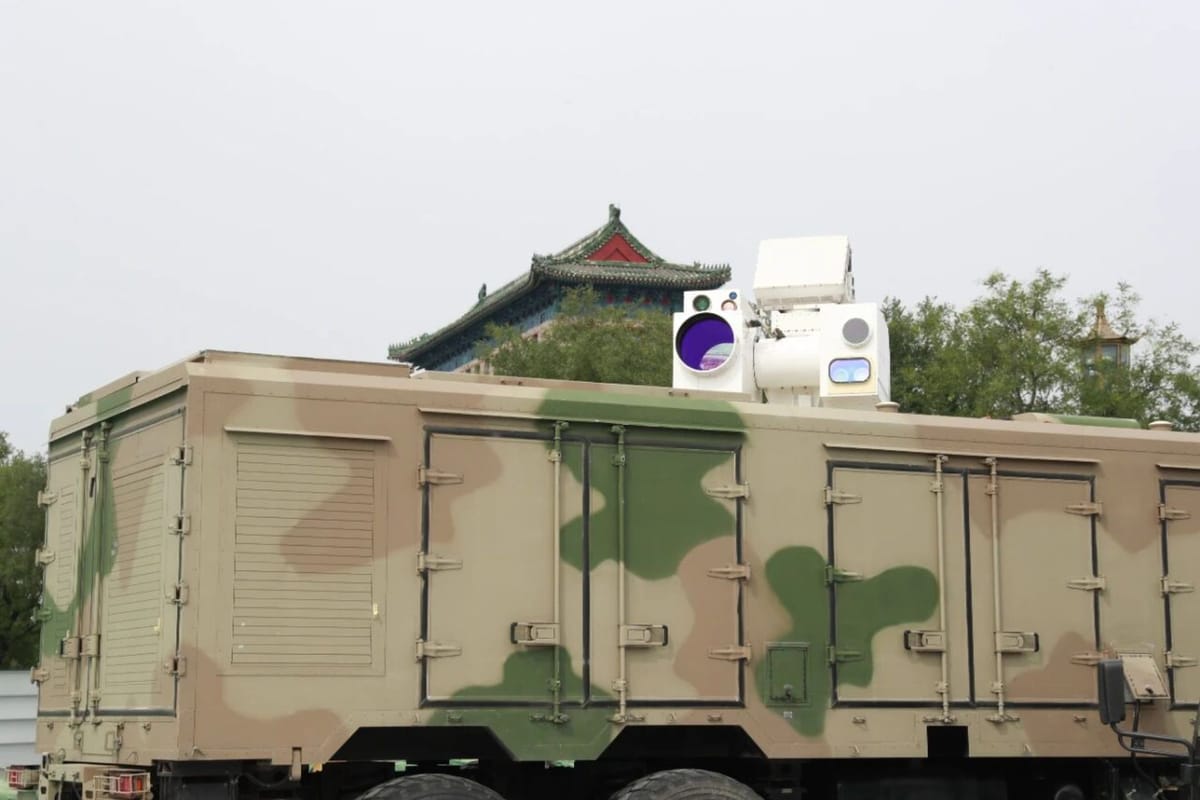
Introduction of Laser-Based Air Defense Systems in China
China has unveiled two advanced laser air defense systems, the Guangjian-11E and Guangjian-21A, specifically engineered to target low-flying unmanned aerial vehicles (UAVs) at short ranges. These innovative systems address a pressing vulnerability in contemporary air defenses, where smaller drones can bypass conventional detection methods, thereby transforming the nature of battlefield risks.
Technological Capabilities and Operational Focus
Recent demonstrations broadcast on state television depict both systems engaging simulated quadcopters and loitering munitions operating at altitudes between 50 and 80 meters—areas that fall within the limitations of traditional radar coverage.
- Guangjian-11E:
- Primarily serves as a multi-mode terminal jamming system
- Utilizes electronic warfare capabilities alongside directed-energy effects
- Aims to disrupt on-board sensors and communication links of UAVs
- Guangjian-21A:
- A mobile laser weapon system
- Capable of executing kinetic strikes while in motion
- Enhances survivability against counter-battery engagements
Detection and Engagement Mechanisms
Both systems reportedly leverage phased-array radar for identifying and tracking targets, supplemented by infrared sensors that facilitate passive detection in environments where electronic emissions are restricted. This dual-sensor architecture enables consistent engagement with low-observable or intermittently emitting threats.
- Guangjian-21A’s Laser Capability:
- Features a high-energy laser capable of creating a concentrated beam over several kilometers
- Designed to rapidly weaken the structural integrity of drone airframes or incapacitate propulsion systems almost instantaneously
- Supports both autonomous operations and integration into networked formations
- Guangjian-11E’s Jamming Techniques:
- Incorporates multi-band optical active countermeasures
- Utilizes a combination of interference, damage, and decoy methodologies to neutralize precision-guided munitions and drones
- Effective for terminal defense of both static installations and mobile units
Addressing e-Resistance from Drones
The design of these systems is a direct response to the tactical challenges presented by fiber-optic guided drones, which are less susceptible to traditional electronic countermeasures due to hardwired data links. Consequently, hard-kill solutions are increasingly necessary. The integration of soft-kill options allows operators to conserve resources while minimizing collateral damage when non-destructive methods suffice.
Strategic Framework and Integrated Operations
The successful integration of these systems into broader combat networks is crucial for maximizing their effectiveness. According to the Aviation Industry Corporation of China (AVIC), a combination of multi-source detection and intelligent identification capabilities enables an expeditious detect-to-engage process. This links radar systems, electro-optical sensors, and directed-energy weapons, reflecting a significant trend in integrated air defense aimed at shortening response times while enhancing engagement precision against agile, high-speed threats.
Historical Context and Future Implications
The introduction of these systems follows previous showcases of counter-drone technologies during China’s September 2025 military parade, which highlighted missile, artillery, laser, and microwave capabilities forming a multi-layered defense structure. This composition is referred to as an “iron triangle,” integrating both soft-kill and hard-kill methodologies and reflecting lessons learned from recent operational theaters.
Recent advancements signal a continuous commitment to directed-energy weaponry as a viable countermeasure against burgeoning drone threats.
Conclusion
In summary, the emergence of these laser air defense systems marks a pivotal shift towards a more integrated counter-drone architecture within the PLA. Ongoing assessments indicate a steady progression in laser and microwave technologies, although independent verification remains scarce. If validated under operational scenarios, these developments could significantly impact military procurement strategies, particularly among nations confronting similar challenges posed by low-cost UAVs.