China’s PLA Embraces Exoskeletons in the Himalayas

The Emergence of Powered Exoskeletons in the People’s Liberation Army
Transforming Infantry Operations
The integration of powered exoskeletons into military operations represents a significant advancement in soldier capability, especially in challenging environments. These exoskeletons, along with robotic support units and cargo drones, enable troops to traverse rugged terrains, such as snow-covered areas, while efficiently carrying loads exceeding 100 pounds.
Recent Developments in PLA Logistics
In early 2023, the People’s Liberation Army (PLA) undertook an advanced exercise featuring “intelligent logistics devices” in the Karakoram Plateau, within the Xinjiang Military District. This marks a pivotal shift from experimental demos to actual deployment of sophisticated assistive technologies.
Evolution of Exoskeleton R&D
China has cultivated a robust ecosystem for exoskeleton research and development over the past few years, characterized by collaborative efforts across state-run enterprises, private companies, and academic institutions. Key milestones include:
- 2019 – “Super Warrior” Contest: This competition attracted over 50 prototypes across 25 development teams, assessing innovations in lightweight mobility, heavy-load maneuvers, and munitions handling.
- 2020 – Military Applications: State-owned Norinco delivered a passive, backpack-style exoskeleton demonstrated to enhance load-bearing capabilities on the Tibetan border, receiving immediate favorable evaluations and subsequent contracts.
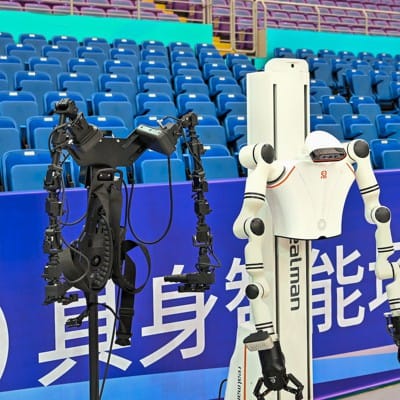
The PLA has also unveiled several models, notably the Powered Ammunition Support Assist suit, which leverages electric-motor assistance and can offload more than 50% of a soldier’s burden, enabling them to carry substantial supplies with minimal effort.
Advancements in Design and Functionality
Recent exhibitions, such as at the Zhuhai Airshow, have showcased innovative designs, such as a lightweight knee brace produced by Beijing Precision Mechatronics. This device provides significant torque during ascents while maintaining a minimal weight, highlighting the dual-use potential for military and civilian applications.
Start-ups like Blood Wingnse are further enhancing exoskeleton capabilities. Their hybrid Vanguard suit, expected to debut at the 2025 Shanghai Defense-Industry Expo, promises a lightweight yet high-capacity structure, capable of assisting significant loads, demonstrating a broader trend of integration within China’s military-civil fusion strategy.
Tactical Implementation
The PLA has selectively deployed exoskeletons in its most demanding operational units, notably in Tibet and Xinjiang, where altitude significantly impacts troop endurance. Recent drills have confirmed exoskeletons’ effectiveness in facilitating logistics and patrol operations in harsh conditions, including altitudes of 4,500 to 5,500 meters.
- Unit Testing: Infantry brigades have utilized third-generation powered suits in exercises aimed at validating man-machine synergy in extreme environments, particularly near sensitive border areas.
The PLA’s expanded use of exoskeletons has evolved from niche experimental applications to essential operational tools, suggesting a tactical and logistical revolution in troop deployment strategies.
Broader Implications for Military Logistics
Recent drills have demonstrated how exoskeletons enable soldiers to maintain essential lifting capabilities in adverse conditions. For instance:
- During a recent field exercise at high altitudes, troops equipped with lightweight knee-hip frames successfully managed heavy equipment, showcasing their operational viability.
- The focus on integrating these systems into logistics allows for a more efficient supply chain, reducing the reliance on large porter teams and enhancing the operational flexibility of smaller units.
Tactical Considerations
The incorporation of exoskeleton technology can significantly alter the capabilities of PLA units in challenging terrains by enhancing their operational range and load management. For instance, the ability for a single soldier to transport 110–176 pounds independently can transform mission parameter strategies, circumventing the logistical constraints posed by traditional supply lines.
Enhancing Combat Power and Operational Readiness
Chinese military doctrine emphasizes the synergy between mechanical exoskeletons and other advancement technologies like unmanned aerial vehicles, positing these systems as critical components in modernizing the PLA’s logistics ecosystem. Articles from PLA sources highlight the “smart support” narrative, underscoring the role of exoskeletons as force multipliers in various operational contexts, including extended patrols and high-altitude resupply missions.
Strategic Outlook
As China continues to refine its military capabilities, the relentless pursuit of soldier augmentation and operational support solutions shapes strategic calculations across regional and global theaters. The potential for these technologies to be adapted by partner militaries and deployed in peacekeeping and disaster relief operations further complicates the tactical landscape, challenging assumptions about the preparedness and capabilities of rival forces.
In summary, the PLA’s advancements in powered exoskeleton technology signify a profound shift in military logistics and operational strategy, underscoring the potential for enhanced soldier performance in environments where both weight and endurance are critical. The future of warfare could very well hinge on the successful integration of such innovative capabilities into military doctrine and practice.