CNO Presents Vision for Unmanned Systems in Navy's Enhanced 'Hedge Strategy'

Adapting Naval Strategy for Uncertain Futures: The Hedge Strategy
The complexity and unpredictability of modern warfare demand that the U.S. Navy reassess its approach to conflict readiness. At the Apex Defense Conference in Washington, D.C., Chief of Naval Operations (CNO) Admiral Daryl Caudle unveiled the Navy’s innovative “hedge strategy,” designed to enhance the service’s operational adaptability.
A Framework for Future Operations
Adm. Caudle articulated a vision wherein unmanned and autonomous systems serve as essential enablers within the Navy’s operational landscape. This new “hedge strategy” builds upon earlier concepts he previously hinted at, focusing on creating “tailored forces”—composite units specifically formulated for scenarios deemed significant yet unlikely to dictate the overall architecture of the fleet.
Addressing Varied Warfare Environments
The hedge strategy is predicated on the need for the Navy to effectively navigate diverse conflict scenarios, ranging from high-stakes, large-scale confrontations to more nuanced, low-intensity skirmishes. Caudle emphasized:
- Versatility: The approach facilitates adaptability without necessitating excessive investment in specific capabilities.
- Balanced Force Structure: By creating a force that is neither over-prepared for unlikely high-threat scenarios nor under-equipped for common low-intensity operations, the strategy seeks to avert the pitfalls of a rigid, single-use military posture.
“The dilemma lies in constructing a Navy geared towards either high-consequence, low-probability events or low-consequence, high-probability occurrences. Each approach could lead to a suboptimal force configuration,” stated Caudle.
Enhancements Through Technological Integration
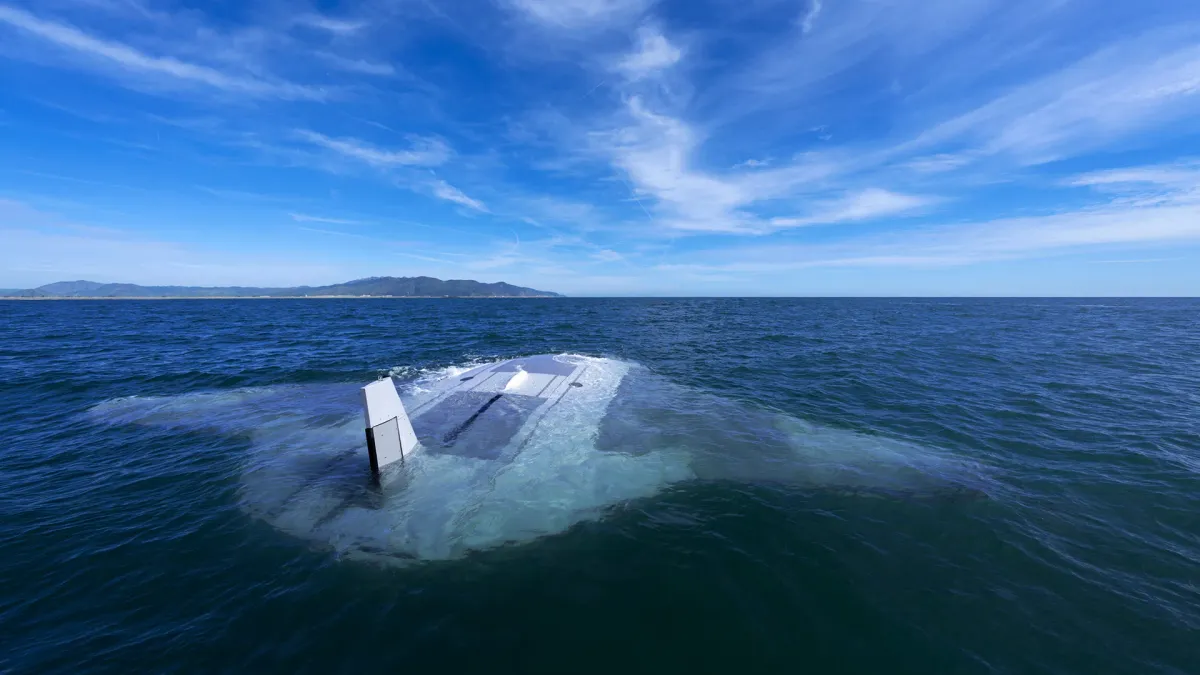
The Navy’s strategy includes the integration of low-cost, expendable unmanned systems along with drone interceptors, designed to address high-stakes engagements with reduced risk. This might encompass:
- Attritable Uncrewed Vessels: Lightweight surface ships that can be easily replaced.
- Medium Uncrewed Surface Vehicles (USVs): Deployed for vital tasks such as surveillance, screening, and targeted strikes.
- Unmanned Underwater Vehicles (UUVs): Engaged in missions focused on area denial and counter-mine operations.
Caudle articulated that these capabilities would not just serve as auxiliary forces; they would augment the main battle array, thereby enhancing operational lethality while remaining cost-effective and adaptable in diverse scenarios.
Challenges and Operational Pressures
Yet, the Navy grapples with operational constraints. Its fleet is overstretched, continually responding to ongoing challenges in the Pacific against Chinese gray-zone tactics, while also addressing demands in the Middle East. This dual pressure is compounded by recruitment difficulties that have impeded the Navy’s ability to meet accession goals.
Bryan Clark from the Hudson Institute, who moderated Caudle’s panel, remarked on the necessity of reinvigorating fleet readiness to contend with an evolving array of threats and operational requirements.
Moreover, the reliance on historical structures, such as carrier strike groups, has limited the Navy’s flexibility to deploy tailored forces effectively. Current fleet commitments often outstrip operational capabilities, necessitating a reevaluation of how best to maintain presence and readiness across global theaters.
Future Aspirations and Strategic Vision
Looking forward, the Navy aims to develop what has been termed the “Golden Fleet,” a modern revival of battleships inspired by the previous presidential administration. However, experts question the feasibility and practicality of such a fleet, citing the significant costs and logistics involved.
Adm. Caudle acknowledged the imperative for expansion, stating, “The need for a larger navy is apparent, and efforts are underway to expedite the design and construction of the Golden Fleet.”
However, he also posed a critical question: “Where do we draw the line? How do we determine the optimal composition of each force element?” This careful balancing act lies at the heart of the hedge strategy, where risk is managed, mitigated, and strategically shifted to create a military posture that favors U.S. interests.
By embracing this multifaceted approach, the Navy aims to navigate the complexities of future warfare effectively, ensuring readiness and resilience in an increasingly unpredictable global landscape.