DSEI 2025: KNDS Germany Unveils Enhanced Armoured Command and Liaison Vehicle – Revitalizing the AMPV Platform

Emerging Armoured Solutions: The ACLV and the UK Land Mobility Programme
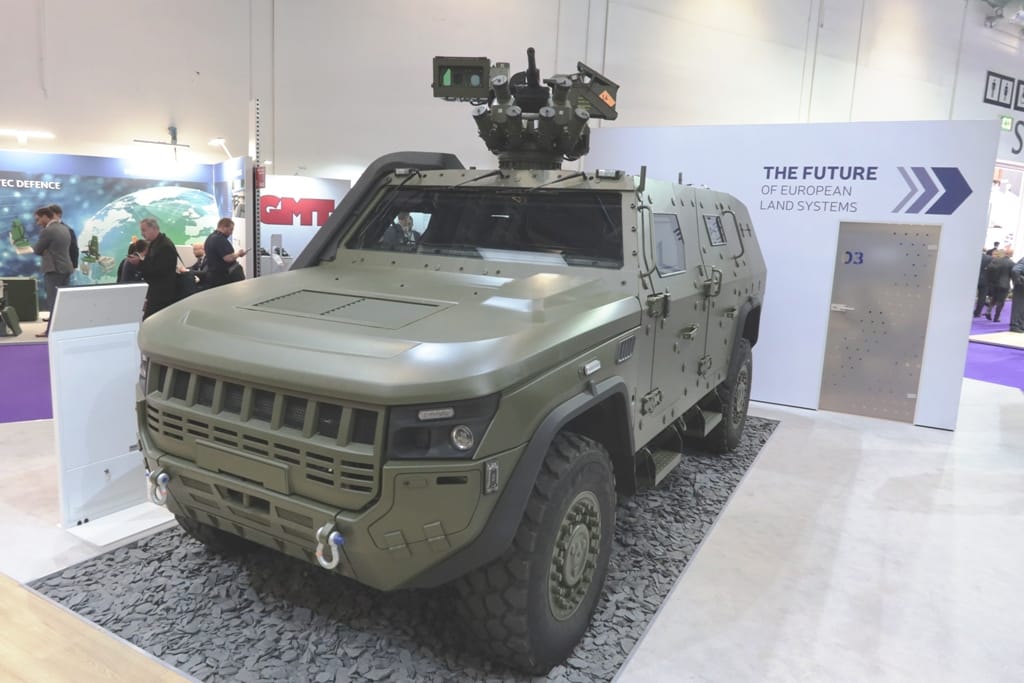
As military forces globally navigate the evolving landscape of contemporary warfare, the UK Land Mobility Programme (LMP) seeks to modernize its fleet with vehicles that address pressing needs for enhanced protection and operational flexibility. One significant contender showcased at DSEI 2025 is the Armoured Command and Liaison Vehicle (ACLV), introduced by KNDS Deutschland. This development aims squarely at fulfilling the German Army’s requirement for protected command and role-specific vehicles, known as GFF (Geschützte Führungs und Funktionsfahrzeuge) under Group 2 specifications.
Design Innovations and Legacy
While the term “unveiled” could imply a novel offering, the ACLV is more accurately a sophisticated evolution of the previously established Armoured Multi-Purpose Vehicle (AMPV). Weighing in at 10 tonnes with a 4×4 configuration, this vehicle is a product of collaboration between Rheinmetall MAN Military Vehicles (RMMV) and Krauss-Maffei Wegmann (KMW).
Key Design Features:
- Exterior Modifications: The front hood exhibits a new design distinct from the original AMPV, which was crafted by the Porsche Design Studio.
- Armoured Cabin: Although the overall structure resembles the AMPV, the interior has been engineered to accommodate four personnel comfortably.
- Component Modernization: While the vehicle retains key aspects such as the suspension and armour package, KNDS Deutschland has upgraded components to mitigate obsolescence. A completely revamped braking system ensures compliance with modern safety standards.
Tactical Specifications
The ACLV is designed for operational versatility, serving as a potential replacement for legacy platforms like the Mastiff, Ridgeback, and Wolfhound. It promises an Initial Operational Capability (IOC) between 2029 and 2030.
Technical Specifications:
- Gross Vehicle Weight: 10 tonnes
- Payload Capacity: 2.2 tonnes
- Protected Volume: 5.5 m³
- Unprotected Volume: 10 m³
- Dimensions:
- Length: 5.42 meters
- Width: 2.30 meters
- Height: 2.18 meters
- Ground Clearance: 0.345 meters
- Engine Performance: A 3.2-litre, 6-cylinder powerplant delivers 200 kW (268 hp) and 610 Nm of torque, achieving a power-to-weight ratio of 20 kW/t. Top speeds reach 105 km/h with a cruising range of 700 km.
Enhanced Protection and Survivability
The ACLV emphasizes crew safety through a self-supporting safety cell and advanced independent suspension systems. It achieves Level 3 ballistic protection according to STANAG 4569 standards while providing varying levels of blast protection beneath the vehicle:
- Wheels: Level 3
- Belly: Level 2
To further mitigate blast effects on personnel, new energy-absorbing seats have been incorporated. Options for self-protection include a remotely operated weapon station, which at DSEI was shown equipped with an FLW 200 Remote Control Weapon Station (RCWS) armed with a 12.7 mm heavy machine gun.
Strategic Implications
In the face of technological advancements and operational demands, the ACLV represents a shift toward multifunctional, protected mobility solutions within the British Army’s arsenal. By replacing aging systems with a vehicle that incorporates modern engineering and combat vitality, the UK aims to enhance situational awareness and response capabilities on the battlefield.
This transition not only reflects ongoing commitments to operational effectiveness but also underscores the importance of staying viable amid a rapidly evolving security environment. Through initiatives such as the LMP, military forces continue to adapt and upscale their ground capabilities in anticipation of future challenges.