DSEI 2025: Origin Robotics Unveils Counter-UAS Interceptor Blaze

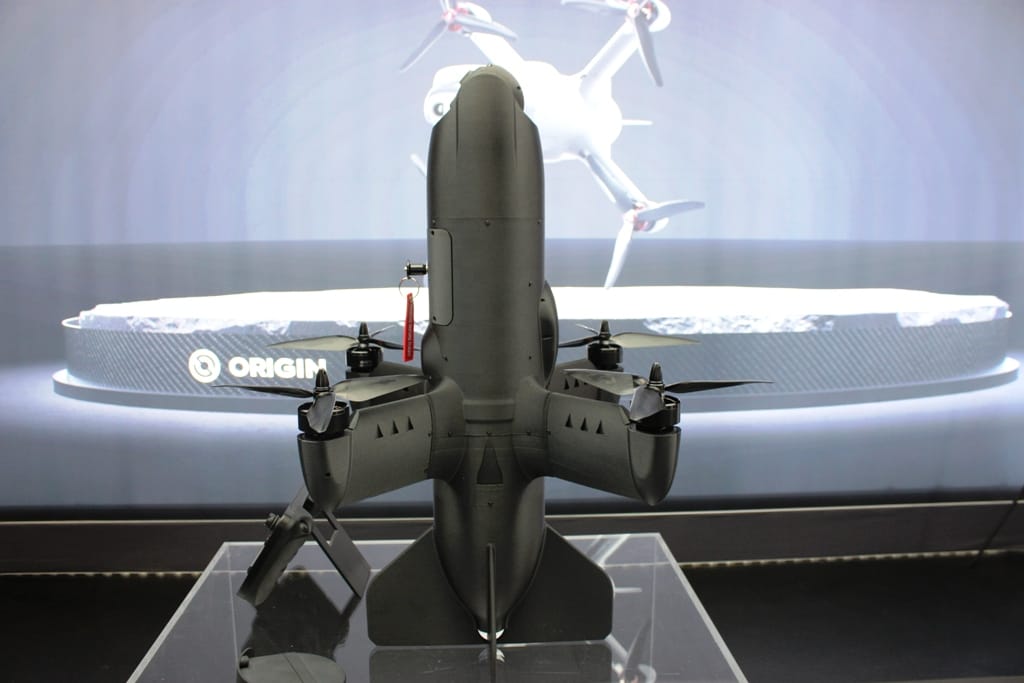
Overview of Origin Robotics’ Blaze Counter-UAS Interceptor
Introduction to Blaze
At the DSEI UK 2025 exhibition, Origin Robotics, a drone manufacturer based in Latvia, unveiled its latest offering, the Blaze counter-Unmanned Aerial System (UAS) interceptor. Launched earlier in May, Blaze is designed to provide a rapid response solution for neutralizing aerial threats.
Specifications and Design Features
- Weight and Payload: The man-portable Blaze weighs less than 6 kg and is outfitted with an 800-gram high-explosive fragmentation warhead.
- Launch Readiness: Operators can prepare the system for deployment in under 10 minutes, with a launch range exceeding 10 km.
- Flight Mechanics:
- Blaze employs a vertical takeoff design facilitated by four tail wings, which allow it to stabilize prior to launch.
- After take-off, it transitions to horizontal flight via dual propped wings aligned at 90-degree intervals, optimizing aerodynamic lift.
Advanced Control Mechanisms
Agris Kipurs, co-founder and CEO of Origin Robotics, emphasized key technological aspects of Blaze:
- Resilient Communication: The system features RF jamming-resistant capabilities that uphold a reliable connection between the operator and the vehicle.
- Safety Protocols:
- Blaze includes a three-tiered safety system, ensuring controlled arming of the interceptor and preventing inadvertent detonation.
- A self-destruct feature is activated if the system crosses its geofence or encounters a communication failure.
- The integration of a STANAG-compliant electronic safe and arm device ensures alignment with NATO operational standards.
Targeting and Engagement Systems
Blaze utilizes a hybrid of radar-based detection and AI-enhanced computer vision technologies:
- Initial Navigation: The command-and-control system guides the drone via radar during its approach to a target.
- Target Identification: Once within an optimal range, Blaze utilizes electro-optical and infrared sensors for precise target identification and locking, requiring operator confirmation prior to engagement.
- Engagement Strategies: Upon confirming a target, Blaze can deploy its fragmentation warhead either kinetically or via airburst, adapting its approach to maximize effectiveness in a given scenario.
Integration and Operational Context
Blaze maintains compatibility with existing air defense infrastructures. Its role as a primary interception layer capitalizes on its capacity to engage single targets effectively. The system’s MESH radio functionality allows for coordination among multiple interceptors to manage simultaneous threats.
Complementary Technology: The Beak System
Origin Robotics is also the developer of the Beak, a portable drone-launched precision-guided weapon system.
- Design and Capabilities:
- Featuring an optronic gimbal with 3-axis stabilization, the Beak includes multiple sensors: an HD day camera, a 4K long-range spotter camera, and a thermal imaging camera.
- It accommodates a maximum payload of 4 kg and can conduct ISR (Intelligence, Surveillance, and Reconnaissance) missions or attacks, with flight endurance ranging from 35 to 60 minutes depending on load configuration.
Regional Adoption and Strategic Implications
Currently, the Beak system is operational across three NATO member states, including Latvia, and has seen deployment in Ukraine. As of late 2025, additional NATO countries are anticipated to integrate both Beak and Blaze into their arsenals.
Future Directions in Drone Defense
As the proliferation of uncrewed aerial systems continues, so does the urgency for effective and economically viable countermeasures. Origin Robotics aims to provide solutions that are not only technologically robust but also affordable, facilitating rapid adoption by military and defense organizations.
Conclusion
With innovations like Blaze and Beak, Origin Robotics addresses the evolving landscape of aerial threats. The dual capabilities of these systems foster a balanced approach to countering emerging UAS challenges that threaten national security and critical infrastructures worldwide.