DSTA and Singapore Navy Develop AI-Powered Vessel Classification Tool


Advancements in Maritime Security: Singapore’s AI-Driven C3 System
Introduction to AI Integration
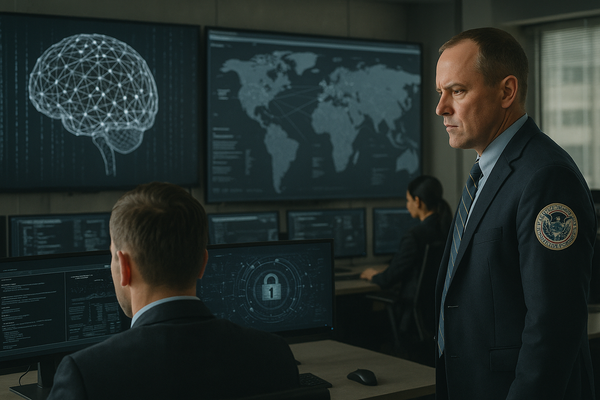
The Defence Science and Technology Agency (DSTA) of Singapore has collaborated with the Republic of Singapore Navy (RSN) to engineer an innovative computer vision-based command, control, and communications (C3) system. This advanced capability harnesses artificial intelligence (AI) to real-time detect, monitor, and categorize maritime vessels.
Enhancing Maritime Situational Awareness
This initiative is a strategic response to the evolving complexities of maritime security challenges. By aggregating data from diverse sources, including optical cameras and Automatic Identification System (AIS) inputs, the system aims to bolster Singapore’s situational awareness in its surrounding waters.
System Performance Highlights
During a demonstration held on 16 September, officials from DSTA showcased the system’s capabilities, emphasizing its efficiency in vessel classification:
- Speed of Classification: The AI system can accurately classify up to 20 vessels per second.
- Comparison to Human Operators: Traditional methods relying on human operators can take up to 120 seconds to identify each vessel, highlighting the significant time-saving benefits of the AI system.
Technological Framework
To attain the rapid classification rates, DSTA’s computer vision system employs:
- Video Analytics: Advanced algorithms process and analyze live video feeds.
- Deep Machine Learning: The system is trained on a robust dataset containing images of various vessel types, ranging from large tankers to small crafts. It learns to determine vessel classes based on characteristics like length, size, and specific visual features.
Anomaly Detection Capabilities
The system is equipped with a mechanism to alert operators only in cases of irregularities. This includes situations where a vessel is inappropriately positioned next to a large tanker, potentially indicating illicit ship-to-ship transfer activities. Such targeted alerts enable operators to concentrate on high-priority threats, enhancing overall operational efficiency.
Collaboration for Accuracy
To guarantee the accuracy of its classifications, DSTA engineers collaborated closely with RSN domain specialists. This partnership resulted in the collection and precise labeling of thousands of operational images, ensuring the system is grounded in reliable data.
Conclusion
Singapore’s innovative AI-driven C3 system illustrates a significant advancement in maritime security technology. By leveraging artificial intelligence and robust data analytics, the DSTA and RSN are setting new benchmarks for situational awareness and operational readiness in increasingly complex maritime environments.