Exploring the Air Force's Use of AI-Powered Technology for Battle Management Innovation

Advancements in AI and the U.S. Air Force: A Proving Ground for Future Warfare
With each passing day, the influence of artificial intelligence (AI) on military operations grows ever more significant. In 2025, the U.S. Air Force is set to leverage a series of crucial capstone events to test and refine these advancements within the context of battle management operations. This initiative is not merely about exploring innovative technologies but reimagining how these capabilities can transform modern warfare.
The Role of Capstone Events
At the forefront of this exploration is the 805th Combat Training Squadron, based at Nellis Air Force Base in Nevada. This unit specializes in blending new technologies with operational strategies to ensure that the Air Force remains agile and responsive in the face of evolving threats. The biannual capstone events serve as an experimental platform where new tech is rigorously tested for real-world applicability in battle management and tactical command-and-control scenarios. Following a successful iteration at the end of 2024, the 805th is keen to build on its findings and push ahead with rapid experimentation and development.
Understanding Modern Combat Complexity
As Lt. Col. Shawn Finney, commander of ShOC-N (Shadow Operations Center – Nellis), explains, contemporary battlefields are vastly intricate, filled with a deluge of information that must be distilled into actionable insights. AI-empowered technologies are considered pivotal for battle managers, as these tools can help highlight the most critical elements of the operational landscape—effectively sorting through a massive volume of data to inform decision-making.
Experimentation Focus: Capstone 24B
During the recent Capstone 24B event, the 805th Squadron delved into three key areas: human-machine teaming, international partner and allied integration, and cloud-based command-and-control (C2) decision advantage. The scenarios simulated during these capstones included offensive counter-air operations, defense counter-air measures, electronic warfare, and special operations. Such a diverse range of scenarios enables a comprehensive evaluation of how AI can enhance tactical responses.
AI Platforms Under Scrutiny
Among the technologies under the spotlight were platforms like the Maven Smart System and the Maverick AI application. These cutting-edge tools facilitated tactical control and execution, allowing battle managers to assign friendly and adversarial assets within a unified operational picture. This capability extends beyond mere data display; it includes the ingestion of planning data to offer managers real-time insights into fast-evolving tactical situations.
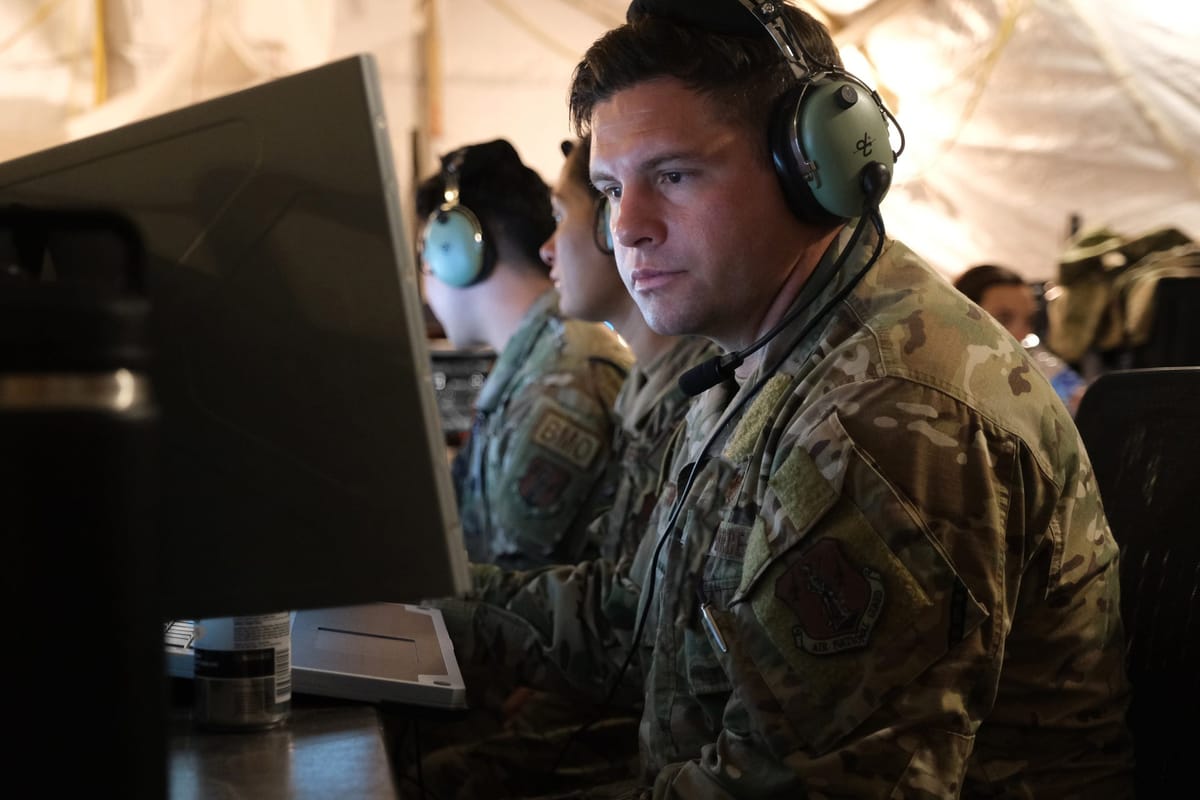
In a first for the Air Force, the Maven system was integrated with the new Tactical Operations Centers-Light (TOC-L) kits during live exercises. These mobile command-and-control systems consolidate hundreds of data feeds to create a comprehensive air picture, enhancing situational awareness for operators in the field.
TOC-L: A Mobile Command Solution
The TOC-L represents a significant leap towards modernizing military operations, being designed for rapid delivery and adaptation based on user feedback. Lt. Col. Carl Rossini III emphasized how this approach allows units to experiment with these technologies in real-world situations, effectively informing future requirements and operational strategies. The TOC-L system enables battle management teams to simulate dynamic targeting cells capable of identifying unforeseen assets in operational planning rapidly.
Insights Gained from Experimentation
The insights gleaned from Capstone 24B were diverse, ranging from technical procedures to overarching management concepts. Finney pointed out the critical learning from evaluating how well the dynamic targeting cells collaborated with other systems designed for operational command and control. The role clarity within battle management teams became an essential focus, highlighting the need for defined responsibilities to optimize performance.
The DAF Battle Network: A System of Systems Approach
The Air Force is also working on an integrated "system-of-systems" called the DAF Battle Network, intended to enhance the Pentagon’s Combined Joint All Domain Command and Control (CJADC2) initiative. This ambitious concept aims to unify disparate sensors and weapon systems used by both U.S. forces and international allies, facilitating rapid data transfer across multiple operational domains.
Looking Ahead with AI Innovations
Steve Ciulla, the TOC-L program manager, articulated the Air Force’s commitment to refining and accelerating decision-making through AI-enabled tools tested at ShOC-N. The effort focuses particularly on enhancing dynamic targeting processes, blending machine learning and human expertise to handle the complexities of modern warfare.
While the capabilities demonstrated by the Maven and Maverick AI applications were promising, Finney affirmed the 805th Squadron’s dedication to further experimentation to mature these technologies. This focus on iterative learning ensures that they can continually adapt to the shifting landscape of military needs.
An Ongoing Journey of Experimentation
With an eye on the future, the 805th plans to launch a series of experimental campaigns throughout 2025, including contributions to the Air Force’s Bamboo Eagle exercise and the Army’s Project Convergence. Each experiment builds on previous lessons, providing warfighters with experiential insights that refine their operational capabilities.
Ciulla mentioned the objective of conducting integrated exercises in the Indo-Pacific region, ensuring that the systems tested also provide significant joint operations feedback. As the Air Force gears up for the next phase of TOC-L acquisition, the focus remains on enhancing the technology’s capability based on thorough user feedback and operational insights.
In summary, the ongoing exploration within the Air Force underscores a commitment to harnessing AI for a more resilient and sophisticated military structure. The capstone events represent not merely tests of technology but a dynamic framework for evolving the military’s approach to warfare in a rapidly changing world.