FEINDEF 2025: Saab Unveils Development Roadmap for the Arthur Model D Artillery Hunting Radar

The Resurgence of Artillery: Enhancing Counter-Battery Capabilities
Introduction to Artillery’s Strategic Role
As military operations revive the significance of artillery, the imperative for effective counter-fire solutions becomes paramount. Weapon locating systems (WLS) play a critical role in enabling forces to pinpoint and respond to enemy indirect fire, with radar technologies emerging as essential sensors in modern warfare.
Advancements in Weapon Locating Systems
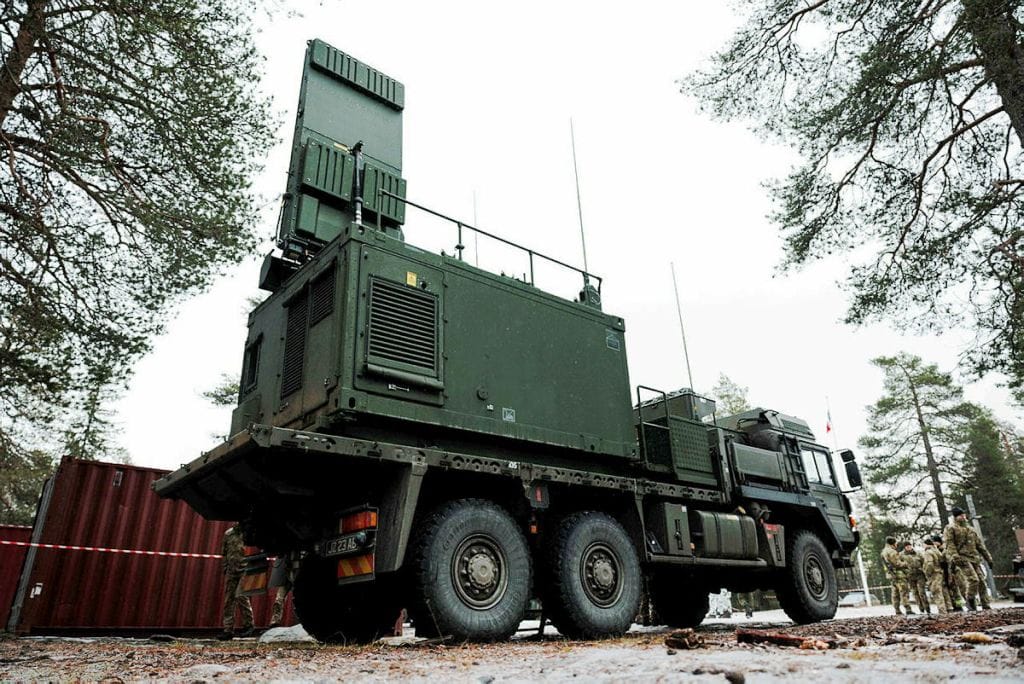
The British Army’s adoption of Saab’s Arthur D model—representing a notable evolution from its predecessor, the Arthur C—demonstrates the shift towards a fully digitized approach to radar systems. This transition illustrates the growing emphasis on advanced technologies in the realms of reconnaissance and counter-battery operations. Saab’s R&D department is already outlining future enhancements to capitalize on evolving battlefield requirements.
Case Study: Artillery in the Russia-Ukraine Conflict
The ongoing conflict in Ukraine provides a poignant example of artillery’s dominance in contemporary warfare, with indirect fire accounting for up to 80% of casualties. This statistic underscores the critical nature of artillery, mortars, and rocket systems, which increasingly utilize drones for target acquisition and fire correction.
- Russian Artillery Output: Since the onset of hostilities in 2022, Russia has been firing approximately 30,000 to 50,000 rounds daily, amounting to nearly 10 million rounds annually.
- Logistical Vulnerability: Notably, within the first few days of conflict, Russian forces depleted the British Army’s entire artillery stockpile.
Technological Evolution in Radar Systems
Establishing the origin of incoming artillery fire is essential for effective counter-battery measures—an approach that echoes tactics from the Cold War era. Saab’s Arthur system, developed during the 1980s, continues to evolve with significant enhancements over the decades.
The Arthur Mod D: A Leap into the Digital Era
- Transition to Phased Array Technology: The Arthur Mod D leverages active phased array technology, using Gallium Nitride modules that dramatically improve radar performance.
- Operational Flexibility: This modernized system can be deployed quickly and remains operational despite the challenges posed by enemy electronic warfare, underscoring its role as a critical asset on the battlefield.
The system’s ability to operate autonomously and its rapid redeployment capabilities make it an indispensable tool for modern militaries facing asymmetric threats.
Tactical Maneuvering for Optimal Effectiveness
To maximize WLS capabilities, operational concepts must emphasize agility and adaptability. The strategy involves:
- Situational Awareness: Utilizing both sound ranging and situational cues allows for passive and active detection methods.
- Radar Maneuvering: Implementing a coordinated "radar maneuver"—involving multiple radar units—enables sustained coverage while minimizing exposure to enemy fire.
Maintaining stealth through camouflage is essential. The Arthur’s static antenna design enhances concealment, reducing the likelihood of enemy detection when compared to mobile radars. As conflicts heat up, these tactical maneuvers provide crucial intelligence for friendly forces, facilitating timely retaliatory actions.
Integration and Scalability
The Arthur Mod D’s reduced mass allows for seamless integration with lighter military vehicles, enhancing the operational flexibility of forces. The system’s modular design means that it can easily adapt to various platforms in the field. Key specifications include:
- Mobile Configuration: With a mass of less than 1,400 kg, the radar is vehicle agnostic and supports integration into platforms like the Boxer module.
- Detection Capabilities: The system can identify incoming artillery rounds at significant ranges, with specific detection thresholds for different calibers:
- 300 mm rockets: Over 60 km
- 122 mm rockets and 120 mm mortars: Over 50 km
- 152 mm rounds: Over 30 km
These parameters highlight the Arthur Mod D’s capability to provide a 90% detection probability for various ordnance types.
Future Developments and Strategic Adaptation
Saab’s roadmap for the Arthur system envisions enhancements that exceed 50% in range through advanced software upgrades, alongside capabilities such as power conservation modes to reduce the acoustic and thermal signatures of the radar system.
Lessons learned from the conflict in Ukraine will undoubtedly shape the evolution of counter-battery sensors. In response to emerging threats, manufacturers must remain agile, adapting quickly to the battlefield realities experienced by their customers.
Global Deployment and Implications
Beyond its use within the British Army, the Arthur system enjoys operational deployment across numerous NATO nations, including but not limited to the Czech Republic, Denmark, and Sweden, as well as in Asia with South Korea. This extensive adoption underscores the system’s reliability and effectiveness in modern military operations.
Conclusion
As the dynamics of warfare continue to evolve, the significance of artillery—and by extension, robust counter-battery systems like Saab’s Arthur—is likely to increase. With adaptability and technological sophistication at the forefront, militaries must remain vigilant in upgrading their capabilities to meet the challenges of modern conflict head-on.