
House Proposes Manufacturing Network to Enhance Wartime Arms Production Capabilities

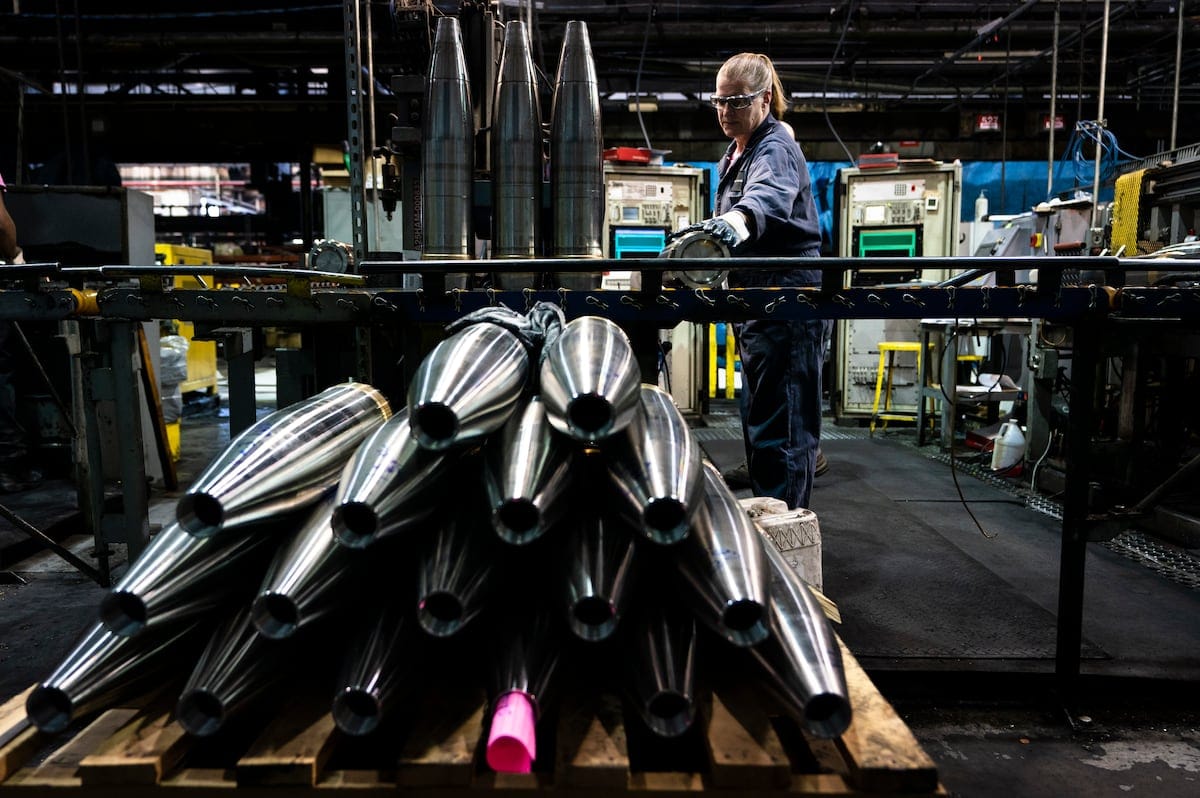
Establishing a Commercial Reserve Manufacturing Network: A Strategic Imperative for U.S. Defense Capability
Introduction
In a significant move aimed at enhancing the United States’ defense capabilities, the House Appropriations Committee’s defense panel has proposed an allocation of $131 million to the Department of Defense (DoD) for the establishment of a Commercial Reserve Manufacturing Network. This innovative framework is designed to provide a rapid-response manufacturing capacity during wartime, allowing for the swift transition from civilian to military production.
Rationale Behind the Initiative
The urgency for such a network arises from growing concerns regarding geopolitical threats, particularly from the People’s Republic of China, which has demonstrated a remarkable efficiency in scaling its military production. U.S. lawmakers and defense officials recognize the risks associated with the current "calcified" defense acquisition processes, prompting the exploration of new strategies to reinvigorate the military industrial base.
Key Features of the Proposed Network
- Rapid Scalability: The network will include commercial enterprises capable of quickly shifting from standard consumer goods to mass-producing military systems when needed.
- First Factory Qualification: The DoD is tasked with devising a plan to assess and qualify the first factory within 30 days post-enactment of the legislation.
- Integration with Current Models: This initiative mirrors existing approaches, such as the Air Force’s Civil Reserve Air Fleet, which allows commercial airlines to augment military airlift capacity during crises.
Aligning with Existing Frameworks
The Pentagon has previously developed models to tap into commercial manufacturing capabilities. The Navy’s National Defense Reserve Fleet serves as a case in point, providing essential maritime logistics during emergencies. Moreover, the Space Force has introduced its Commercial Augmentation Space Reserve aimed at enhancing satellite and space-based capabilities in peacetime while ensuring rapid response during conflicts.
Emphasizing Advanced Technologies
The House committee highlights the necessity for immediate integration of advanced manufacturing techniques, particularly those utilizing artificial intelligence (AI). The report asserts:
“Action is needed to immediately accelerate the Department’s adoption of commercially available AI-driven additive manufacturing factories to preserve America’s military advantage."
This pursuit is bolstered by opportunities to scale advanced technologies, effectively bridging the gap between defense requirements and the broader American industrial ecosystem.
Lessons from Industry Leaders
Michael Bloomberg’s recent report, which articulates a roadmap for mobilizing the industrial base, reinforces the need for a Civil Reserve Manufacturing Network. Acclaimed defense analysts argue this initiative would enable the U.S. to achieve “ready-to-scale defense production.” Lawmakers are urged to secure funding for this priority initiative as early as fiscal year 2026.
Nathan Diller, a prominent figure in manufacturing innovation, emphasizes the urgency of transitioning defense production back to the U.S. He notes the versatility enabled by AI and digital technologies, stating:
“Right now, we literally are printing hyper car frames in the morning and cruise missiles in the afternoon.”
Diller’s insights underscore the transformative potential of AI-driven production methods, which can improve efficiency and reduce costs while simultaneously meeting national security needs.
Addressing Industrial Fragility
Diller attributes the offshoring of defense manufacturing to a crisis. The resurgence of domestic capabilities is critical not only for national security but also for revitalizing the American manufacturing landscape, which has seen significant erosion in recent decades.
Strategic Initiatives by the Pentagon
The DoD’s ongoing commitment to increasing production speed and scale aligns with its need to replenish dwindling weapons stocks. Recently, the Defense Innovation Unit (DIU) launched the Blue Manufacturing Marketplace, aimed at fostering collaborations between technology firms and advanced manufacturing entities. This initiative is particularly significant for connecting vetted companies capable of enhancing the defense industrial base’s speed and resilience.
- Current Status: DIU is presently reviewing proposals from manufacturing companies to ensure supply chain security before enabling strategic partnerships.
Conclusion
The proposed Commercial Reserve Manufacturing Network reflects a proactive approach to modernizing U.S. defense production capabilities in the face of evolving threats. By leveraging commercial technologies and establishing a framework for rapid transition to military manufacturing, the United States can fortify its defense posture and maintain its strategic advantage. Building a robust industrial base, underpinned by innovative practices, will be essential to sustaining long-term national security objectives.
The integration of cutting-edge technologies and strategic partnerships represents a significant opportunity to revitalize America’s defense capabilities while ensuring economic resilience in a rapidly changing global landscape.