India Signs $47M Deal for Russian Tunguska Air Defense System to Counter Drones and Missiles

India Enhances Air Defense Capabilities with Tunguska Acquisition
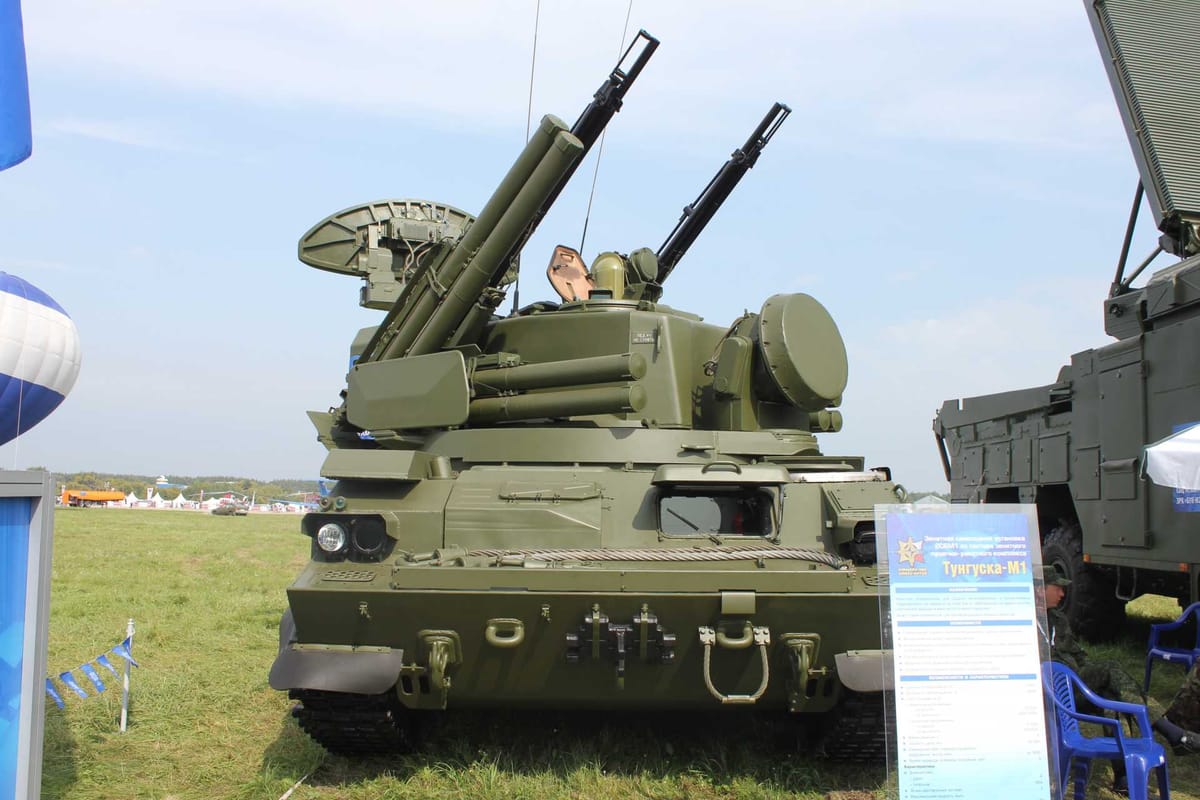
On March 27, 2026, India finalized a $47 million procurement deal with Russia’s JSC Rosoboronexport for the acquisition of Tunguska air defense missile systems in New Delhi. This strategic purchase provides the Indian Army with a versatile mobile defense platform, enabling the interception of various aerial threats—including aircraft, drones, and low-flying cruise missiles—through an integrated dual gun-and-missile system.
Strengthening Short-Range Air Defense
The procurement comes at a critical juncture, addressing escalating aerial threats and enhancing India’s short-range air defense mechanisms. The Tunguska systems will afford ground forces a fortified layered defense against swift, low-altitude assaults. By consolidating dual fire capabilities within a single framework, the Indian Army can achieve faster response times, improved engagement options, and enhanced protection for frontline units operating in contested zones. Key Features of the Tunguska System:
- Mobile Platform: Facilitates engagement in dynamic operational environments
- Dual Capability: Integrated gun and missile systems for flexible response
- Engagement Radius: Effective against threats within 8–10 km
A Strategic Reinforcement of Aerial Defense Structure
The agreement was formalized at Kartavya Bhawan-2, presided over by Defence Secretary Rajesh Kumar Singh. It marks a significant step in advancing India’s multi-tiered air defense strategy amid rapidly evolving aerial challenges. This procurement is expected to bolster the battlefield survivability of forward-deployed units while deepening bilateral defense cooperation with Russia.
Overview of the Air Defense Network
India’s ground-based air defense system is sophisticated, featuring an extensive architecture of over 728 surface-to-air missile systems. This network is designed to counter threats across varying altitude and range parameters. The layered approach includes:
- Medium-Range Defense:
- Akash SAM: An indigenously developed system with an engagement range of 25–30 km, bolstered by phased-array radar and comprehensive command networks.
- 2K12 Kub System: Provides supplementary coverage and redundancy.
- Short-Range and Point Defense:
- 9K33 Osa-AKM: A mobile platform with autonomous, radar-guided interception capabilities.
- Strela Systems: Including 9K31 and 9K35, offering highly mobile air defense solutions.
- Man-Portable Systems: Such as the Igla series ensuring coverage for dispersed units.
Role of the 2K22 Tunguska in the Defense Framework
The newly acquired 2K22 Tunguska plays a vital role as a self-propelled anti-aircraft system, augmenting the existing fleet of 80 units in service with the Indian Army. It serves as a last line of defense, specifically crafted to shield armored formations and maneuver units from emerging aerial threats that successfully breach outer air defense layers. Specifications of the Tunguska System:
- Missile Component:
- The 9M311 series missiles (NATO designation SA-19 Grison) feature advanced capabilities for rapid engagement and electronic countermeasure resistance.
- Effective range: 2.5–10 km, reaching altitudes of approximately 3.5 km.
- Gun Systems:
- Equipped with twin 2A38M 30 mm automatic cannons with a combined fire rate of up to 5,000 rounds per minute, effective at a range of 4 km.
Operational Significance
The Tunguska system is equipped with a full 360° search radar and a specialized tracking radar, allowing for autonomous target detection and engagement. Its mobility, mounted on a tracked GM-352 chassis, ensures operational synergy with tanks and infantry units, reinforcing defense during offensive and defensive maneuvers. As threats evolve, particularly with increasing instances of drone warfare and precision-guided munitions, the introduction of the Tunguska system enhances India’s close-in air defense capacities, thereby improving the survivability of combat units and complicating adversaries’ targeting strategies.
A Strategic Alliance in Defense
This procurement underscores India’s ongoing reliance on Russian technology for vital battlefield capabilities while concurrently pursuing a broader diversification strategy. By expanding its Tunguska fleet, supplemented with 9M311 missiles, the Indian Army fortifies its layered air defense doctrine, ensuring robust countermeasures across the spectrum of modern aerial threats. Source link