INDOPACOM's 'Expeditionary Foundry' Advances Towards a 3D-Printed Future

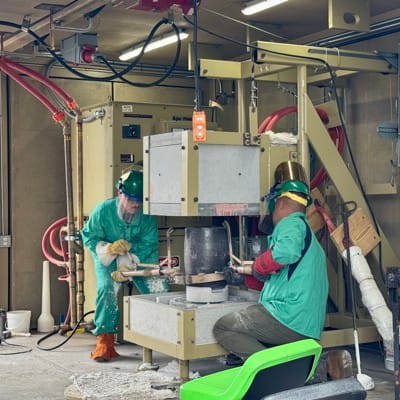
SCHOFIELD BARRACKS, Hawaii — The recent establishment of a cutting-edge manufacturing facility at U.S. Indo-Pacific Command marks a significant advancement in military logistics and operational sustainability. Components that typically require extended lead times, such as a propeller blade taking 18 months to replace, parts for a specialized office setup, or a critical howitzer bracket, can now be fabricated within hours.
Overview of ‘The Forge’
Referred to as “The Forge,” this innovative facility is touted by its director as the world’s only expeditionary foundry. Its primary function extends beyond mass production; it focuses on the fabrication of unique prototypes and limited production runs that can be rigorously tested and assessed for military or commercial application. The Forge was conceptualized with the vision to manufacture high-quality, precision components in maritime environments, an essential capability for potential conflict scenarios in the Pacific. Plans are in motion for a more expansive 10,000-square-foot manufacturing facility near Pearl Harbor.
Workforce Development Initiatives
To support this self-reliant future force, robust training and workforce development programs have been implemented across Hawaii. Key initiatives include:
- Project manufacturing and welding programs at educational institutions across three islands.
- A state-of-the-art training center at Honolulu Community College, featuring $12 million worth of advanced machinery funded by the Pentagon, which will be inaugurated this Wednesday.
Benjamin Worrell, director of The Forge and strategic advisor to INDOPACOM from Oak Ridge National Laboratory, emphasized the need for a comprehensive strategy: “To restore deterrence, strategic capability is essential. This involves capable personnel, joint forces, and a resilient economy — all integral to maintaining operational readiness.”
Historical Context and Facility Transformation
The structure currently housing The Forge, originally built in 1936, has undergone a remarkable transformation. Initially utilized as a horse stable and subsequently repurposed for different military applications, it remained unused for approximately 13 years. Unearthed potential within its dilapidated conditions spurred Worrell’s quick action, motivated by the pressing geopolitical landscape involving China.
Innovative Prototype Development
Today, The Forge boasts an array of 3D printing and welding apparatus sourced from Oak Ridge National Laboratory. Journalists were recently permitted to view, albeit not photograph, an array of prototypes, including:
- A carbon fiber-reinforced polymer boat, capable of being produced in 18 hours for under $1,000, designed for one-way autonomous resupply.
- A first-person-view drone with a 200-kilometer operational range, described by Worrell as “combat-proven.”
Adjacent to these innovations, portable makerspaces are utilized by Marines and soldiers to fabricate vital components for weaponry and vehicles. These containers are equipped for operations at sea, with specific adjustments that allow them to function in challenging maritime conditions. One such machine, designed for a KC-135, has already participated in numerous airlift missions and will be deployed to the Philippines for an upcoming military exercise.
Strategic Implications for Military Operations
The practical implications of The Forge’s capabilities were underscored during a demonstration involving a howitzer. Chief Warrant Officer 5 Anthony Gravely and Chief Warrant Officer 2 William Nicely highlighted the rapid response to a crisis when a critical bracket of the artillery piece was damaged during an exercise. Their team successfully created a mold and replicated the component in approximately five hours, subsequently manufacturing additional units for future contingencies.
This capability revolutionizes the military’s approach to operational logistics—a true “game-changer” in potential conflict scenarios, according to Gravely. As military operations become increasingly complex and the battlefield more dynamic, the ability to produce essential components quickly and efficiently could prove crucial in maintaining strategic advantages in theater.