Iran Claims New Arash-2 Drone Breached Air Defenses in Attack on Israel’s Ben Gurion Airport

Iranian Military Developments: The Arash-2 Loitering Munition
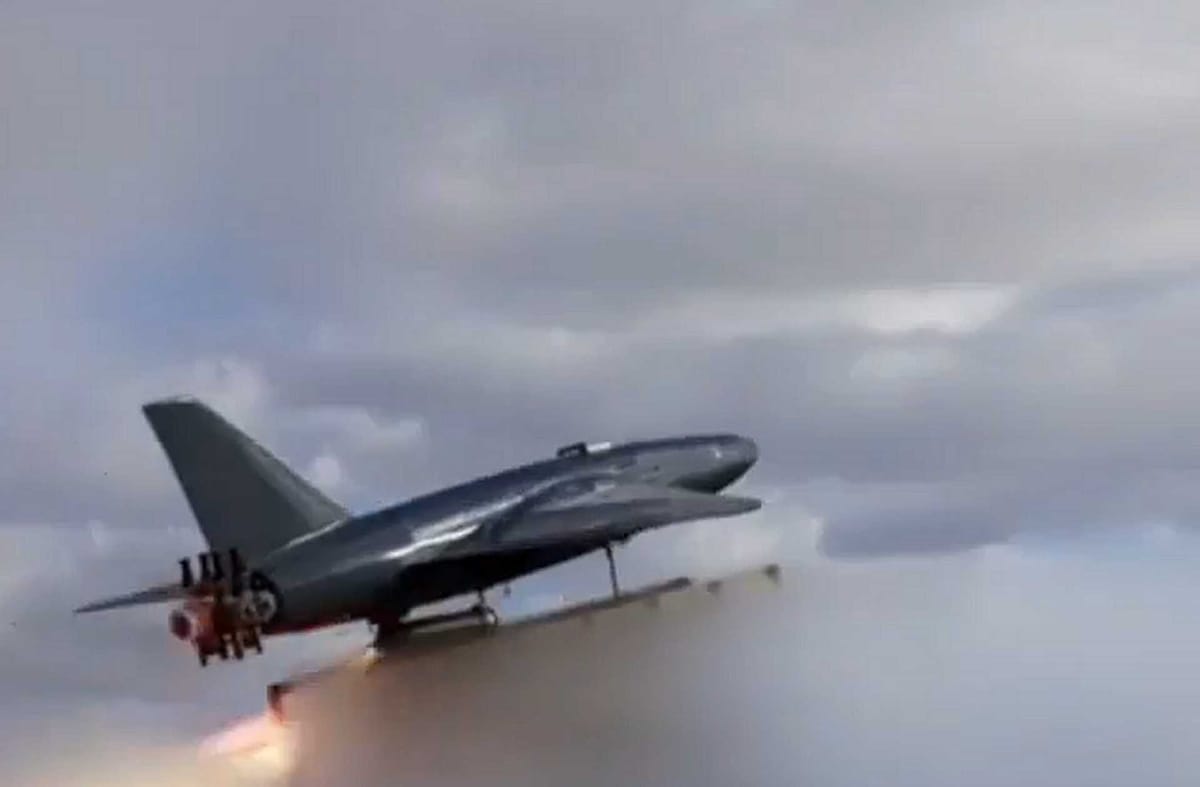
Recently, Iran announced the deployment of its Arash-2 loitering munition, purportedly targeting Israel’s Ben Gurion Airport. This assertion positions the drone as a long-range precision strike asset capable of breaching fortified airspace—an indication of Tehran’s intent to exhibit its advancing deep-strike capabilities against critical and high-value military targets.
Key Features of the Arash-2
Design and Capabilities Brigadier General Mohammad Akrami Naeini, speaking for the Iranian military, highlighted that the Arash-2 is engineered with a significantly reduced radar cross-section and enhanced endurance, facilitating its evasion of sophisticated detection systems. The drone is classified as an upgraded version of existing one-way attack UAVs within Iran’s expanding inventory of loitering munitions, designed specifically for long-range precision operations.
- Extended Range: Estimates suggest the Arash-2 can strike targets up to 2,000 kilometers away, surpassing the operational envelope of earlier models like the Shahed-136, which ranges between 1,000 and 1,500 kilometers.
- Optimized Airframe: Modifications in airframe design and material selection enhance the drone’s stealth characteristics, reducing detection range while complicating engagement for air defense systems.
Improved Endurance and Flight Profiles The Arash-2 is believed to be powered by a piston engine optimized for fuel efficiency, allowing for extended flight durations. This capability enables it to approach targets through indirect paths, potentially exploiting radar blind spots. In contrast, the Shahed-136 typically engages in more straightforward attack profiles.
Guidance Systems and Warhead Specifications
Navigation and Targeting Architecture Both the Arash-2 and its predecessors utilize inertial navigation systems with GPS support. However, the former may include advanced resilience features, enhancing its jamming resistance and accuracy during the terminal phase of flight.
- Fixed Target Engagement: The lack of real-time operator control indicates the Arash-2 is suited for fixed or pre-designated targets, emphasizing its role in strategic infrastructure strikes rather than dynamic tactical engagements.
Payload and Impact The drone’s warhead is estimated to fall within the 30–50 kg range. Its strategic impact hinges less on payload capacity and more on its reliability and penetration success rates, significantly increasing the likelihood of successful strikes against high-value targets.
Implications for Regional and Global Security
Production and Scalability Iran’s rapid production capabilities for loitering munitions underscore a commitment to scale deployment of the Arash-2. This approach reflects a shift toward balancing mass deployment strategies with enhanced individual effectiveness, allowing Tehran both saturation and precision strike capabilities.
- Complex Threat Landscape: The emergence of the Arash-2 complicates the operational environment for U.S. and Israeli forces, as its long range enables launches from deeper within Iranian territory or proxy sites, complicating early warning and preemptive actions.
Challenges to Defense Architectures The Arash-2 introduces substantial challenges to existing air defense mechanisms, particularly those focused on intercepting larger, more predictable targets. With its reduced radar profile and low-altitude flight characteristics, the Arash-2 can exploit vulnerabilities in layered defense systems, potentially leading to costly expenditure of interceptors against cost-effective loitering munitions.
Broader Strategic Considerations
Naval Operations Vulnerability Naval assets operating in the Persian Gulf may find themselves at heightened risk from Arash-2 drone capabilities, which could effectively target vital infrastructure, such as ports and logistics bases crucial to U.S. military operations. Proliferation Risks The potential for Iran to proliferate Arash-2 technology to allied non-state actors continues to pose a significant concern. Enhanced long-range strike capabilities could empower these groups, extending operational reach and increasing unpredictability in various geographic areas.
Conclusion: A New Era in UAV Warfare
The Arash-2 signifies a strategic evolution in Iranian unmanned warfare, moving from traditional harassment applications to a more integrated role in strategic military planning. By capitalizing on its range, production adaptability, and improved survivability, Iran is advancing a sophisticated capability that could exert continuous pressure on critical military and infrastructure targets across the region. The assertion of successfully striking Ben Gurion Airport, whether verified or not, illustrates a determined trajectory in UAV development. As the Arash-2 solidifies its role as a long-range precision strike asset, it stands to challenge conventional defense paradigms in multiple theaters, reshaping the dynamics of regional and global security. Source link