Israel Adopts Netting for Combat Vehicle Defense Against Hezbollah Drones

New Defensive Measures Against Drone Threats
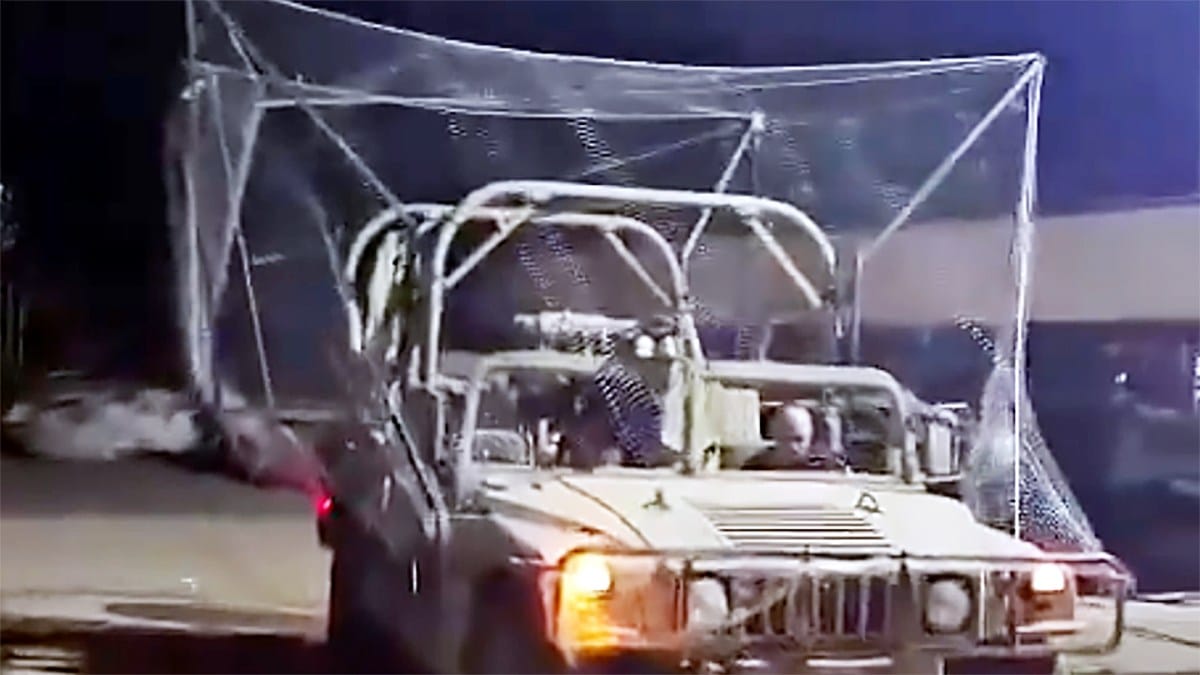
In response to the increasing threat from Hezbollah's first-person view (FPV) drones, the Israel Defense Forces (IDF) have begun utilizing netting systems to enhance the protection of their combat vehicles. This shift comes amid criticism of the IDF for not taking more robust actions to defend against these drone attacks, which have become a significant concern for Israeli military operations.
The deployment of netting reflects an effort to counteract the effectiveness of FPV drones, which have been increasingly used by Hezbollah in recent conflicts. As the IDF faces mounting pressure to enhance its defensive capabilities, the introduction of netting serves as a stopgap measure. However, options for comprehensive defense against drone technology remain limited, highlighting the ongoing challenges faced by military forces in adapting to rapidly evolving threats.
Implications for Future Operations
This development raises questions about the long-term effectiveness of such defensive measures. While netting may mitigate some risks associated with drone attacks, it does not address the broader tactical implications of incorporating FPV drones into modern warfare. The IDF's current strategy may need to evolve further to include more advanced counter-drone systems and technologies.
The implications are significant; as drone warfare continues to advance, militaries worldwide will need to rethink their defensive strategies. Analysts will be watching how the IDF's adoption of netting influences its operational effectiveness and whether it prompts further innovations in counter-drone technologies.
Sources: Twz, The Washington Post, The Guardian, The Times of Israel, and Haaretz