Leonardo Hystrix 40 ADS: The Marlin 40 Takes to Land for Enhanced Counter-UAS Operations

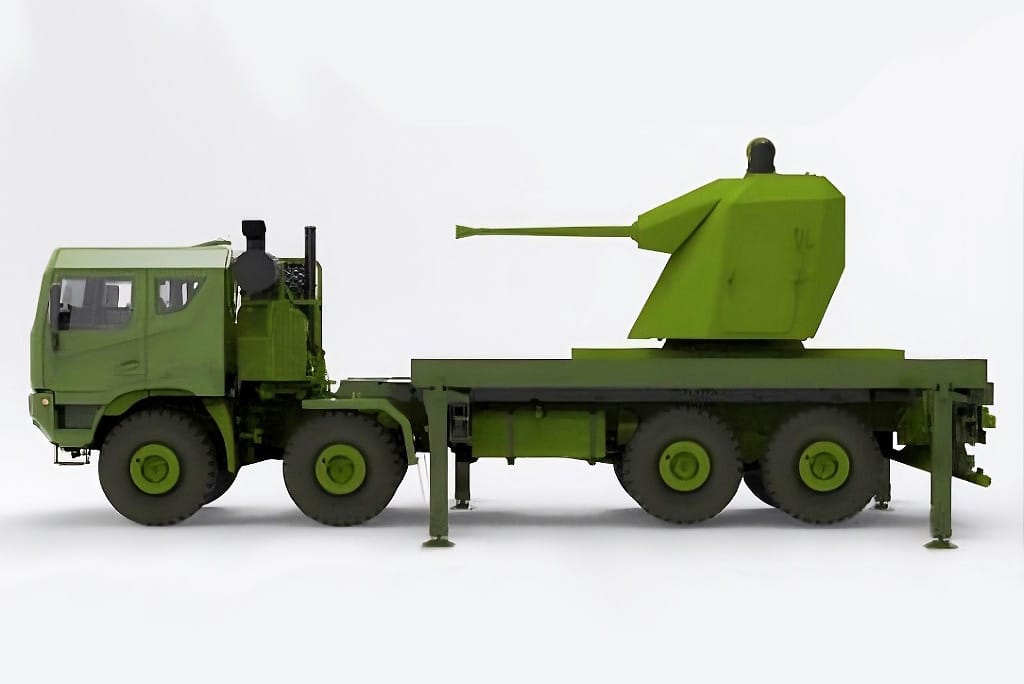
Advancements in Air Defense: Leonardo’s Michelangelo Dome and Hystrix Family
Strategic Context and Emerging Threats
The contemporary landscape of military engagement underscores an escalating emphasis on air defense capabilities. Nations worldwide are reallocating resources to counter increasingly sophisticated aerial threats. In response, Italian defense giant Leonardo has introduced the Michelangelo Dome, a state-of-the-art, modular integrated defense system that adapts to various operational domains. Unveiled in January 2026, this advanced framework incorporates a robust C5I model—Command, Control, Communications, Computers, Combat Systems, and Intelligence—with multifaceted sensors and effectors to form a protective “Dead Zone.” Here, localized threats are neutralized by specialized point-defense systems.
Hystrix: A New Class of Defense Solutions
Among the innovations showcased during Leonardo’s presentation in Brescia, Northern Italy, is the Hystrix system—a family of land-based effectors derived from naval artillery. The nomenclature, inspired by the Latin term for “hedgehog,” emphasizes its defensive characteristics. Central to this system is the Hystrix 40 Air Defense System (ADS), constructed upon the proven Marlin 40 turret platform, which has been in service with over 30 navies globally since the 1950s.
Operational Flexibility through Modular Design
The Hystrix 40 ADS exemplifies adaptability across various terrains:
- Static, relocatable, and mobile configurations allow for rapid deployment in response to emerging threats.
- The turret is built for quick, efficient reloading, accommodating 72 ready-to-fire rounds while achieving a maximum rate of fire.
- Significantly lighter than its naval counterpart, the land version weighs 2,100 kg, facilitating transportation and operational agility.
Technical Specifications and Capabilities
The Marlin 40 turret’s exceptional features enhance short-range air defense efficacy:
- 360° training capability with an elevation range of -20° to +85°.
- High angular speeds—up to 120°/s for training and 75°/s for elevation—ensure rapid target engagement.
- The turret supports various firing modes, allowing for rapid volume fire essential for intercepting aerial threats.
Advanced sensors integrated into the Hystrix 40 ADS include:
- An electro-optical gimbal system for autonomous detection, tracking, and engagement.
- Capabilities to engage multiple aerial threats using high explosive incendiary rounds, programmable munitions, and custom ammunition types.
Collaborations and Joint Development
Leonardo’s ongoing collaboration with MBDA Italy aims to enhance the range of the Hystrix system. The integration of the Fulgur Very Short Range Air Defense (VSHORAD) missile could provide a comprehensive solution for specific combat scenarios, potentially enabling stand-alone air defense capabilities.
Global Market Adoption and Strategic Contracts
Recent contract wins reflect growing international interest in the Hystrix system. Leonardo has successfully supplied a Southeast Asian nation with numerous Marlin 40 turrets mounted on trailers for air defense applications. The response has been positive, leading to discussions for an additional order to equip the Army with similar systems. Current production processes leverage local supply chains to enhance delivery efficiency and bolster regional indigenous capabilities.
Conclusion
Leonardo’s developments in air defense technology symbolize a critical paradigm shift towards integrated, modular systems capable of addressing today’s complex threat environment. As military operations increasingly shift to multi-domain engagements, systems like the Michelangelo Dome and the Hystrix family stand at the forefront, offering nations expansive, scalable defense solutions that are ready for current and future challenges.
With the adoption of such advanced technologies, defense analysts and military strategists must continuously evaluate the operational implications—not only regarding defense efficacy but also in terms of international defense partnerships and supply chain integration. The evolution of air defense solutions heralds a new era of military preparedness in an increasingly interconnected and competitive global arena.