Marine Corps Seeks Increased Funding for Joint Development of Next-Gen Combat Aircraft

Advancements in Marine Corps Combat Aviation: A $58 Million Investment
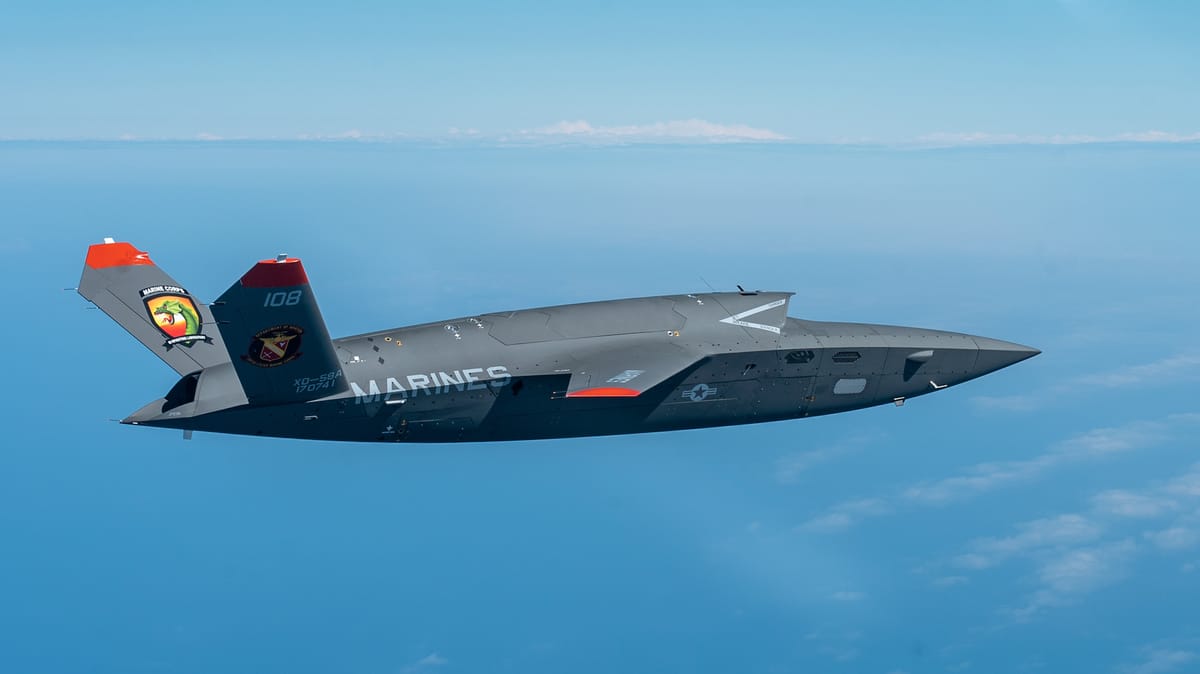
The United States Marine Corps has outlined a significant funding request of $58 million for fiscal year 2026 aimed at advancing its collaborative combat aircraft (CCA) initiative. This investment reflects an escalated commitment to integrating advanced unmanned aerial systems (UAS) alongside traditional crewed aircraft to enhance operational effectiveness in future conflict scenarios.
Budget Allocation and Development Focus
The specified budget will allocate nearly $20 million to air vehicle development, while an additional $15 million is earmarked for mission systems development and integration. The remaining resources will be directed toward systems engineering, control segment development, and comprehensive support for the program’s aims.
MUX TACAIR Increment 1: A Forward-Looking Initiative
Often referred to as MUX TACAIR Increment 1, this ambitious project seeks to build on earlier efforts associated with the Penetrating Affordable Autonomous Collaborative Killer (PAACK-P), previously funded under the Pentagon’s Rapid Defense Experimentation Reserve. The initiative aims to create a highly autonomous system capable of acting as a robotic wingman in high-stakes environments, particularly in the Indo-Pacific theater where potential adversaries like China pose significant threats.
Key objectives of MUX TACAIR include:
- Enhanced Electronic Warfare Capabilities: The systems are expected to participate actively in electronic warfare and reconnaissance missions.
- Interoperability with Existing Platforms: Seamless operation alongside crewed platforms, such as the F-35 fighter jet, is a priority, capitalizing on recent tests validating their collaborative capabilities in electronic warfare and autonomous task execution.
- Operational Versatility: Designed for deployment from austere Expeditionary Advanced Basing Operations (EABO) airfields, MUX TACAIR will aid Marine Littoral Regiments (MLR) and Marine Expeditionary Units (MEU), offering adaptable support from both land and sea.
Strategic Importance and Military Synergy
Marine Corps Commandant General Eric Smith articulated the strategic necessity of such investments during testimony to the Senate Appropriations Defense Subcommittee. He emphasized that employing CCAs not only enhances the operational range but also significantly mitigates risks to personnel by expediting decision-making processes. The proposed initiatives aim to:
- Strengthen MAGTF Lethality: Increasing capacity and effectiveness against peer/near-peer threats.
- Facilitate Joint Operations: Encourage mass mobilization of Joint Forces in response to evolving security challenges.
Implementation and Prototyping Efforts
The Marine Corps plans to issue up to three contracts before the start of the next fiscal year to facilitate the MUX TACAIR program. Prototyping activities for 2026 will focus on critical components that enhance air vehicle launch/recovery systems, conventional take-off and landing capabilities, electronic warfare subsystems, and mission systems computing.
Expected prototyping outcomes include:
- Mission System Integration: Incorporating flight tests alongside crewed aircraft to evaluate system efficacy.
- Command and Control Architecture: Developing an open architecture framework to ensure compatibility across different military branches.
Coordinated Efforts Across Military Services
The investment by the Marine Corps aligns with similar initiatives underway within the U.S. Air Force, which is channeling $807 million into its own CCAs during the same fiscal cycle. To maximize effectiveness, the Marine Corps aims to synchronize its efforts with both the Air Force and the Department of the Navy to streamline operations and enhance interoperability.
Conclusion
As the Marine Corps embarks on this strategic investment in collaborative combat aircraft, it not only seeks to upgrade its own capabilities but also aims to fortify joint operational frameworks within the U.S. military. The ongoing development of MUX TACAIR represents a pivotal evolution in how the Marine Corps prepares to confront modern threats, ensuring that it remains agile and effective in diverse and high-stakes environments.
By fostering innovation through research, development, and experimentation, the Marine Corps is not just preserving its relevance but actively setting the pace for future combat operations.