Northrop's Mission Robotic Vehicle: Dual-Use Capabilities in Space Operations

Overview of the Mission Robotic Vehicle
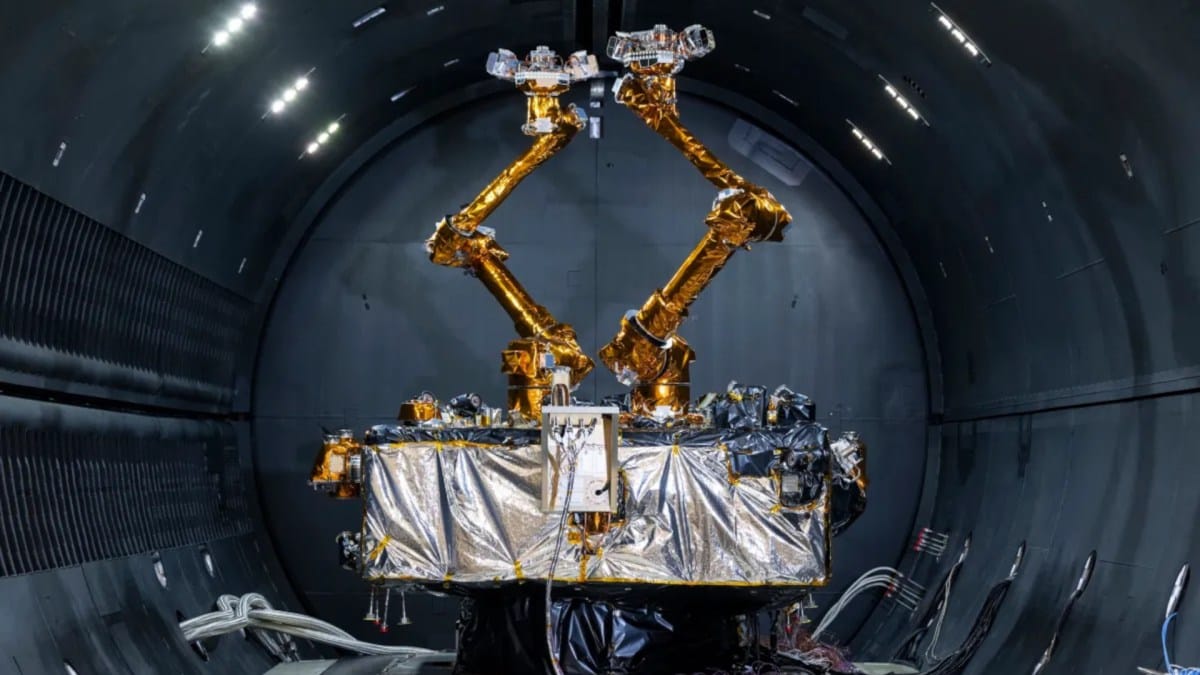
The Mission Robotic Vehicle (MRV), developed by Northrop Grumman, is primarily designed for refueling satellites in orbit. However, recent discussions suggest that this innovative spacecraft could also possess the capacity for offensive operations against enemy satellites. This dual-use potential significantly enhances the strategic capabilities of the MRV in the context of modern warfare.
Strategic Implications of Robotic Arms
The MRV's robotic arms are central to its intended function of satellite refueling, a critical operation that extends the lifespan and operational capabilities of satellites. However, the ability to manipulate objects in space using these robotic arms opens up the possibility of engaging with adversarial satellites. This raises questions about the weaponization of space and the implications for international security. As nations increasingly rely on satellite technology for communication, navigation, and intelligence, the potential for offensive capabilities in space necessitates a reevaluation of defense strategies.
Analysts will be watching how Northrop Grumman further develops the MRV and the extent to which military operations may integrate these capabilities. The conversation surrounding space as a contested domain is evolving rapidly, and the MRV could serve as a benchmark for future developments in military space technologies.
This development matters because it indicates a shift towards more aggressive posturing in space operations. As countries like the United States consider the MRV's capabilities, the international community will need to address the ramifications of such technology. The potential for offensive capabilities in space could lead to an arms race, prompting nations to invest more heavily in counter-space technologies. The future of space warfare may hinge on how effectively nations can adapt to and regulate these emerging capabilities.
Sources: Twz, Northrop Grumman, DVIDS, and darpa.mil