Pakistan Enhances Air Defense Capabilities with Advanced Chinese Technology

Pakistan’s Strategic Shift: Pursuit of Advanced Missile Defense
Following a recent four-day conflict with India in May, Pakistan is exploring options to enhance its air defense capabilities, particularly by acquiring China’s state-of-the-art HQ-19 missile defense system. This development coincides with plans to procure 40 J-35A stealth fighters, with anticipated deliveries commencing in early 2026, as reported by Kuala Lumpur-based outlet Defence Security Asia.
Overview of the HQ-19 System
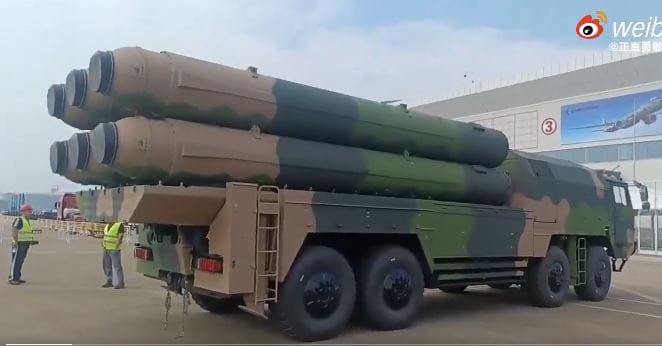
The HQ-19, officially unveiled in November 2024, is engineered primarily for long-range ballistic missile interception, boasting an impressive operational range of approximately 3,000 kilometers (1,864 miles). Its design also accommodates the detection and neutralization of advanced cruising munitions, including:
- BrahMos: Supersonic anti-ship and land-attack cruise missile.
- SCALP-EG: Standoff cruise missile known for its precision.
- Agni Series: A family of Indian ballistic missiles.
This wide operational scope positions the HQ-19 as a critical asset in Pakistan’s defense architecture, particularly given India’s expanding missile capabilities.
Technical Specifications
Developed by the China Aerospace Science and Technology Corporation, the HQ-19 employs a ‘hit-to-kill’ methodology for target interception. Key features include:
- Deployment Mechanism: Mounted on an 8×8 wheeled transporter-erector-launcher, capable of launching a six-missile configuration.
- Command and Control: Equipped with the advanced Type 610A radar, which offers a detection range of about 4,000 kilometers (2,485 miles).
- Development History: The system’s design traces back to the late 1990s, with initial testing phases beginning in 2021.
Notably, the HQ-19 has roots in the HQ-9 surface-to-air missile system, which itself is derived from the Russian S-300 missile architecture, illustrating a lineage of advanced technology transfer in missile defense systems.
Addressing Air Defense Vulnerabilities
Pakistan currently operates various air defense assets, including the Chinese-manufactured HQ-9 for long-range interception and HQ-16 for medium-range scenarios. However, insights from recent conflict assessments indicate significant vulnerabilities within Pakistan’s air defense framework.
During the May skirmish, the Indian Air Force executed multiple strikes on key military bases and alleged terror camps within Pakistani territory. According to analyses by think tank Stimson Center, India displayed a marked capability to conduct precision strikes, especially noted on May 7 and 10. The report underscored:
- Effectiveness of Indian Strikes: Indian forces utilized air-launched cruise missiles to achieve these operational goals.
- Pakistan’s Defensive Challenges: While Pakistani defenses engaged some incoming threats, they faced substantial gaps, thereby raising concerns over the overall integrity of air defense against India’s advanced strike platforms.
Strategic Implications
The move to acquire the HQ-19 symbolizes a critical pivot in Pakistan’s defense strategy, driven by the urgency to shore up capabilities in a dynamic security environment characterized by regional tension and technological advancement. The simultaneous procurement of stealth aircraft like the J-35A further underscores a dual approach to both air defense and offensive capabilities, possibly aiming to create a more balanced military posture against adversaries.
As geopolitical dynamics evolve, the integration of advanced missile defense systems such as the HQ-19 may not only enhance Pakistan’s deterrent capabilities but could also provoke responses from neighboring countries, thereby influencing regional stability and military strategies.
In summary, Pakistan’s pursuit of advanced defense systems amid evolving regional threats highlights the imperative for continuous modernization and strategic realignment in military policy, reflective of a broader trend among nations seeking to secure their national interests in an increasingly complex international landscape.