
PAS 2025: Safran and MBDA Unveil Thundart, Their Proposal for the French Army's FLP-T Program

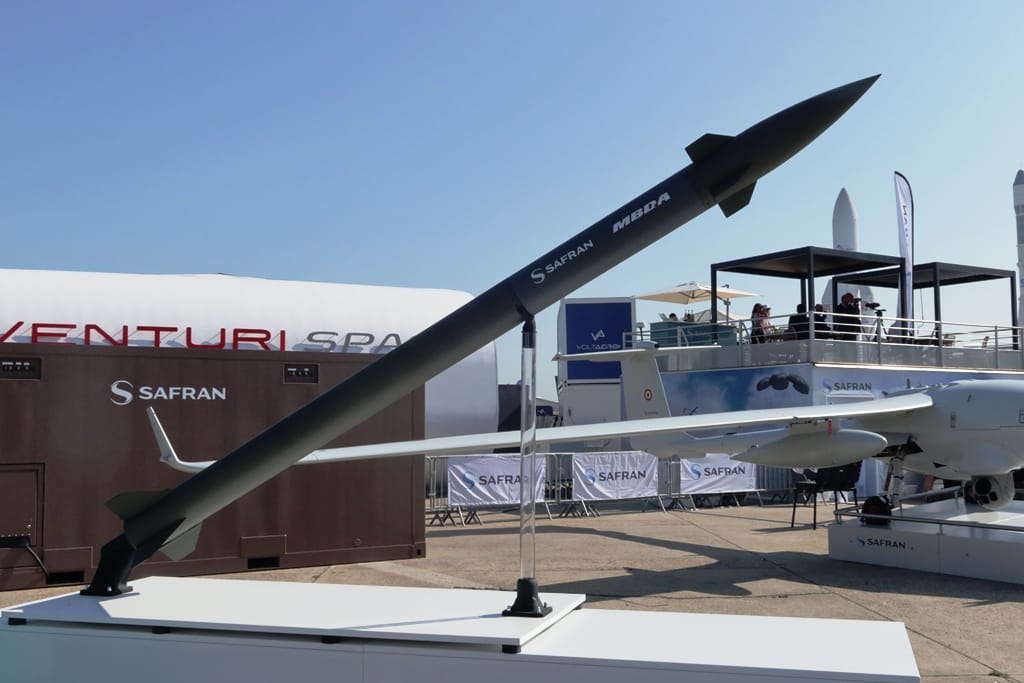
Advancements in French Artillery: The Thundart Rocket System
Introduction to the FLP-T Program
At the recent Paris Air Show, Safran Electronics & Defense (SED) and MBDA unveiled critical updates regarding their collaborative project, the Thundart rocket system. This initiative aims to establish a new cornerstone for the French Army’s multiple rocket launcher capabilities, linked directly to the FLP-T (Frappe Longue Portée Terrestre) program—an imperative development for long-range land strike operations.
With the retirement of the existing MLRS fleet projected for 2027, the French military initiated the FLP-T project in July 2023. Initial discussions at Eurosatory 2024 laid groundwork, but formal momentum was achieved in October 2024 when SED and MBDA officially partnered to create both the rocket launcher and its munitions.
Design Objectives and Range Capabilities
The FLP-T program encompasses two primary operational tiers:
- Tactical Range: Aiming for a striking distance of 150 km, funded within the French Military Programming Act (LPM) 2024-2030.
- Operational Range: Targeting a reach of 500 km, which is not currently financed by the LPM and is likely to feature in the next fiscal planning cycle.
This capability transformation is crucial for achieving saturating fire missions, an evolving requirement in contemporary military engagements.
Technological Collaboration and Development Milestones
From October 2024, MBDA has contributed its extensive experience in propulsion systems—boosted by the integration of Roxel following the acquisition of Safran’s shares earlier that year. SED is tasked with developing the guidance system, which draws from existing technologies. A notable adaptation will involve using elements from the ASSM Hammer’s guidance, enhancing precision through three configurations: INS/GPS, INS/GPS IR, and INS/GPS Laser. For Thundart, the standard INS/GPS model is being utilized initially, although additional enhancements such as a seeker may be explored in future phases, representing a strategic evolution in capabilities.
Innovation in Propulsion and Munitions
Although the design borrows from previous iterations, both the propulsion system and warhead will be newly engineered:
- Propulsion: Roxel is focused on crafting a novel thruster, leveraging its background in solid-propellant systems for the European Guided MLRS.
- Warhead: MBDA is evaluating previous warhead designs, exploring several options for optimal effectiveness without disclosing specifics at this phase.
Financial Ambitions and Future Budgets
While the exact financial parameters remain undisclosed, both companies aim to price the Thundart rocket competitively, analogous to the M31 GMLRS round. Achieving this target is ambitious, given that the M31 has benefited from extensive mass production, while Thundart features a longer range—at greater than 140 km—offering a substantial enhancement in capabilities.
Development Timeline and Future Prototypes
The current development phase is scheduled to conclude in October 2025, following which the focus will shift to comprehensive design elements including the launch platform and logistical support. Early specifications indicate an 8×8 high-mobility truck as the preferred delivery platform, with capacity to launch up to 12 Thundart rockets—effectively doubling the firepower compared to existing HIMARS systems.
Prototypes are expected to undergo initial testing by April 2026, making this timeline exceptionally tight. The French Army must then determine its preferred vendor among competing entries, including Turgis and Gaillard’s Foudre MRL, and a joint proposition from Thales with ArianeGroup—though details from Thales remain limited.
Addressing Capability Gaps
The potential gap between retiring the current MLRS system and the FLP-T’s deployment raises concerns. Options being explored to mitigate this include relaxing specific requirements, such as air mobility criteria, in an effort to shorten development timelines. While maintaining a fully sovereign solution remains the goal, initial flexibility in design may be necessary.
Additionally, as military trends evolve towards multi-role capabilities, there’s consideration for the Thundart system to interact with various international MRL platforms, expanding the potential for export opportunities.
Conclusion
The Thundart rocket system represents a strategic leap forward for the French Army in the realm of artillery and long-range strike capabilities. As development progresses, the focus on maintaining affordability while enhancing precision and operational range will be crucial in meeting both current and future military objectives. With robust engineering efforts underway, the Thundart initiative epitomizes the drive towards modernization and increased firepower within the French military arsenal.