Rheinmetall Secures Nitrocellulose Supply During European Ammunition Shortage

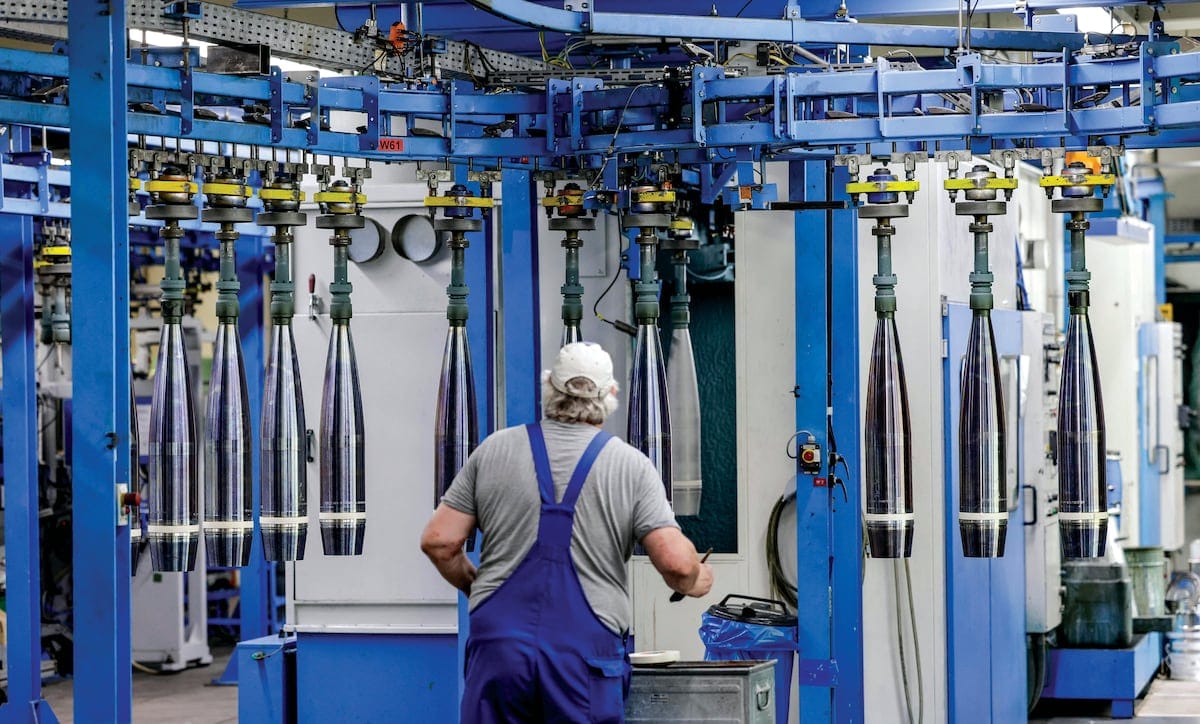
Rheinmetall’s Strategic Acquisition of Hagedorn-NC
In a significant move to bolster its supply chain for artillery propellant, Rheinmetall has agreed to acquire Hagedorn-NC, a German firm that specializes in manufacturing industrial nitrocellulose. This acquisition comes amid a broader effort by companies and countries across Europe to secure and increase their production capacities for ammunition and explosives in response to the heightened military tensions following Russia’s invasion of Ukraine.
Ramping Up Production Capacity
Rheinmetall, a key player in the defense industry, plans to transition Hagedorn-NC’s production toward military-grade cellulose in the coming months. While this shift takes place, the company assures that existing civilian clients will still receive their supplies “for the time being.” By integrating production operations in this manner, Rheinmetall aims not only to fulfill its military needs but also to address a critical shortage in the supply chain—something that is crucial for national defense.
Addressing Strategic Bottlenecks
Rheinmetall’s CEO, Armin Papperger, emphasized that this acquisition is essential for overcoming a strategic bottleneck in propellant production. He stated, “The acquisition helps us to overcome a strategic bottleneck in propellant production. It gives us an important source of raw materials and continues the vertical integration along the entire value chain in the production of ammunition.” This strategy of vertical integration indicates a move towards self-sufficiency in materials critical for defense operations.
The European Context
The urgency behind such acquisitions is underscored by recent global events. Following the outbreak of the conflict in Ukraine, European nations have swiftly ramped up their artillery ammunition production capabilities. Joint ventures between the defense industry and the European Union have seen over €1.5 billion ($1.6 billion) invested to boost the production of explosives, propellants, and shells. The EU forecasts that the bloc’s production of artillery shells could reach 2 million by the year 2025, a significant rise from the estimated annual production of just 230,000 rounds at the beginning of 2023.
The Role of Nitrocellulose
At the core of this increased production capacity is nitrocellulose, a vital raw material that propels modern artillery rounds. The substance serves as the charge that launches grenades from howitzers, enabling them to reach distances of up to 40 kilometers (25 miles). To achieve longer ranges, gunners typically use modular charges that allow them to stack propellant. Rheinmetall’s commitment to producing large-caliber ammunition includes plans to reach a production capacity of 1.1 million 155 mm artillery shells annually by 2027, reflecting the burgeoning demand for military-grade ammunition.
Competitive Moves in the Industry
Rheinmetall’s acquisition of Hagedorn-NC is just one of several important developments in Europe’s defense sector. Recently, the Czech defense firm Czechoslovak Group (CSG) acquired the nitrocellulose operations of U.S.-based International Flavors & Fragrances in Walsrode, Germany. CSG intends to gradually augment nitrocellulose production for ammunition while maintaining production for other industrial uses.
Regulatory Considerations and Workforce Implications
The acquisition of Hagedorn-NC by Rheinmetall is still contingent upon antitrust approval, which underscores the regulatory complexities inherent in defense industry consolidations. Should the acquisition go through, it will add around 90 employees to Rheinmetall’s workforce. In comparison, more than 350 personnel are currently associated with the nitrocellulose plant that CSG has acquired.
Expanding Production Capacities Across Europe
Facing the lessons learned from Ukraine’s resource shortages, European nations are exploring or already implementing new production capacities for explosives and artillery propellant. France has restarted explosive powder production at Eurenco in Bergerac, after a hiatus since 2007, and Denmark has chosen Norway’s Nammo to reopen an ammunition plant that had been closed since 2020.
In Poland, governmental approval has been granted for an investment of approximately 3 billion zloty ($760 million) aimed at boosting local ammunition production, especially 155 mm shells. This will be part of a cooperative initiative involving Grupa Azoty and Polska Grupa Zbrojeniowa to establish domestic nitrocellulose and propellant manufacturing capabilities.
Rheinmetall’s Existing Structures
Before the acquisition of Hagedorn-NC, Rheinmetall was already producing nitrocellulose through its Nitrochemie joint venture with RUAG MRO Holding in Switzerland, complemented by additional production facilities in Spain and South Africa. Hagedorn-NC, located in Osnabrück, Germany, with a production site in Lingen, will now provide Rheinmetall with a crucial additional facility focused on military-grade production.
In summary, Rheinmetall’s acquisition of Hagedorn-NC serves not only to enhance its position in the defense market but also highlights the broader trends and urgent responses within Europe’s defense sector in light of recent geopolitical challenges.