RMMV HX3 Enters Testing Phase in the US with Upcoming Evaluations in Europe; Scheduled for Availability in 2027

Advancements in Military Logistics: The HX3 Tactical Vehicle
Overview of the HX3 Program
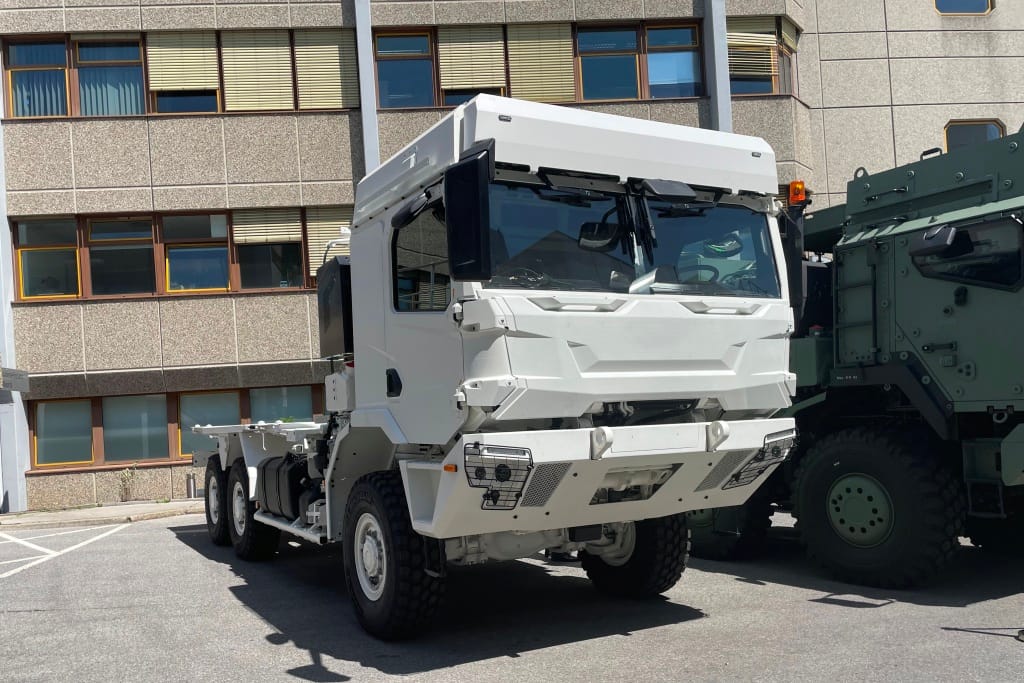
The RMMV (Rheinmetall MAN Military Vehicles) facility in Vienna recently showcased three vehicles from its assembly line, including two of the environmentally efficient 8×8 HX2 trucks and the inaugural HX3 vehicle, distinguished by its white finish. This HX3 marks the beginning of a production run of six functional prototypes that are poised to undergo rigorous testing across various European locations.
Currently, three HX3 trucks, configured in the 8×8 format—including one as a tank transporter—are already engaged in trials within the United States. These vehicles have been delivered to the Program Executive Office for Combat Support and Combat Service Support, specifically under the Project Manager for Transportation Systems, as part of the U.S. Army’s Common Tactical Truck (CTT) initiative. This program aims to replace several legacy systems, including the M915 and M1088 tactical vehicles, while leveraging commercial economies of scale to minimize procurement expenses.
Key Features and Specifications
Enhanced Performance Metrics
The HX3 boasts significant upgrades over its predecessor, powered by a robust 6-cylinder MAN D2676 diesel engine that generates 520 hp (382 kW) and delivers a noteworthy maximum torque of 2,650 Nm. This engine is designed to meet Euro V and Euro VI emission standards and is compatible with F-34 military fuel.
Key specifications include:
- Transmission Options: 7-speed fully automatic or 12-speed automated transmission, with a 2-speed transfer case.
- Vehicle Weight and Capacity:
- Gross vehicle weights:
- 6×6: 33,000 kg
- 8×8: 41,000 kg
- 10×10: 82,000 kg
- Payload capacities with a protected cab:
- 6×6: 13,000 kg
- 8×8: 21,000 kg
- 10×10: 30,000 kg
- Gross vehicle weights:
Enhanced Protection and Situational Awareness
Developed by Rheinmetall, the HX3’s armored cabin offers improved protection levels, details of which remain classified. Nonetheless, it allows for better situational awareness thanks to a larger windscreen, re-engineered for visibility on challenging terrain. The cabin roof is engineered to accommodate advanced weapon systems, including Rheinmetall’s MSSA, along with defensive measures such as the ROSY_VL screening system.
Mobility Capabilities
The HX3 retains comparable mobility parameters to the HX2, featuring:
- Approach/Departure Angles: 40°
- Gradient Handling: 60%
- Side Slope: 40%
- Fording Ability: 1.5 meters
RMMV has incorporated centralized tire inflation systems that can accommodate tires up to 16.00 R20, allowing for enhanced operational flexibility in diverse terrains.
State-of-the-Art Electronics and Cybersecurity
With a cutting-edge digital cockpit derived from MAN’s commercial platforms, the HX3 integrates an open electronic architecture that facilitates the incorporation of new subsystems and future technologies, including Advanced Driver Assistance Systems (ADAS). To address the increased risk of cyber threats due to advanced electronics, cybersecurity measures are embedded into the system architecture from the outset.
Configurability and Future Outlook
The HX3’s design enables numerous configurations tailored to specific operational needs, such as:
- Cargo transport
- Crane operation
- Tanker and tipper functionality
- Artillery and defense system deployment
Equipped with a 190 A generator, the HX3 is prepared to support sophisticated onboard systems necessary for modern combat scenarios.
Production and Testing Timeline
Currently, the RMMV plant is producing six functional test vehicles: one 6×6 and four 8×8 variants, which will engage in comprehensive mobility and Electronic Countermeasure (ECM) testing processes. The HX3 is projected to enter the market by 2027, with the German Army slated to receive initial units for operational validation, followed by a series of deliveries anticipated between 2028 and 2030.
Conclusion
The advancements embodied in the HX3 tactical vehicle represent a significant leap in military logistics capabilities, combining enhanced power, protection, and technology in a robust platform aimed at modernizing military transportation. Such developments will be crucial in addressing the evolving demands of contemporary battlefield mobility and operational effectiveness.