SATURN Rising: European Security and Defence

Evolution of Tactical Communications: The Rise of SATURN Waveform
Overview of Transition
NATO and allied nations are experiencing a significant transformation in tactical communications systems as they gradually retire two legacy systems in favor of the more advanced SATURN waveform. The Second-Generation Anti-Jam Ultra High Frequency Radio, commonly referred to as SATURN, was formalized by NATO’s Standardisation Agreement 4372 (STANAG-4372) adopted on January 1, 1992. While the details of the agreement are confidential and likely encompass critical specifications related to communication and transmission security (COMSEC/TRANSEC), the general principles of SATURN are accessible in the public domain.
Understanding Tactical Waveforms
To grasp the importance of the SATURN waveform, it’s essential to review its historical context and technological lineage. NATO forces utilize a complex array of radio waveforms tailored for various tactical communication needs, ranging from surface-to-surface to air-to-surface communication. Each waveform possesses distinct characteristics that dictate its operational capabilities, akin to how a mobile phone distinguishes text messages from voice calls.
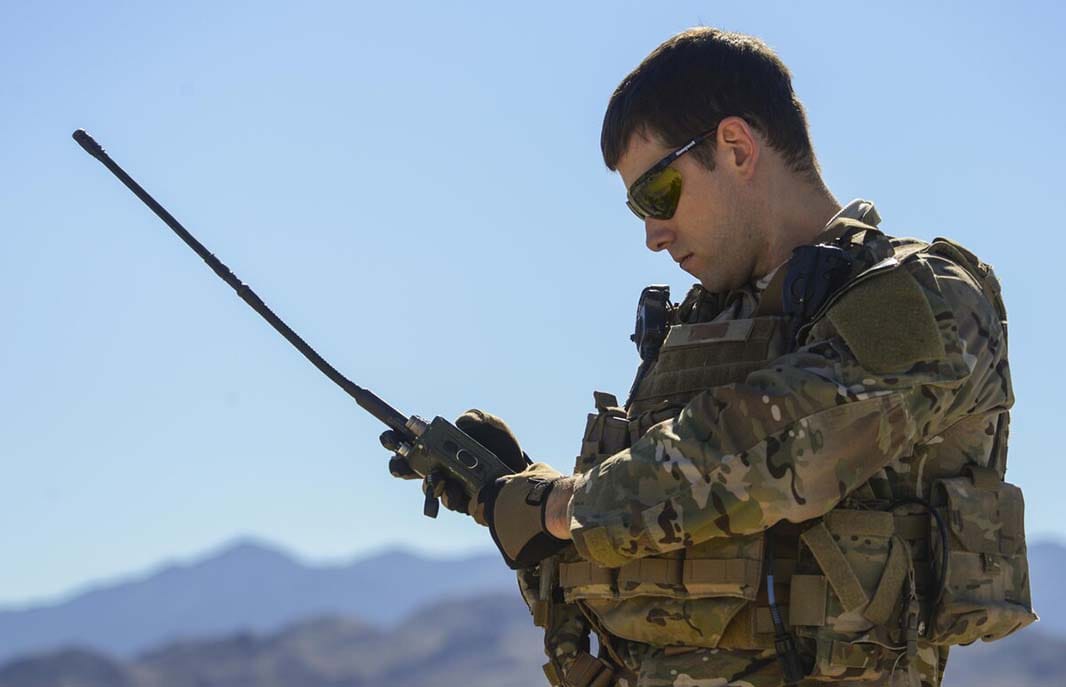
Modern military radios leverage software-defined systems, enabling operators to perform multiple functions—such as soldier positioning—at the press of a button. Prior to this evolution, operators relied on manual tuning to adapt their radios for specific frequencies.
Historical Predecessors
Overview of SINCGARS
The Single Channel Ground and Airborne Radio System (SINCGARS) was a cornerstone of communication for U.S. and allied forces beginning in the late 1980s. While SINCGARS is technically a family of radios, it exhibited a range of capabilities across 20 models designed to function within very-high frequencies (VHF) from 30 MHz to 87.975 MHz, delivering various power outputs from 5 W to 50 W, depending on the configuration.
- Operational Range: SINCGARS radios typically offer a range of 200m to 10 km, substantially extending to 40 km with the addition of a power amplifier.
- Channel Capacity: Each radio can be programmed with up to eight frequencies, allowing simultaneous communication across multiple channels.
- Resistance to Jamming: Although the single-channel mode lacked resilience against jamming, SINCGARS incorporated frequency hopping (FH) techniques to mitigate vulnerabilities.
Enhancements and Modernization
The SINCGARS system, while still in service today, has undergone significant upgrades. Notably, in response to lessons learned from recent conflict environments, enhancements have incorporated the U.S. National Security Agency’s AES-256 encryption standard. This provides fortified COMSEC/TRANSEC capabilities well beyond the existing FH methods.
THE REPLACEMENT CYCLE: SINCGARS and HAVEQUICK
While SINCGARS continues to evolve, it will ultimately be phased out in favor of the SATURN waveform, which will also supersede the earlier HAVEQUICK-I/II systems. The HAVEQUICK waveforms, introduced in the U.S. military in the 1980s, primarily focused on UHF communications for air-to-surface and surface-to-air operations.
- Waveband Coverage: HAVEQUICK operates in the 225 MHz to 400 MHz band, achieving enhanced FH capabilities compared to its predecessor.
- Synchronization Requirements: To ensure secure communication, users must synchronize radios using a common timing source, often derived from Global Navigation Satellite Systems (GNSS).
Transitioning to SATURN
SATURN emerged as a continuation of efforts by the U.S. Air Force to enhance operational capabilities through sophisticated waveform technology. After initial setbacks, the U.S. transferred SATURN to NATO, underscoring a collaborative approach to modern military communications.
Key highlights of SATURN include:
- Interoperability: Capable of performing all functions familiar to both SINCGARS and HAVEQUICK-I/II, SATURN is also designed to transmit Link-22 tactical information, significantly improving interoperability across air, land, and maritime forces.
- Robustness Against Jamming: SATURN incorporates advanced COMSEC/TRANSEC methodologies, including a high-frequency hopping mechanism, allowing it to operate effectively in electronic warfare environments.
Looking Ahead: Phasing Out Legacy Systems
Though the exact timeline for retiring SINCGARS and HAVEQUICK-I/II remains undisclosed, there are indications that the transition to SATURN could begin within the next two years. The SATURN waveform has already been operationalized by several NATO nations, marking its significance in the modernization of military communication systems.
In summary, while legacy systems like SINCGARS and HAVEQUICK-I/II have played crucial roles in past conflicts, the shift to the SATURN waveform represents a strategic advancement that promises enhanced operational capabilities and resilience in an increasingly complex electronic warfare landscape. This transition will ultimately fortify NATO and allied nations against evolving threats in future engagements.
Dr. Thomas Withington Dr. Thomas Withington is an independent specialist in electronic warfare, radar, and military communications based in France.