SOFINS 2025: Thales Electronic Warfare – Featuring EagleTracker and More

Intelligence Gathering on the Modern Battlefield: Thales’ EagleTracker
In recent years, the landscape of intelligence gathering on the battlefield has undergone a significant transformation. The growing need for real-time information has made Electronic Intelligence (ELINT) paramount for military operations. Traditionally, this intelligence extraction was reliant on cumbersome ground assets and larger aerial platforms that could traverse the electromagnetic spectrum. However, advancements in miniaturization technology have paved the way for lighter, more efficient systems. One such innovation was showcased at the SOFINS 2025 exhibition: the EagleTracker by Thales.
The EagleTracker: A New Era of Intelligence
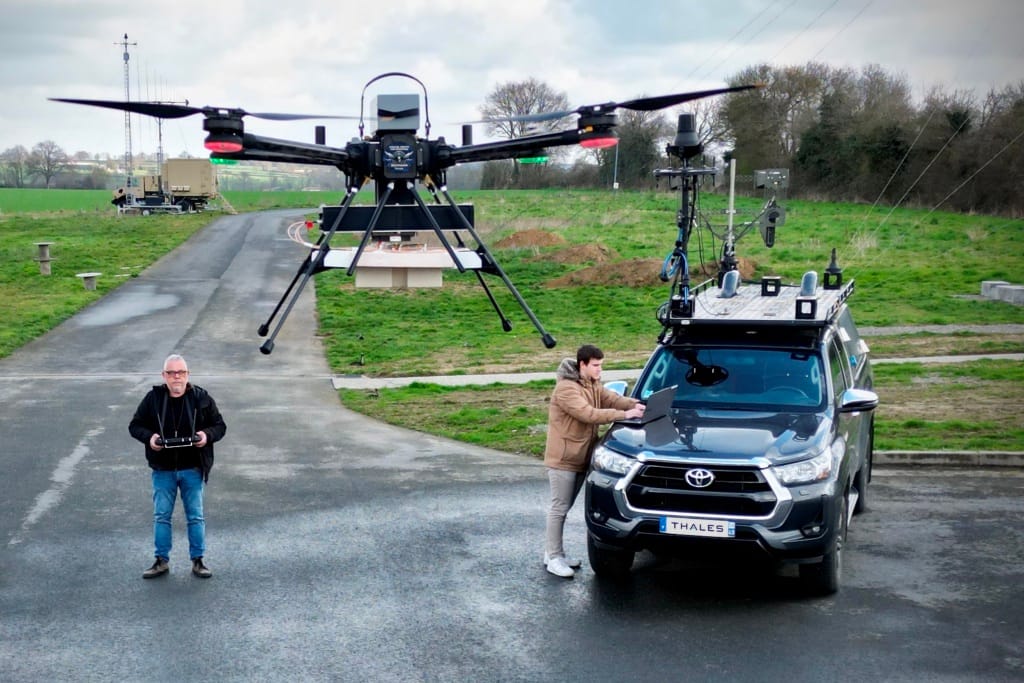
The EagleTracker is a game-changing system designed specifically for integration with lightweight aerial platforms, such as Class 1 quadcopters. With a compact design, encompassing less than 2 liters in volume and weighing approximately 4 kg, this device fosters elegance without compromising on performance. Notably, it operates with minimal power requirements of less than 40 watts, making it easily deployable for various military scenarios.
One of the system’s standout features is its capability to detect, identify, and localize telecommunications signals emitted from various sources, ranging from combat radios to drones and satellite phones. During a recent exercise with the French Special Operations Command, the EagleTracker demonstrated its prowess by intercepting signals from a soldier radio located 40 kilometers away. This ability to capture real-time voice exchanges, where clear transmissions are evident, highlights its potential for tactical advantage in operations.

Versatility in Deployment
The true strength of the EagleTracker lies in its versatility and adaptability across numerous platforms. While optimally suited for Class I and II UAVs, it can also be mounted on high-altitude platforms, such as tethered drones, ensuring continuous surveillance of potential threats. For instance, operating a tethered version at altitudes of around 100 meters is an effective strategy for monitoring enemy activities. Additionally, the system can be integrated into vehicular platforms for convoy protection, typically mounted on telescopic masts for enhanced range.
The EagleTracker offers two distinct localization modes, catering to different operational needs. The first enables the UAV to fly directly over a potential target, gathering intelligence rapidly. The second mode positions the UAV at varying distances, leveraging direction-finding techniques to pinpoint the exact emitter location. This dynamic flexibility in operations enhances situational awareness and facilitates more informed decision-making in real-time combat scenarios.
Enhancing Electronic Warfare Capabilities
Thales has crafted the EagleTracker to complement existing Electronic Warfare (EW) units significantly. In its complete configuration, it supports technical signal analysis, assisted decoding, and metadata access, thereby amplifying the intelligence-gathering capabilities of specialized units. The initial Standard 1 version, expected to be available by late 2025, will focus on operations within the UHF band. Subsequently, Thales plans to introduce the Standard 2 version, extending functionalities to VHF and SHF bands in 2026.
For non-specialized military units, Thales also presents a simplified version of the EagleTracker. While operators don’t have access to detailed intelligence content, the system improves tactical situational awareness by alerting personnel to nearby threats, thus enhancing their decision-making processes on the battlefield.

The Eclipse Jammer: A Complementary Solution
In addition to the EagleTracker, Thales showcased the Eclipse jammer at SOFINS, built from the lessons learned during the Barrage program aimed at counteracting improvised explosive devices (IEDs) in Afghanistan. With over 100 systems already deployed in the French army, the Eclipse has now evolved. It has expanded its operational scope to not only target IEDs but also unmanned aerial systems (UAS), functioning as a combined countermeasures unit for these contemporary threats.
The Eclipse jam can operate in either an active or reactive mode and can be outfitted with omnidirectional or directional antennas, enhancing its utility in diverse combat scenarios. According to Thales representatives, the system can effectively intercept incoming drones from a distance of over one kilometer. Moreover, existing units can be upgraded with new electronic modules and software modifications, allowing continuous enhancement of capabilities with changing battlefield dynamics.

A Dynamic Future for Military Intelligence
As the dynamics of warfare continue to shift, platforms like Thales’ EagleTracker and Eclipse jammer underscore the importance of maintaining a technological edge in intelligence gathering. By leveraging innovative designs that accommodate the demands of modern military operations, these systems not only redefine how intelligence is collected but also enhance the safety and effectiveness of operating units. With development trajectories set for broader capabilities in the coming years, the battle for information supremacy is becoming not only faster but significantly more precise.
This evolving landscape of military technology paints a promising picture of future operations, where agility and intelligence will be as crucial as traditional combat strategies.