
Strategic Movements of U.S. Carrier Groups Amid Growing Tensions

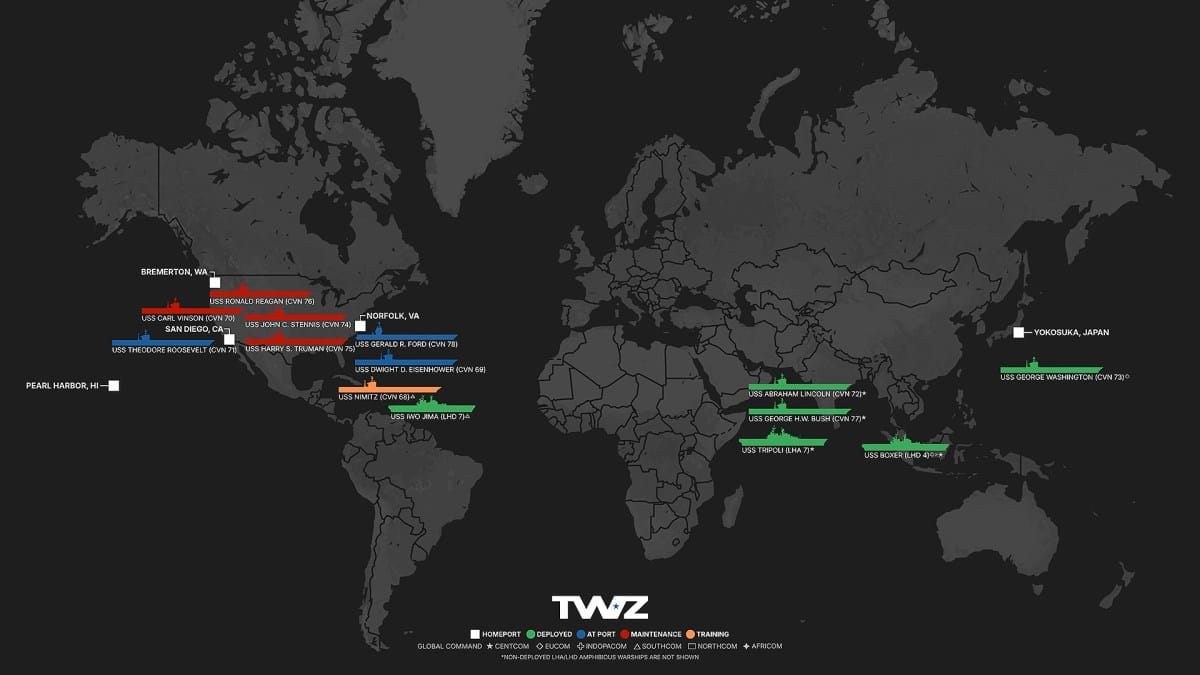
Deployment Overview
As of May 26, 2026, the USS George Washington has departed from Yokosuka, Japan, amidst increasing Chinese naval activity in the Western Pacific. This movement highlights the ongoing strategic repositioning of U.S. naval assets in response to regional security challenges. Meanwhile, the USS Nimitz has arrived in the Caribbean, indicating a broadening of U.S. naval presence across multiple theaters.
Context and Analysis
The departure of the USS George Washington coincides with heightened maritime tensions in the area, stemming from China's assertive actions in the South China Sea and surrounding waters. The U.S. Navy's decision to reposition its assets is part of a larger strategy to project power and reassure allies in the region. By maintaining a visible naval presence, the U.S. aims to deter potential aggression and signal its commitment to regional stability. The USS Nimitz's arrival in the Caribbean further underscores the adaptability of U.S. forces, allowing for tactical flexibility across various operational environments.
These deployments are not merely reactive; they reflect a calculated approach to ensuring that U.S. naval forces are poised to respond to evolving threats. The U.S. Navy's ability to operate effectively in both the Western Pacific and the Caribbean simultaneously demonstrates the operational reach and readiness of its carrier groups.
Why it matters: The movements of these carrier groups raise important questions about U.S. naval strategy and its implications for global security dynamics. Analysts will be watching how these deployments influence Chinese naval operations and whether they lead to heightened tensions in disputed maritime areas. Furthermore, the ability to project power across multiple regions reinforces the U.S. commitment to its allies and partners, which could be crucial in maintaining a balance of power in the face of rising challenges.
Sources: Twz, The War Zone, 19FortyFive, USNI News, and South China Morning Post




