Thales Storm 2: Evolving from Countering Land IEDs to Neutralizing Aerial IEDs

Emergence of the Storm 2: Adapting to the Evolving Battlefield
At the dawn of the 21st century, Western militaries faced a pressing challenge: the pervasive threat of improvised explosive devices (IEDs) strategically placed along communication routes. Initially, these threats emerged in Iraq, later proliferating across Afghanistan and beyond. The ongoing conflict between Russia and Ukraine underscores a significant evolution in warfare, particularly evident in the proliferation of drones, including first-person view (FPV) and suicide drones, which some analysts have characterized as “flying IEDs.”
Responding to New Threats
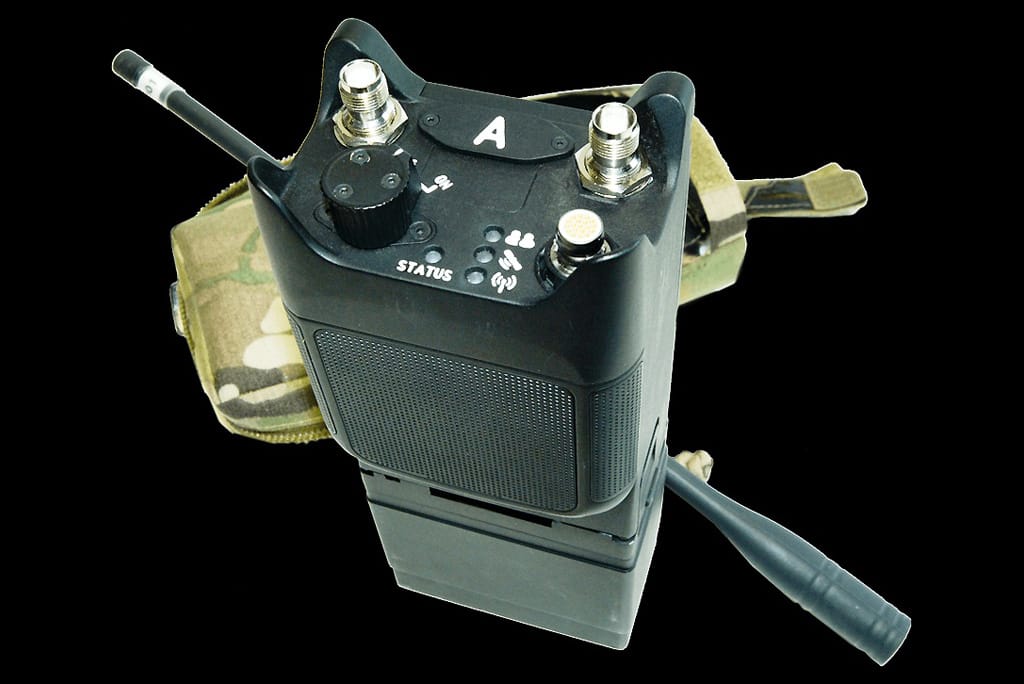
In response to the IED menace at the individual soldier level, Thales UK introduced the Storm-H system in 2012, aimed at providing protection against radio-controlled IEDs. The need for rapid adaptation to the dynamic landscape of modern conflict led Thales UK to advance its capabilities further with the development of the Storm 2, a new individual defense apparatus that retains the protective lineage of its predecessor while addressing contemporary threats.
Official Launch and Key Features
Following a preliminary introduction at DSEI 2025, Thales UK is poised to unveil the Storm 2 at the Future Soldier 2026 event in London, set for March 9-11, 2026. The Storm 2 serves as an individual cyber and electromagnetic activities node, or CEMA node, a modern rebranding of previously recognized electronic countermeasures.
- Operational Capacity: The Storm 2 can effectively neutralize FPVs and drones utilizing radio frequency (RF) communications. However, it is important to note that drones operated via fiber-optic links remain immune to jamming efforts. Nonetheless, insights from ongoing conflicts indicate that fiber-optic systems often disrupt major electronic warfare assets, suggesting a dual threat landscape.
- Decentralized Defence: The Storm 2 promotes a decentralized approach to electronic countermeasures, distributing capabilities among personnel rather than relying on centralized systems. This mitigates single points of failure and enhances the overall resilience against RF-controlled drone attacks.
Technical Specifications
The Storm 2 is notably heavier than the Storm-H, weighing approximately 2 kg compared to its predecessor’s 1,110 grams. This increased mass corresponds with enhanced power requirements to disrupt UAV communications over greater distances.
- Frequency Bands: The system operates across two major frequency bands:
- Low band: 20 MHz to 500 MHz
- High band: 500 MHz to 6 GHz
- Adaptive Intelligence: Leveraging intelligence on enemy frequency usage allows operators to concentrate jamming efforts effectively. Thales emphasizes that the Storm 2, as a software-defined system, can be rapidly reconfigured to respond to battlefield changes.
Dynamic Countermeasure Strategy
Most UAVs utilize dual RF links—one for command and another for video transmission. The command link, which typically requires an onboard receiver, is often less detectable than the video stream transmitter, which serves as a detection signal for the Storm 2. This allows for precise targeting of command frequencies, given that the drone’s receiver operates at a much closer proximity to the jamming unit than the ground control station.
- Power Output: The Storm 2 boasts an overall output power of 10 watts, evenly divided between the low and high bands. The design carefully balances range, power, and endurance to meet the rigorous demands of on-foot soldier deployment.
Operational Efficiency
The Storm 2 features selective jamming capabilities activated upon signal detection, conserving power while minimizing RF signature. Battery life remains a critical consideration, as power limitations affect all electronic devices. The Storm 2 guarantees continuous operation for up to four hours, although performance can vary based on activation frequency and external ambient conditions.
- Antenna Design: Thales is set to offer a range of omnidirectional antennas tailored for varied operational scenarios. The transition from the Storm-H to the Storm 2 includes a shift in antenna focus; while counter-IED applications prioritize horizontal propagation, counter-UAS operations necessitate antennas capable of effective vertical propagation.
Future Readiness and Potential Applications
Currently assessed at Technology Readiness Level (TRL) 7/8, Thales is actively engaging with potential customers, prepared for immediate production upon securing launch clients.
In a rapidly evolving landscape of warfare technology, the Storm 2 stands as a significant advance, equipping front-line personnel with vital capabilities to meet modern aerial threats. As military operations increasingly confront asymmetric warfare challenges, systems like the Storm 2 are critical to safeguarding operational integrity and effectiveness on the battlefield.