U.S. Accelerates MADIS Counter-Drone Deployment for Marines to Address Low-Cost UAV Threats

Advancements in Marine Air Defense: The MADIS Counter-Drone System
Overview of MADIS Deployment
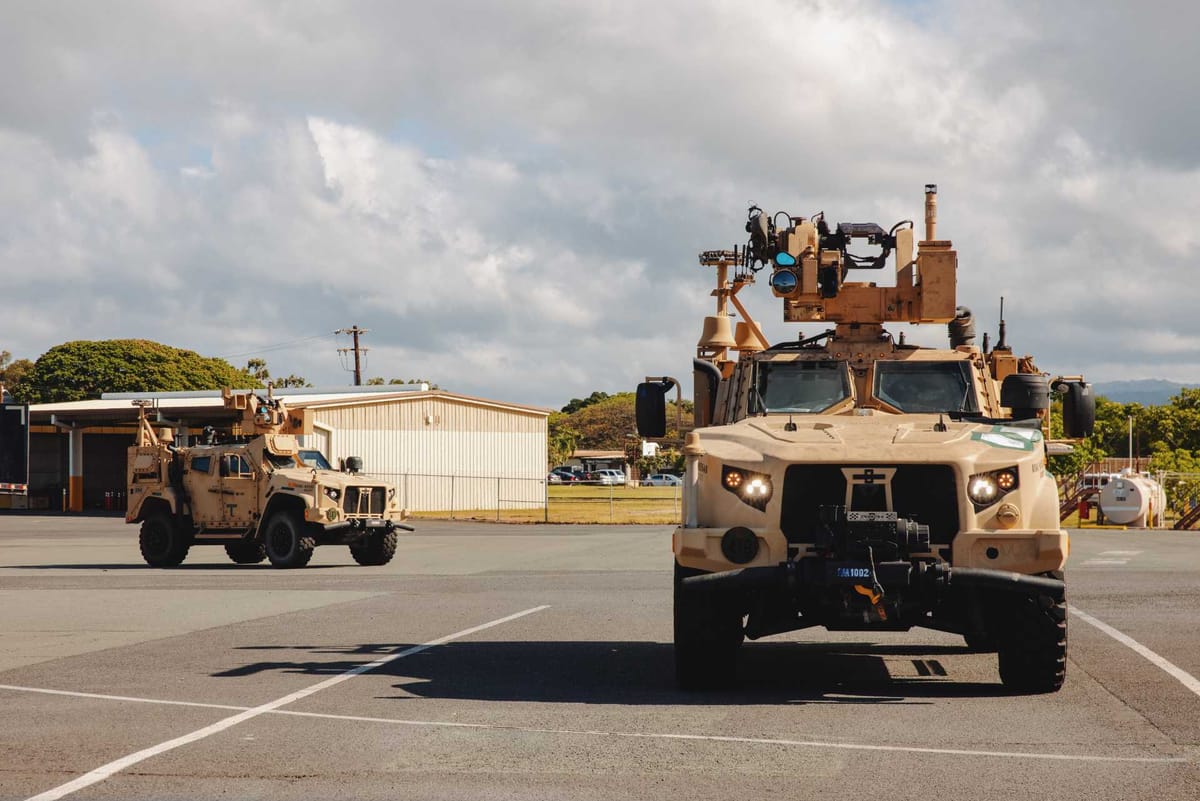
The U.S. Naval Information Warfare Center Atlantic is expeditiously deploying the Marine Air Defense Integrated System (MADIS) across Marine units, with a focus on countering low-cost aerial threats through 2025. This initiative addresses a significant vulnerability in contemporary battlefield dynamics, offering frontline forces a mobile, real-time defense mechanism capable of detecting, jamming, and neutralizing drones.
Integrated Defense Capabilities
Configured on Joint Light Tactical Vehicles (JLTVs), MADIS provides a comprehensive counter-UAS (Unmanned Aerial System) capability that aligns with the operational needs of expeditionary forces. The system integrates multiple components, including:
- Sensors: For detection and tracking.
- Electronic Warfare Systems: For jamming and disruption.
- Direct-Fire Weapons: For kinetic engagement.
This synergy enables Marine units to effectively identify and counter low-altitude aerial threats while ensuring operational mobility under persistent surveillance.
Operational Deployment and Structure
MADIS operates in a two-vehicle formation, each fulfilling distinct roles within a multi-layered short-range air defense network.
- Weapons Carrier Vehicle:
- Houses a 30mm automatic cannon and Stinger missile launchers for engaging aerial threats.
- Effective against Group 1 and Group 2 UAVs, including quadcopters and loitering munitions.
- Capable of engaging multiple targets rapidly, making it well-suited for counter-swarm scenarios.
- Electronic Warfare Vehicle:
- Equipped to detect, classify, and disrupt enemy drones.
- Continuously scans the electromagnetic spectrum to identify control and navigation signals.
- Can execute jamming operations against hostile aerial systems to prevent them from reaching engagement range.
Enhancing Reaction Times and Threat Management
The weapons carrier operates using integrated onboard sensors and fire-control systems. These allow for immediate detection and engagement of threats, either autonomously or via cueing from the electronic warfare vehicle. This interoperability enhances:
- Reaction Times: Rapid detection-to-engagement capabilities facilitate timely responses to aerial threats.
- Threat Management: Prioritizing targets based on identified risk factors ensures efficient allocation of kinetic and electronic resources.
Lessons from Recent Conflicts
The development of MADIS reflects key lessons learned from recent military engagements—particularly in Ukraine and the Middle East—where low-cost UAVs were exploited for surveillance and precision strikes. It is evident that control over low-altitude airspace is paramount for maintaining combat effectiveness and operational maneuverability.
Future Developments and Strategic Implications
Looking ahead, MADIS represents an initial increment in capabilities that will be expanded through future enhancements, including:
- Improved sensor functionalities.
- Enhanced electronic countermeasures against advanced and autonomous threats.
- Better integration with the broader Marine Corps and joint air defense frameworks.
Its modular design permits rapid updates of mission-critical technologies, ensuring its alignment with the evolving landscape of unmanned warfare.
Conclusion
Strategically, MADIS enhances the Marine Corps’ operational capacity within contested environments, re-establishing control over low-altitude airspace and promoting force protection. By amalgamating electronic warfare capabilities with direct-fire solutions, MADIS not only bolsters the efficacy of distributed maneuver but also ensures sustained operational effectiveness in theaters where aerial threats are increasingly prevalent.