U.S. Marine Corps Enhances Indo-Pacific Operations Through Osprey Training with Indonesia

Strengthening Amphibious Capabilities
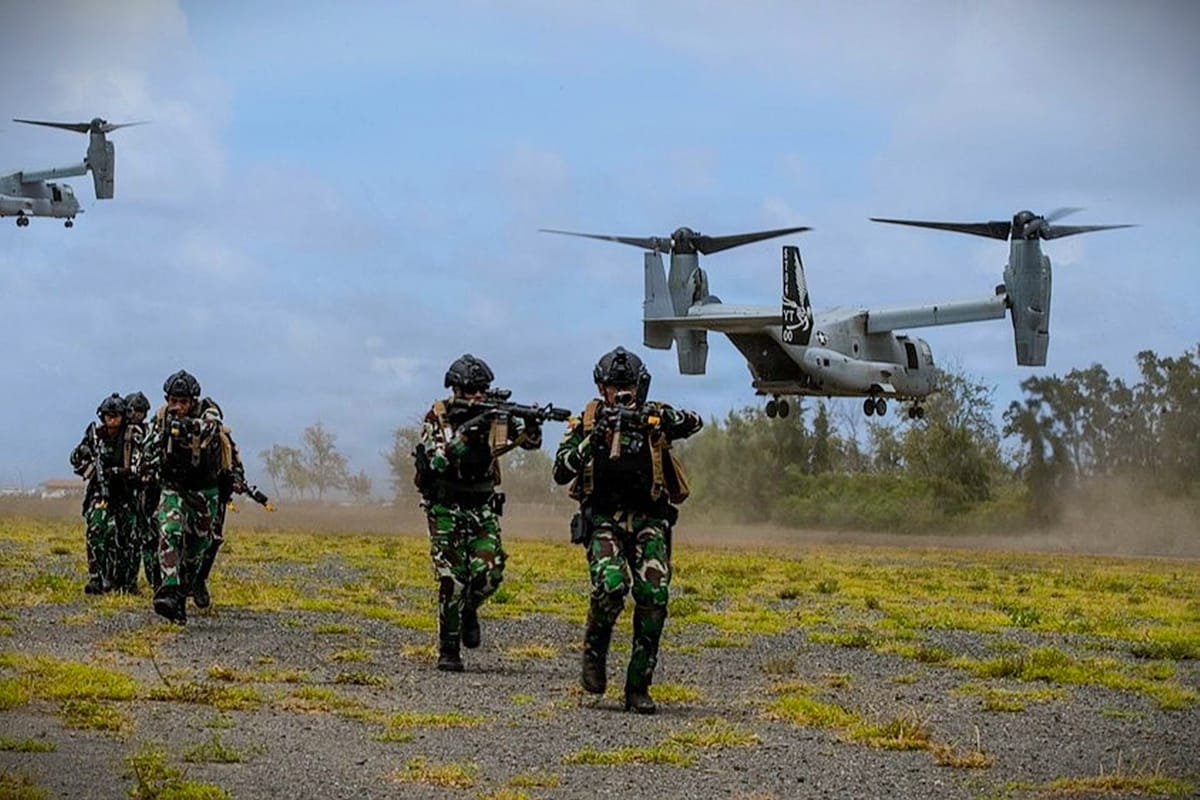
During RIMPAC 2026, U.S. Marine Corps MV-22B Ospreys successfully inserted Indonesian Marines, showcasing an important step in enhancing Indo-Pacific amphibious interoperability. This joint training exercise highlights the commitment of the U.S. to strengthen partnerships in the region amid increasing geopolitical tensions.
Context and Implications
The integration of the Osprey into training operations with Indonesian forces signifies a broader strategy of the U.S. to enhance regional military cooperation. As tensions in the Indo-Pacific escalate, particularly with regard to maritime security, exercises like RIMPAC serve not only to improve operational readiness but also to foster trust and collaboration among allied forces. The U.S. Marine Corps' use of the MV-22B Osprey, known for its versatility in both vertical takeoff and landing, enhances the capability of both U.S. and Indonesian forces to conduct effective amphibious operations.
The developing partnership between the U.S. and Indonesia can be seen as part of a larger strategy to counterbalance the influence of other regional powers. By increasing the operational readiness and interoperability of allied forces, the U.S. aims to ensure a stable security environment in the Indo-Pacific.
Why It Matters
This recent training exercise raises the question of how future engagements will further shape the operational landscape in the region. Analysts will be watching closely as enhanced cooperation may lead to more coordinated responses to emerging threats. The implications of these collaborative efforts will likely have lasting impacts on the security dynamics of the Indo-Pacific, reinforcing the U.S. commitment to its allies while addressing regional challenges.
Sources: Armyrecognition, DVIDS, Indo-Pacific Defense FORUM, pacom.mil, and ANTARA News