U.S. Military Enhancements Against Drone Threats and Defense Industry Collaborations

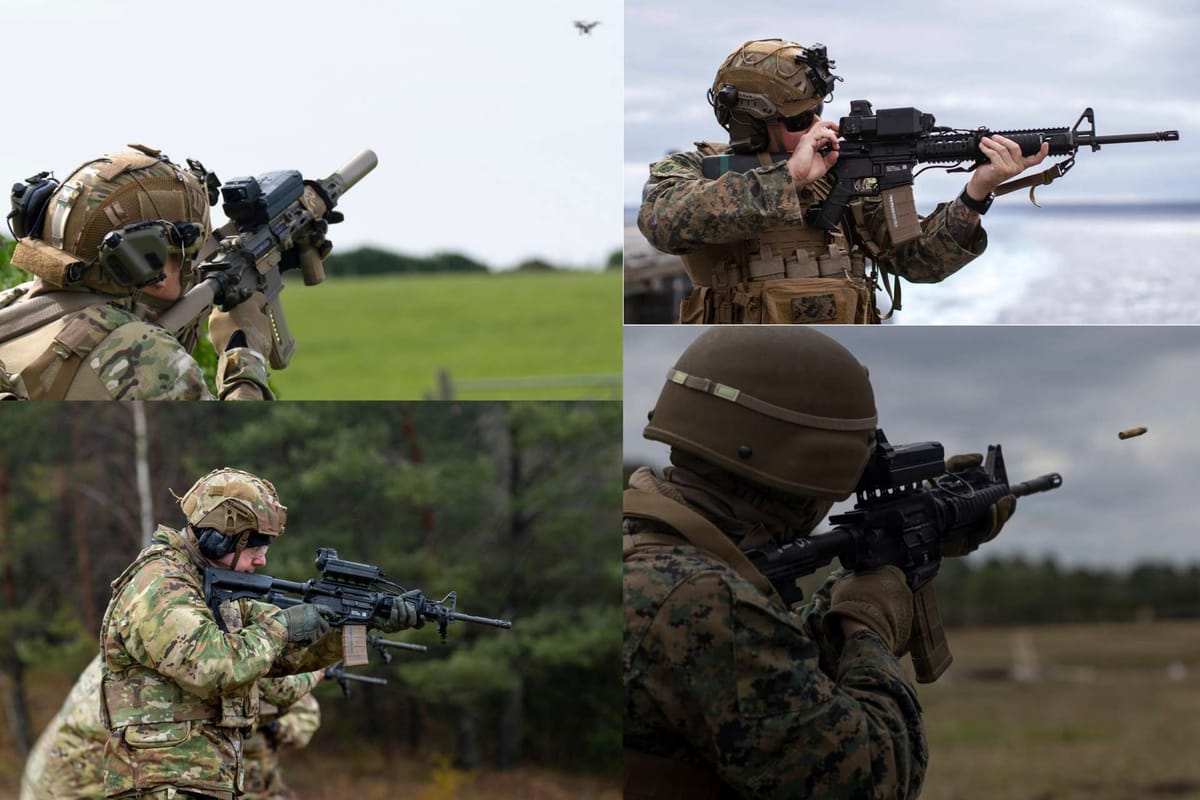
The evolving landscape of military threats has prompted significant advancements in U.S. defense capabilities. As drone technology proliferates, the U.S. Army is taking proactive measures to counter this growing risk with the expansion of the SMASH 2000LE fire control systems. These systems are designed to provide soldiers with a direct counter-drone capability specifically targeting first-person view (FPV) threats.
What happened
The U.S. Army’s initiative involves the integration of artificial intelligence within the SMASH 2000LE systems, enhancing their effectiveness against drone incursions. This development underscores a strategic shift in military operations, focusing on immediate and direct responses to aerial threats.
In parallel, the Pentagon is deploying laser and microwave counter-drone systems across five U.S. military bases. This deployment is aimed at testing advanced technologies in real-world scenarios to evaluate their effectiveness against the increasing number of drone threats faced by military installations.
The strategic calculus
The decision to enhance drone defense capabilities is driven by a clear recognition of the risks posed by unmanned aerial vehicles (UAVs). The integration of various technologies reflects a comprehensive approach to defense, combining both ground-based systems and aerial countermeasures. Key elements of this strategy include:
- Utilization of AI-driven fire control systems for precise targeting.
- Deployment of non-kinetic solutions, such as laser and microwave systems, to neutralize threats.
- Testing across multiple military bases to gather data and refine operational protocols.
This raises the question of how effective these technologies will be in diverse operational environments, especially as adversaries continue to innovate in drone technology. Analysts will be watching the outcomes of these tests closely to assess their potential for broader application within the military.
Industry fallout
As the U.S. military ramps up its counter-drone initiatives, the defense industry is also witnessing shifts in partnerships and collaborations. In Finland, the defense contractor Patria is set to formalize a cooperation deal with the city of Hämeenlinna to strengthen the local defense industrial base. This move highlights the importance of regional collaborations in bolstering defense capabilities.
Such partnerships are essential not only for technological innovation but also for enhancing local economies and fostering a skilled workforce. The implications of these developments extend beyond immediate military applications, influencing broader defense strategies and industrial growth.
In summary, the U.S. military's focus on counter-drone technologies, combined with strategic partnerships in the defense sector, positions it to better address current and future threats. The developments regarding the SMASH 2000LE systems and the Pentagon's testing of laser and microwave weapons signify a robust commitment to maintaining superiority in the face of evolving challenges.
Sources: Armyrecognition, Thedefensepost, Army Recognition, The Defence Blog, and Task & Purpose