Ukraine's Drone Assault on Russia: Casualties and Implications

Overview of the Attack
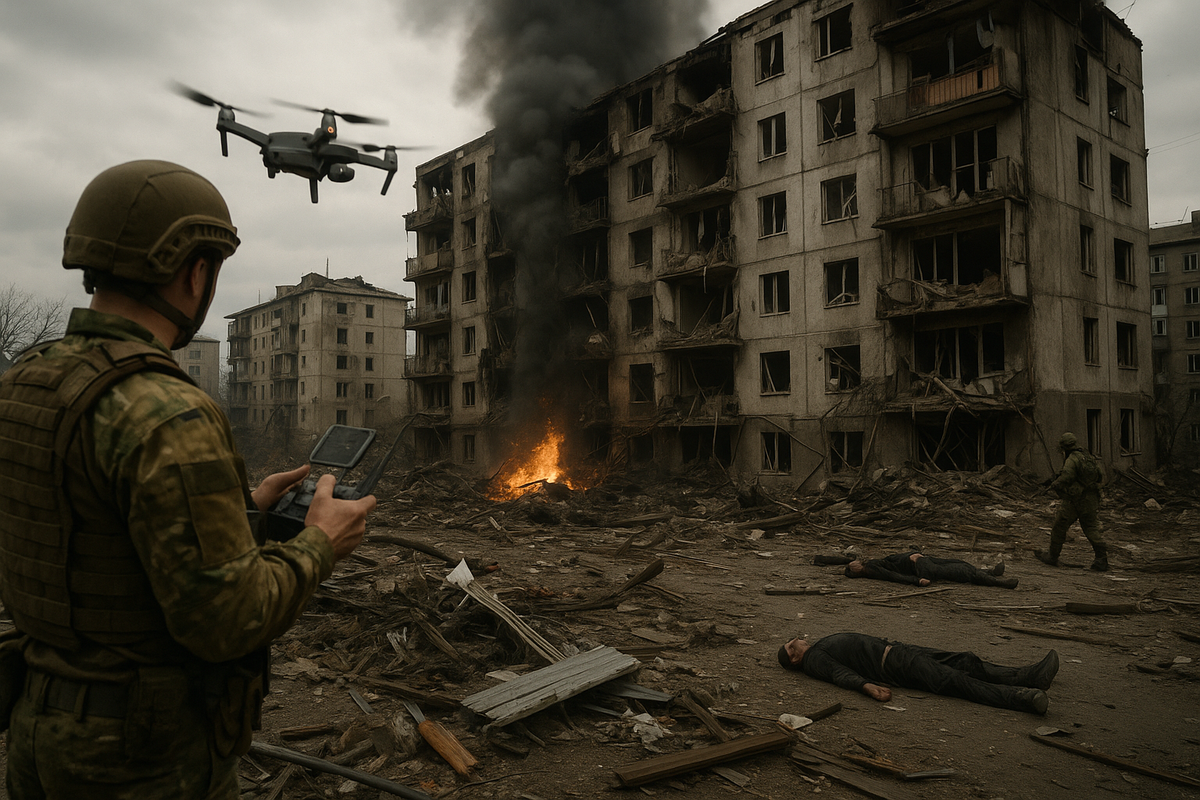
A significant escalation in the ongoing conflict between Ukraine and Russia occurred recently when Ukraine launched an assault involving more than 500 drones targeting Russian territory. This operation resulted in the deaths of three individuals in the Moscow region, according to Russian authorities. The scale of this drone strike indicates an intensification of Ukraine's military capabilities and strategies in the face of the ongoing conflict.
Context and Analysis
The use of drones in warfare has become increasingly prevalent, with both sides of the Ukraine-Russia conflict leveraging this technology to gain strategic advantages. Ukraine's coordinated drone attack reflects its growing reliance on unmanned aerial vehicles (UAVs) as a means of asymmetric warfare. This method allows for significant operational reach while minimizing the risk to personnel. The strike's timing may suggest a calculated response to recent developments in the conflict, possibly aimed at demonstrating Ukraine's resilience and military innovation.
Furthermore, the targeting of civilian and military assets within Russia raises questions about the potential for further escalation of hostilities. The Kremlin's response to such provocations will likely shape the conflict's trajectory in the coming months, as it may lead to retaliatory measures that could involve increased military operations or enhanced defensive strategies.
Why it Matters
This drone attack underscores the evolving nature of modern warfare, particularly the effectiveness of UAVs as tools for both strategic surprise and psychological impact. Analysts will be watching how Russia responds to this significant breach, and whether it will alter its military posture in the region. The implication is that as both sides continue to develop their drone capabilities, the conflict may become increasingly unpredictable, with potential ramifications for broader regional stability.
Sources: Thedefensepost, The Moscow Times, Atlantic Council, Bangkok Post, and The Sunday Guardian