UMEX 2026: Kalashnikov Introduces Upgraded Goliath and Karakurt Mini-UAVs

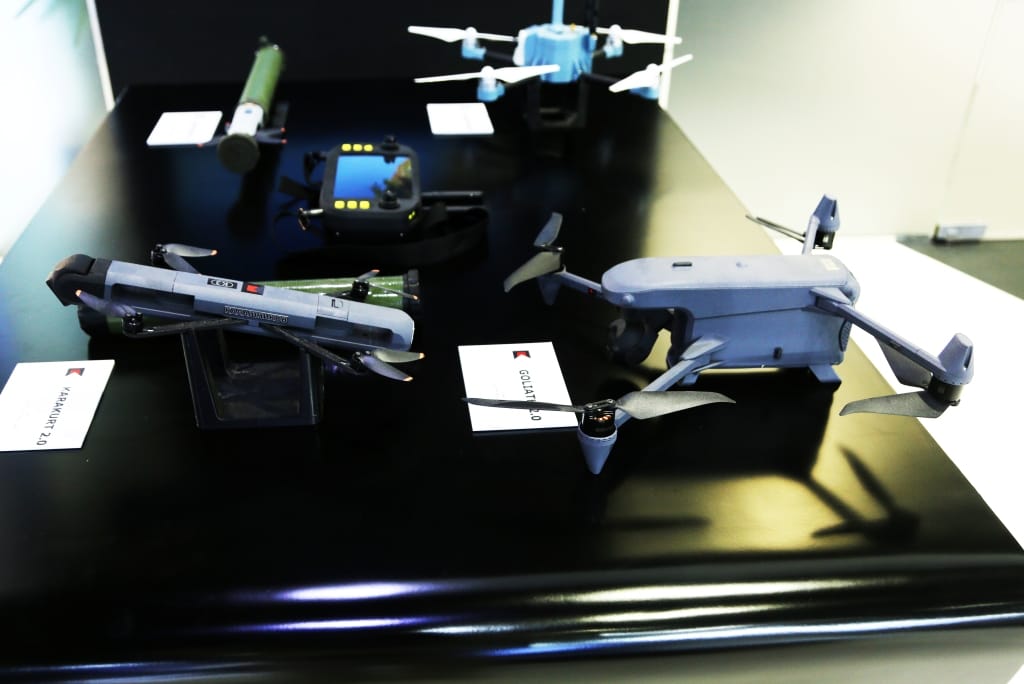
Advancements in Mini-UAV Technology: The Goliath 2.0 and Karakurt 2.0
At the recent unmanned systems exhibition in Abu Dhabi, Kalashnikov Concern introduced its significantly enhanced small rotary-wing unmanned aerial vehicles (UAVs), the Goliath 2.0 and Karakurt 2.0. These mini-UAVs represent an evolution informed by operational experiences from recent combat scenarios in Ukraine.
Goliath 2.0: Enhanced Reconnaissance Capabilities
The Goliath 2.0 is engineered for advanced reconnaissance operations. Its refined capabilities include:
- Target Detection and Tracking: The system excels in locating, identifying, and monitoring both static and mobile targets.
- Resilient Communication: A jam-resistant radio communication system incorporates sophisticated encryption algorithms and pseudo-random frequency hopping, allowing effective operations in electronic warfare environments.
- Operator Assistance: Equipped with a suite of supportive technologies, it features:
- Optical positioning
- Target acquisition
- Tracking and holding functions
- Emergency alerts
Additionally, the Goliath 2.0 is integrated within a joint information exchange framework, facilitating seamless data transmission to command centers.
Technical Specifications:
- Optical-Electronic Module:
- High-resolution, three-axis stabilized daytime camera with both telephoto and wide-angle lenses
- 30x optical zoom alongside a thermal imaging camera (640 x 480 pixels), supplemented by 4x digital zoom
- Safety Features: Incorporates obstacle detection and threat alert systems.
- Performance Metrics:
- Maximum takeoff weight: 1,500 grams
- Flight endurance: up to 40 minutes
- Operational range: up to 10 kilometers
- Maximum altitude: 500 meters
Karakurt 2.0: Versatile and Portable
The Karakurt 2.0 mini-UAV combines portability with high-performance reconnaissance functionalities. Key features include:
- Compact Design: This UAV’s size allows it to be easily transported on a soldier’s equipment or within a backpack.
- Optronic Reconnaissance Module:
- Equipped with a high-definition daytime camera (1920 x 1080 pixels) offering 10x zoom
- A thermal camera (640 x 480 pixels) with added thermal sensitivity and 4x digital zoom, mounted on a gyrostabilized gimbal
Tactical Advantages:
- Continuous Operation: The drone’s quick-change lithium polymer battery enables sustained reconnaissance throughout its mission duration.
- Launch Mechanism: Designed for rapid deployment, the Karakurt 2.0 can be launched from a protective transport container, safeguarding it against environmental factors.
- Ease of Use: The operator can initiate flight while on the move, whether walking, running, or from a vehicle.
Performance Metrics:
- Weight: 500 grams
- Flight Duration: Up to 20 minutes
- Operational Range: 2,500 meters
- Altitude: Capable of reaching 250 meters
Strategic Implications
The introduction of the Goliath 2.0 and Karakurt 2.0 underscores a significant advancement in mini-UAV technology, with implications for modern battlefield reconnaissance. These systems not only enhance situational awareness for military operators but also reflect an adaptive response to emerging challenges in electronic warfare and operational environments. Enhanced capabilities in target tracking and secure communication signal a shift towards more integrated and effective unmanned operations, aligning with contemporary defense strategies.
By continuing to explore innovations in UAV technology, defense organizations can maintain a strategic edge in future conflicts.