US and Iran Clash Over Status of Iranian Warship Sunk by Submarine

Diverging Accounts of Iranian Warship Sinking Escalate Tensions
Overview of the Incident
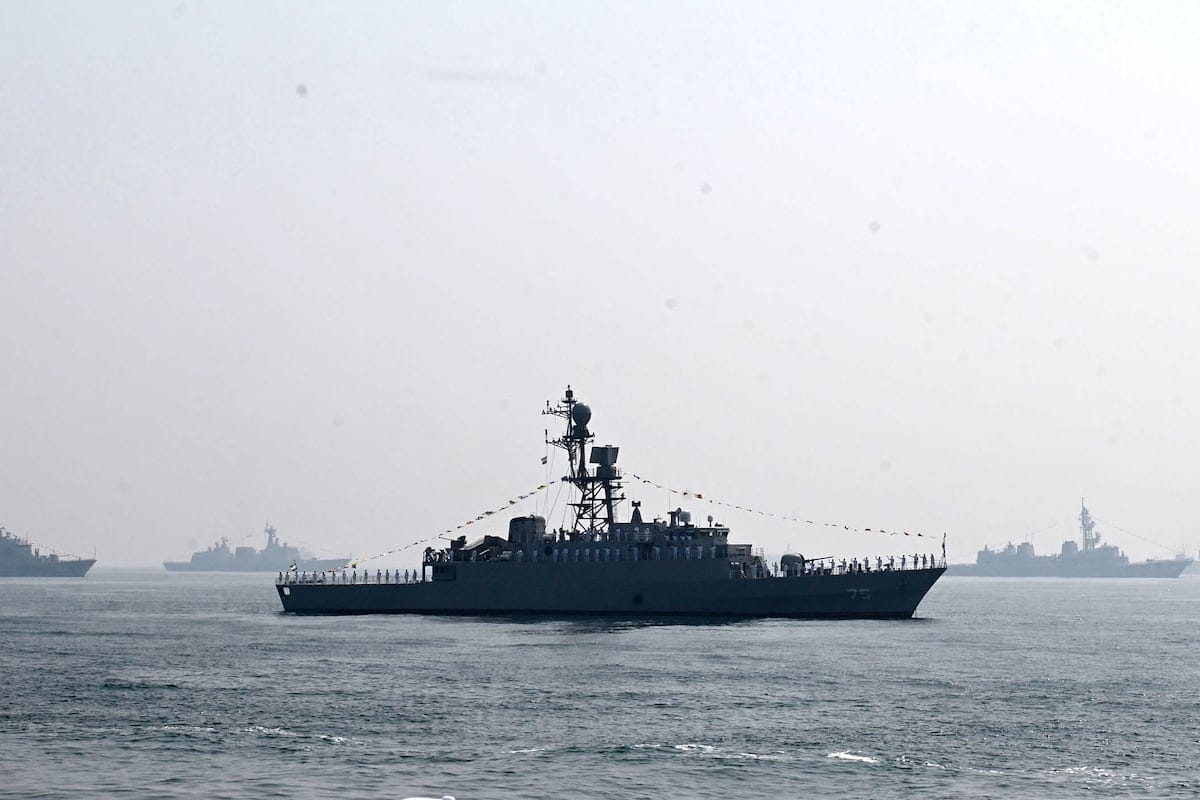
On March 4, a U.S. submarine undertook a torpedo attack that resulted in the sinking of the Iranian warship IRIS Dena in the Indian Ocean, just off the coast of Sri Lanka. This event has prompted conflicting narratives from the United States and Iran, with each nation asserting differing claims regarding the ship’s operational status at the time of the incident.
U.S. Position
The United States Indo-Pacific Command (INDOPACOM) firmly dismissed Iran’s assertion that the IRIS Dena was unarmed during the submarine attack. In a statement made on social media, INDOPACOM characterized Iran’s claim as fundamentally incorrect.
- Context of the Attack: U.S. Defense Secretary Pete Hegseth referred to the IRIS Dena as a “prize ship” that “died a quiet death,” implying a strategic victory in U.S. military operations.
Iranian Claims
Contrarily, Iranian officials have maintained that the IRIS Dena was not equipped with weapons and was on a noncombat mission, returning home after participating in a multinational naval exercise.
- Official Statements: Iranian Deputy Foreign Minister Saeed Khatibzadeh emphasized that the vessel was invited by India for a ceremonial role and accused the U.S. of attacking a defenseless ship.
Analysis of Vessel Armament
An Indian naval official, speaking on condition of anonymity, noted that the IRIS Dena was not “entirely unarmed,” as it had engaged in drills alongside other naval forces.
Expert Insights
- Protocol During Exercises: Analysts, including Rahul Bedi, argue that vessels in such exercises are generally required to be unarmed or carry only limited non-offensive ammunition. This stipulation is standard practice among many navies, including India’s.
- Operational Norms: “The precondition of participating in such a parade is that the vessel comes unarmed,” said Bedi. This serves to mitigate risks during friendly naval engagements.
Aftermath and Broader Implications
The sinking of the IRIS Dena has exacerbated geopolitical tensions, highlighting the spillover of the ongoing U.S.-Israeli-Iran conflict beyond its traditional boundaries in the Middle East.
- Human Casualties: Following the attack, the Sri Lankan navy successfully rescued 32 crew members while recovering 87 bodies, raising humanitarian concerns.
- Participating Navies: An official statement from India’s defense ministry post-exercise noted that live firing occurred during the naval drills, including surface gun and anti-air operations, indicating that other vessels were engaged in militaristic activities.
Broader Context
The incident illuminates the increasingly volatile maritime landscape in the Indian Ocean, particularly as two additional Iranian vessels, IRIS Bushehr and IRIS Lavan, seek refuge in Sri Lanka and India after their operations were impacted.
Strategic Considerations
This event serves as a crucial case study for defense experts examining the evolving dynamics of naval engagements and the operational readiness of fleets in multinational exercises. The implications for maritime security, regional alliances, and military strategy merit ongoing scrutiny as tensions continue to escalate.
As geopolitical stability in this region remains precarious, the IRIS Dena sinking epitomizes the complex interplay of military power, international relations, and operational protocols among maritime forces.