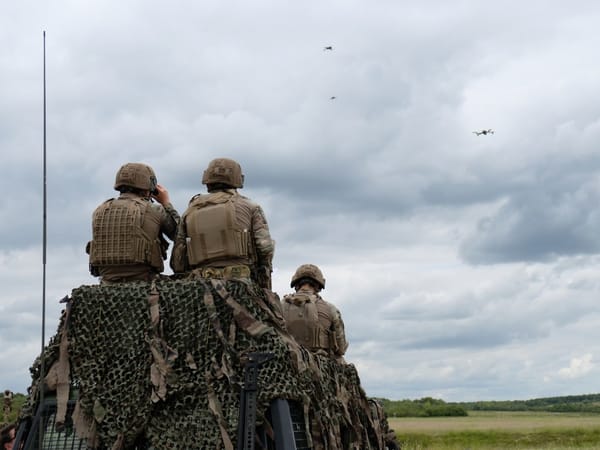
The US Army's Discreet Deployment in the Philippines


U.S. Army’s Strategic Rotation in the Philippines: Implications and Context
Overview of the New Rotational Presence
The U.S. Army has established a rotational deployment in the Philippines, commencing in July 2025. This presence, which consists of approximately 50 personnel operating under the aegis of U.S. Army Pacific, signals a strategic shift in military engagement with the archipelago. This development comes amidst rising geopolitical tensions in the Asia-Pacific region and reflects a nuanced approach to U.S. foreign military policy.
The Shift in Military Engagement
Colonel Isaac Taylor, the chief of public affairs for U.S. Army Pacific, emphasized that this rotational deployment signifies a transition from previous, less frequent engagement models to a more durable and sustained military partnership with the Philippine Army. The mission focus includes:
- Strengthening army-to-army alliances.
- Enhancing military infrastructure.
Historical Context
The Philippines has a complex history with U.S. military presence. After the closure of significant American bases in the early 1990s, U.S. forces maintained a limited presence under specific bilateral agreements. However, the new Task Force Philippines, announced by U.S. Defense Secretary Pete Hegseth and Philippine Defense Secretary Gilbert Teodoro Jr., represents a formal consolidation of military operations intended to bolster regional security, particularly in relation to China’s assertive stance in the South China Sea.
Enhancing Regional Security
The formation of Task Force Philippines is rooted in the necessity to deter Chinese expansionism. Analysts suggest that this initiative may contribute to stabilizing tensions in the contested maritime zones, characterized by multiple overlapping territorial claims, including those from Vietnam, Malaysia, Brunei, and Indonesia.
The Role of the Army in Indo-Pacific Security
Historically, the U.S. Navy and Air Force have played dominant roles in Indo-Pacific operations due to their capabilities and geographical advantages. Katherine Kuzminski from the Center for a New American Security argues that the Army’s new task force highlights its vital contribution to joint operational effectiveness in regional security contexts. Gregory Poling, Director of the Southeast Asia Program at the Center for Strategic and International Studies, asserts that this rotation formalizes existing engagement patterns that had evolved over years of training exercises and military interactions.
Strategic Communication and Collaboration
The establishment of this task force is poised to enhance communication lines and day-to-day interactions between U.S. military personnel, particularly those in ground forces, and their Philippine counterparts. Stacie Pettyjohn from the Center for a New American Security points out that the timing of military capability introductions and incremental relationship-building efforts are crucial for effective collaboration.
Implications for U.S.-China Relations
While this rotational force represents a modest step, it is not without potential risks. Incremental advancements in military partnership often invite scrutiny and criticism from Beijing. However, experts believe that these subtle enhancements are unlikely to provoke significant diplomatic backlash from China.
Conclusion
The U.S. Army’s operational rotation in the Philippines exemplifies a strategic recalibration aimed at fostering sustained military collaboration in a rapidly evolving security landscape. As both nations strengthen their defense ties, this initiative could serve as a deterrent against regional hostilities while also reinforcing the U.S. commitment to a rules-based international order in the Indo-Pacific. Source link