US Army to Test Missile Launcher in Australia Amidst Tensions with China

U.S. Army’s Typhon Missile System: A New Era of Long-Range Capability
The U.S. Army is poised to demonstrate its latest advancements in military technology this summer with a live firing of the Typhon missile system during the Talisman Sabre exercise in Australia. This marks an important milestone as it will be the first time this long-range strike weapon is deployed on foreign soil, signifying a strategic shift in military readiness and capability in the Indo-Pacific region.
What is the Typhon Missile System?
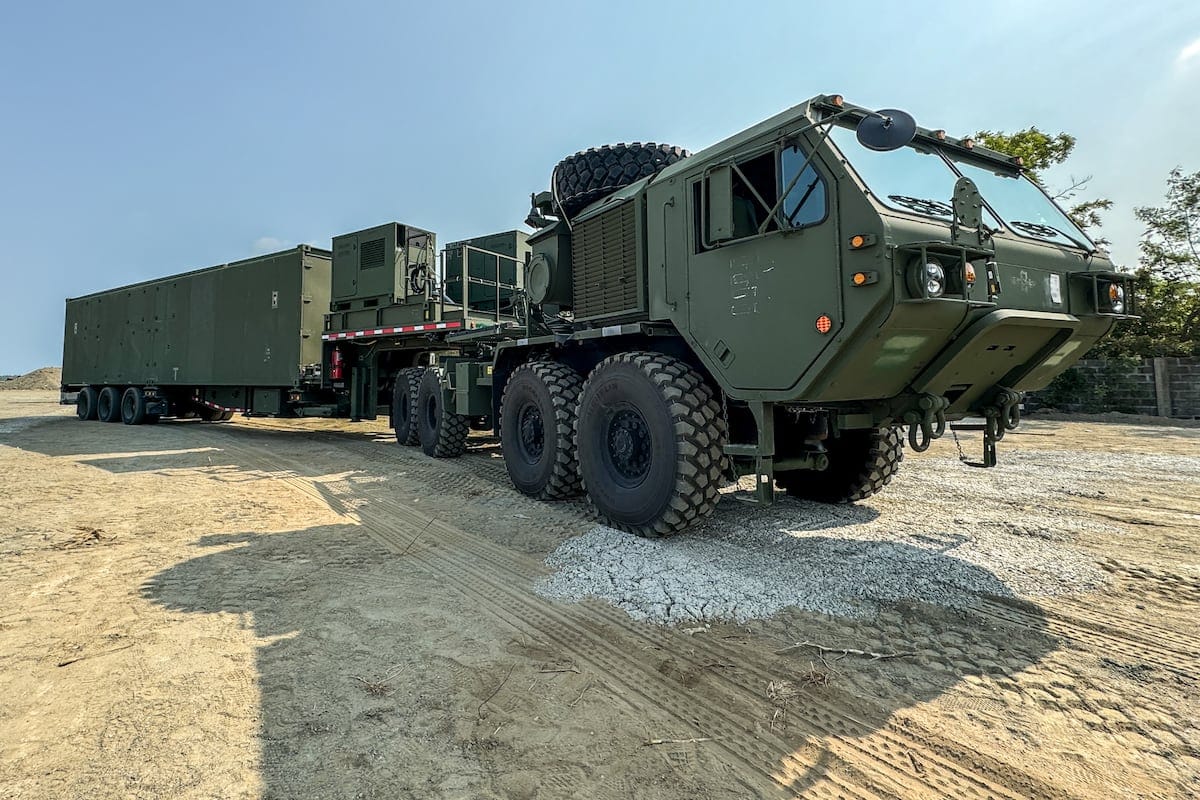
The Typhon missile system, also known as the Mid-Range Capability (MRC) missile system, is an innovative platform designed to enhance the U.S. Army’s long-range strike capabilities. Developed by Lockheed Martin, it features a vertical launch system that utilizes both the Navy’s Raytheon-built Standard Missile-6 (SM-6) and Tomahawk missiles. This system allows for a striking range between 500 to 2,000 kilometers, providing the capacity to engage a variety of high-value targets over significant distances.
Upcoming Live Firing Exercise
Maj. Gen. Frank Lozano, the program executive officer for missiles and space, confirmed that the second battery of the Typhon system will be deployed to Australia for the Talisman Sabre exercise. This event is not only a display of military prowess but also acts as a crucial training opportunity for U.S. forces in collaboration with allied nations. The exercise will involve the firing of an SM-6 missile from the Typhon system’s launcher, providing a real-world test of its capabilities.
Previous Deployments and Regional Impact
Before the deployment to Australia, the first Typhon battery made headlines when it was transported to Luzon, Philippines, in early 2024 as part of the Salaknib exercise. This marked a significant step in the U.S. Army’s Indo-Pacific strategy, seen as vital for countering regional threats, notably from China. Despite remaining in the Philippines, no live-fire exercises have taken place with the Typhon system there, as plans for further exercises in the region are still under consideration.
The modest reaction from China regarding the Typhon’s deployment underscores the delicate balance of military power within the Indo-Pacific. The mobilization of these missile systems is viewed by some regional actors as a direct challenge to their influence, making the Typhon’s operational capabilities all the more critical.
Logistics and Transport
The logistics involved in deploying the Typhon system are impressive. The system traveled over 8,000 miles from Joint Base Lewis-McChord, Washington, to its destination in the Philippines via a C-17 Globemaster cargo aircraft in just 15 hours. Such rapid deployment capabilities highlight the U.S. Army’s focus on mobility and readiness in response to urgent operational requirements, ensuring they can be agile in various theaters of operation.
Structure and Integration of Typhon Batteries
The U.S. Army’s integration of the Typhon system reflects a broader strategic initiative involving the establishment of Multidomain Task Forces (MDTFs). Initially, the first battery is part of the 1st MDTF in the Pacific, while the second battery is designated for the 3rd MDTF. These formations are tailored to meet specific military needs in distinct operational theaters, with plans for a total of five MDTFs; three will be focused on the Pacific theater while others will operate in Europe and remain on standby in reserve at Fort Bragg, North Carolina.
This modular military structure allows for rapid adaptation and deployment, ensuring that U.S. forces are prepared to engage promptly in various scenarios.
Future Developments
The U.S. Army is not slowing down its efforts to enhance its missile capabilities. Plans are already underway for the third battery of the Typhon system, which will be sent to support the 2nd MDTF in Europe, alongside the establishment of a fourth battery for enhanced operational capacity.
As the geopolitical landscape evolves, the U.S. Army’s deployment of the Typhon missile system signifies a proactive approach to maintaining a competitive edge and ensuring national security interests are upheld across the Indo-Pacific region. The upcoming live-fire exercise in Australia will undoubtedly be a pivotal moment in showcasing this strategic capability.
With these developments, the conversation about missile technology and defense capabilities continues to be vital in understanding the complexities of modern warfare and the ongoing efforts to safeguard allies and keep adversarial forces in check.