US Army's Stealthy Deployment in the Philippines


U.S. Army’s Rotational Presence in the Philippines: Strategic Implications and Context
The recent confirmation of a rotational U.S. Army presence in the Philippines, beginning in July 2025, signals a notable shift in U.S. engagement strategies within Southeast Asia. This development, albeit seemingly minor, holds considerable significance in the context of regional security dynamics.
New Deployment Framework
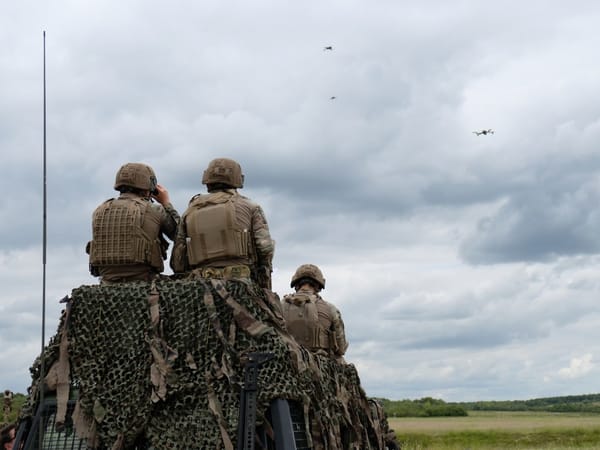
The U.S. Army has established a contingent comprising approximately 50 personnel, designed to operate within the framework of U.S. Army Pacific. This deployment, now termed “Task Force Philippines,” is intended to facilitate ongoing engagement and deepened collaboration with Philippine military forces. Colonel Isaac Taylor, chief of public affairs for U.S. Army Pacific, emphasized that while these troops are not permanently stationed, this initiative marks a transition from a previous pattern of sporadic engagement to a more consistent, rotational framework.
Objectives of the Task Force
- Strengthening Military Partnerships: The primary mission focuses on enhancing army-to-army collaboration between the U.S. and Philippine armed forces.
- Infrastructure Improvement: The task force will also work to bolster military infrastructure within the Philippines, a vital element for future operational capacities.
Historical Context
The Philippines has a rich history of U.S. military presence, which peaked until the early 1990s when domestic sentiment against foreign bases led to the closure of major American facilities. Although subsequent military agreements reintroduced U.S. forces, their presence remained limited and less permanent.
Recent Developments
The formation of Task Force Philippines was announced jointly by U.S. Defense Secretary Pete Hegseth and Philippine Defense Secretary Gilbert Teodoro Jr. in the fall of 2024. Experts view this task force as a critical element in deterring Chinese expansionist actions in the contested South China Sea.
The Role of the Army in Regional Security
While traditionally overshadowed by naval and air capabilities in the Indo-Pacific, the Army’s new role reinforces its significance within the joint force concept. Katherine Kuzminski, director of studies at the Center for a New American Security, noted the necessity of incorporating the Army into broader regional security strategies.
Significance of a Formalized Presence
Gregory Poling, director of the Southeast Asia Program at the Center for Strategic and International Studies, highlighted that formalizing this rotational presence substantiates the routine operations that U.S. forces have conducted in the Philippines for years. This initiative seeks to create a more continuous Army footprint in an area that is not only strategically vital but also rich in resources contested by several nations.
Enhancing Communication and Interactions
The establishment of this task force aims to facilitate:
- Improved Communication: Enhancing the speed and efficiency of high-level communications between U.S. and Philippine military leaders.
- Increased Operational Interactions: Intensifying day-to-day engagements between soldiers from both nations.
Stacie Pettyjohn, director of the defense program at the Center for a New American Security, described this rotation as a modest yet meaningful step toward improved bilateral military relations. Although the scale may appear small, such incremental moves are crucial in the broader geopolitical landscape.
Geopolitical Reactions
While the U.S. deployment is likely to raise concerns in Beijing, analysts suggest that the strategic nature of this presence should not incite a significant escalatory response. The gradual advancement of military cooperation is expected to be perceived as a calculated maneuver, aimed at fortifying alliances without provoking undue conflict.
In summary, the U.S. Army’s rotation in the Philippines underscores a tactical shift towards a more sustained U.S. military engagement in Southeast Asia. This move not only aims to enhance collaboration with Philippine armed forces but also serves to anchor U.S. interests in a region marked by complex geopolitical tensions.