US Companies Compete for Norway's Maritime Surveillance Drone Market

Escalating Competition for Norway’s Arctic Maritime Drones
Strategic Context and Defense Commitments
As Norway ramps up its defense capabilities in the Arctic region, a competitive landscape is emerging for the acquisition of advanced maritime drones. Central to this effort is the Norwegian Defense Pledge for 2025-2036, which underscores Oslo’s commitment to integrating new unmanned aerial systems (UAS) into its military infrastructure. These UAS will be strategically positioned at Andøya Air Station, located approximately 300 kilometers north of the Arctic Circle.
In light of advancing security threats and the need for enhanced surveillance, the Norwegian Ministry of Defense has proactively engaged American defense firms, notably Northrop Grumman and General Atomics, requesting detailed proposals for unmanned aerial vehicle (UAV) solutions.
Candidate Drones: MQ-9B SeaGuardian vs. MQ-4C Triton
Both Northrop Grumman and General Atomics have responded vigorously to Norway’s inquiry:
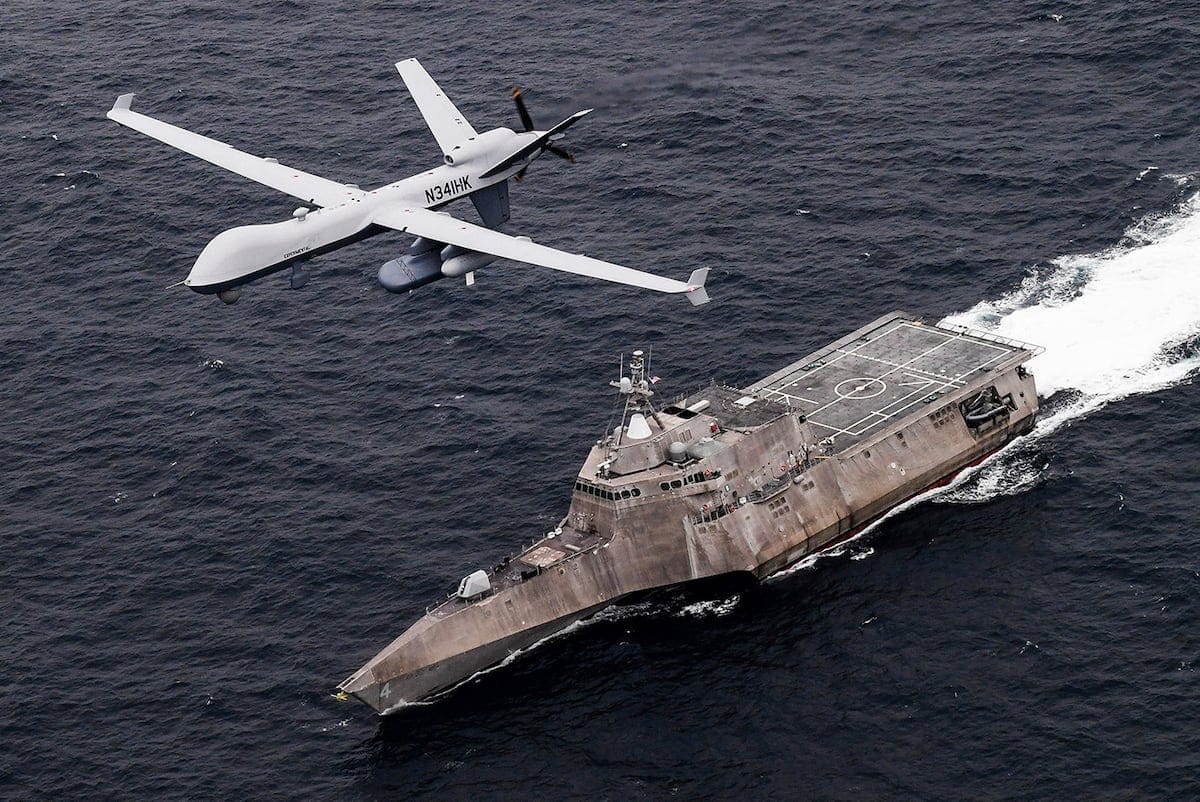
- General Atomics has advocated for its MQ-9B SeaGuardian, highlighting its capabilities tailored for maritime environments.
- Northrop Grumman has entered the fray with its MQ-4C Triton, a high-altitude long-endurance (HALE) drone designed for superior operational performance.
This developing competition has fostered direct critiques between the vendors. Jane Bishop, Vice President at Northrop Grumman, has publicly challenged the MQ-9B, characterizing it as a medium-altitude long-endurance (MALE) platform with significantly lower operational altitudes, rendering it vulnerable to emerging threats.
Key Comparisons:
- Operational Ceiling: The Triton presents a higher service ceiling, which mitigates risks associated with altitude-related vulnerabilities frequently observed with MALE systems.
- Unit Requirement Efficiency: Bishop’s analysis notes that Norway might require up to four MQ-9B units to achieve the same operational footprint offered by a single Triton.
Developmental Stage and Tactical Necessities
Despite the robust proposals from these U.S. manufacturers, the project is still very much in its conceptual phase. Brigadier General Jarle Nergård, overseeing the NDMA Air Systems Division, has emphasized that collaboration with the Norwegian Air Force is concentrated on requirement definition and operational evaluation. Flight tests, thus far, are not scheduled, placing both American vendors in a preliminary competition as Norway continues to refine its strategic needs.
Operational Integration with Existing Platforms
An essential factor for Norway will be the ability of the new UAS to complement its P-8A Poseidon fleet, recently augmented by five units delivered beginning in 2022, which replaced the older P-3 Orion and DA-20 Jet Falcon aircraft. The integration of either the SeaGuardian or Triton with the P-8A would enhance Norway’s capabilities in monitoring extensive maritime territories.
Both candidate drones are advertised as compatible with existing P-8 systems. Notably, interoperability has been previously tested in U.S.-Australian partnerships, indicating a proven framework for effective operational synergy.
Financial Considerations and Future Outlook
While specific funding levels for the Norwegian UAS acquisition remain undisclosed, the defense budget reflects a broader commitment to drone technology. Recently, Norway allocated approximately $620 million to support a maritime coalition for the development and production of unmanned surface vessels in Ukraine, leveraging Kongsberg’s technological expertise.
As Norway navigates this complex procurement landscape, the emphasis on advanced surveillance capabilities in an increasingly challenging Arctic environment will be pivotal. The outcome of this procurement process will not only influence Norway’s defense posture but also shape the dynamics of transatlantic defense cooperation in a geopolitically sensitive region.
Conclusion
The Arctic presents unique operational challenges, and the introduction of advanced maritime drones into Norway’s arsenal represents a critical evolution in military strategy. As the competition for these capabilities intensifies, the implications for regional security and defense collaboration will become increasingly pronounced, warranting close attention from analysts and policymakers alike.
Elisabeth Gosselin-Malo is a defense correspondent covering military procurement and international security issues, with a focus on advancements in aerial technologies. She reports from Milan, Italy.