
Advancements in Space Domain Awareness: LeoLabs Deploys Rapid-Activation 3D Radar

New Capabilities for Satellite Tracking
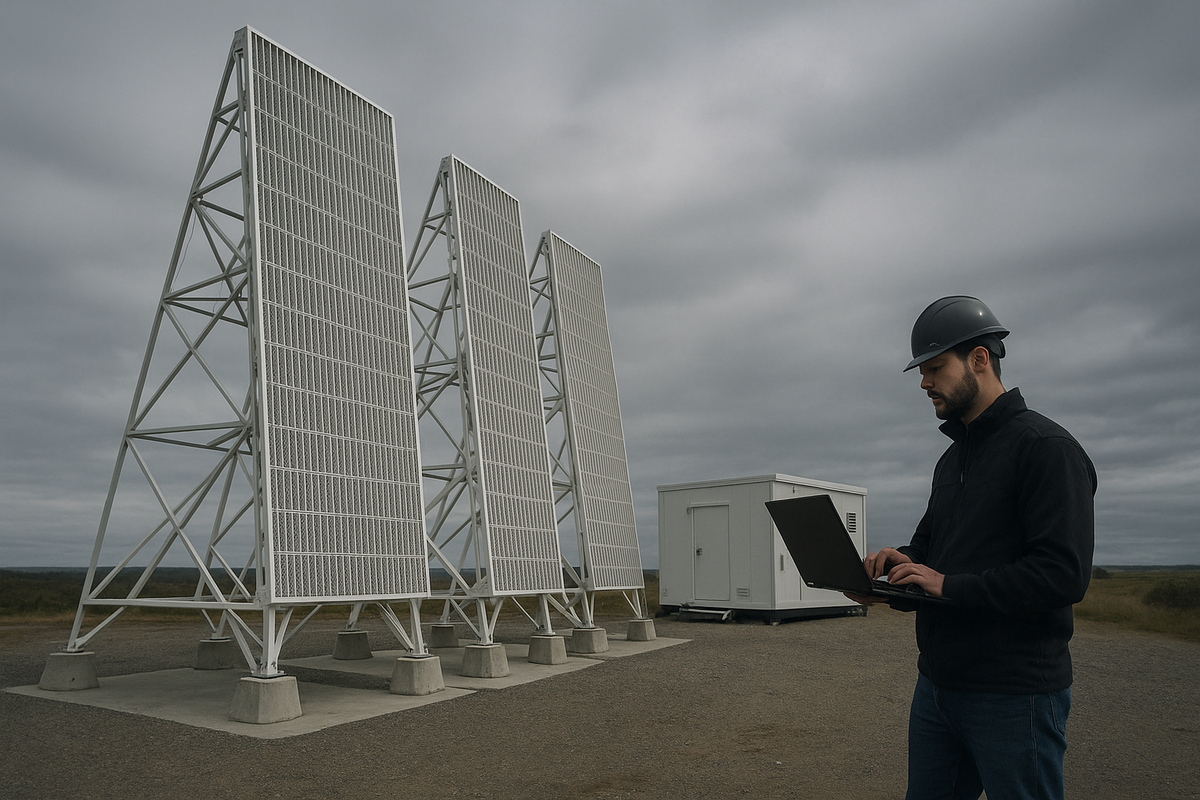
LeoLabs has introduced a containerized 3D search radar that can track satellites within hours of being activated. This development signifies a notable change in the way space domain awareness infrastructure can be deployed rapidly, enhancing capabilities in monitoring and managing satellite operations.
This innovation allows for quick setup and operational readiness, which is crucial given the increasing congestion in low Earth orbit (LEO) and the potential for satellite collisions. The ability to activate such systems swiftly can provide defense and security agencies with timely and accurate data on satellite positions, which is essential for both national security and commercial operations. As space becomes more contested, maintaining situational awareness will be increasingly important for governments and private entities alike.
Strategic Implications
As the U.S. and other nations expand their activities in space, the deployment of this radar system suggests an evolving landscape of satellite tracking and monitoring. Maintaining the capability to swiftly deploy radar systems enhances the ability to respond to emerging threats in space, whether they arise from state actors or commercial competitors. The introduction of such technology may also encourage further investment in space domain awareness, prompting both innovation and competition among defense contractors and researchers.
Understanding the implications of this technology is essential for defense professionals as they navigate the complexities of space security. The rapid deployment capabilities of LeoLabs’ new radar could allow for more proactive management of satellite operations and contribute to a more secure space environment. Analysts will be watching how this technology influences the broader strategic framework of space operations and defense policy.
Sources: Thedefensepost, The Defense Post, Via Satellite, PR Newswire, and NextGen Defense