Advancements in U.S. Military Vehicle Technology and Drone Warfare Capabilities

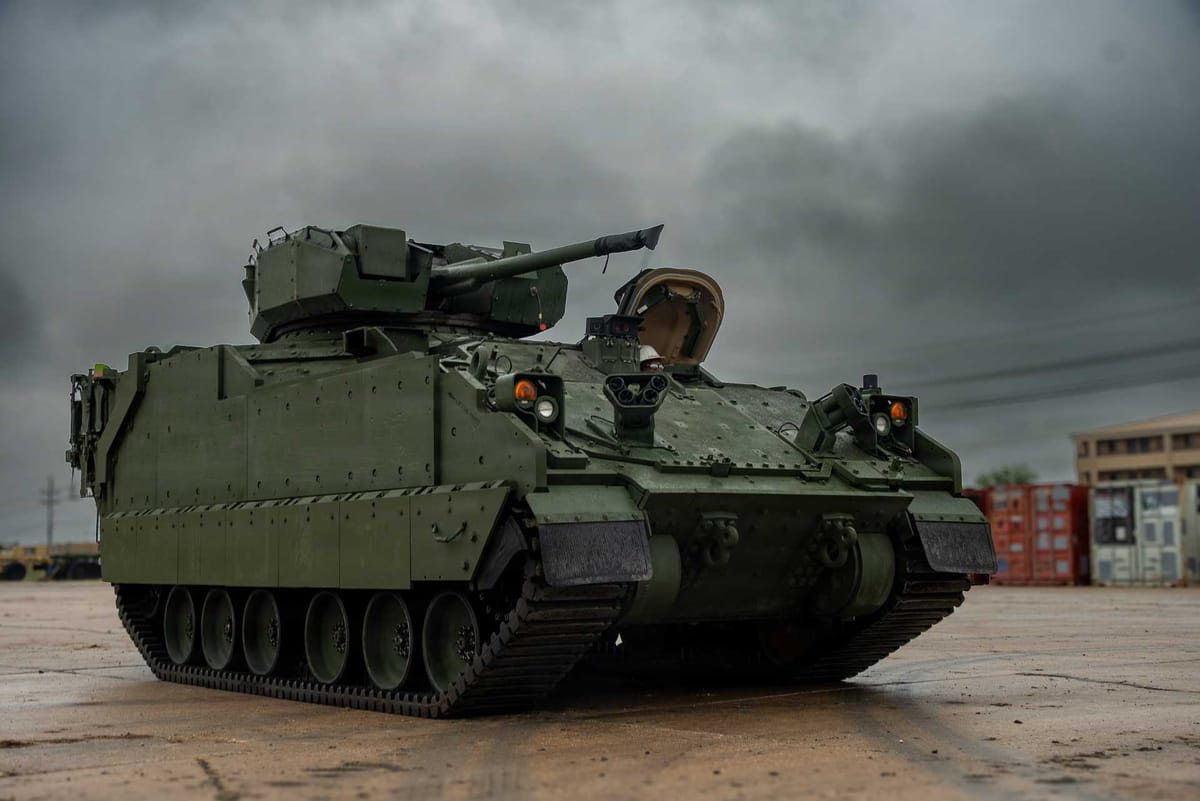
The U.S. military is significantly enhancing its capabilities through various advancements in armored vehicles and drone warfare technology. Recent tests and developments indicate a strategic shift towards increasing firepower and operational efficiency on the battlefield. This is particularly evident in the U.S. Army's ongoing efforts to integrate advanced weaponry into both ground vehicles and unmanned systems.
What Happened
In a notable test, the U.S. Army has upgraded its Armored Multi-Purpose Vehicle (AMPV) by incorporating a 30mm cannon. This modification is designed to boost infantry firepower and enhance battlefield survivability, addressing the evolving demands of modern combat scenarios (Source 1).
Additionally, AM General has unveiled an armed Unmanned Ground Vehicle (UGV) equipped with a 30mm cannon and Coyote Stinger missiles. This development aims to provide Marines with autonomous resupply capabilities and a robust counter-drone warfare solution, aligning with contemporary tactical requirements (Source 2).
The Strategic Calculus
Another pivotal advancement is the U.S. Army's testing of the AERO Sky Vertical Take-Off and Landing (VTOL) drone, which can launch First-Person View (FPV) strike drones beyond frontline positions. This capability is intended to extend the strike range while minimizing the exposure of personnel to frontline hazards (Source 3).
In parallel, the Army is also examining a heavier, hybrid-powered Infantry Squad Vehicle (ISV). The ISV-H is being developed to perform more than just troop transport, indicating a shift towards vehicles that can support a broader range of military operations (Source 4).
Industry Fallout
These advancements in U.S. military vehicle technology and drone capabilities underscore a critical response to the evolving nature of warfare, particularly with the rise of unmanned systems and counter-drone technologies. The implications for future military engagements are substantial, including:
- Increased infantry effectiveness through enhanced firepower.
- Greater operational flexibility and reduced risk to personnel.
- Improved counter-drone strategies to address emerging threats.
Meanwhile, on the global front, the UK Ministry of Defence is resuming tests of its Ajax armored fighting vehicles after a safety review cleared the program to move forward. This development reflects ongoing efforts by allied nations to enhance armored capabilities amid concerns over soldier health and safety (Source 5).
As these technologies evolve, defense professionals will need to monitor how these developments impact combat strategies and force structure, both within the U.S. military and among allied forces.
Sources: Armyrecognition, Defensenews, Thedefensepost, Warrior Maven, 19FortyFive, The Atlantic, and Modern War Institute -