Army's ME-11B Drones Enhance Surveillance Capabilities

Strategic Enhancements in Army Surveillance Operations
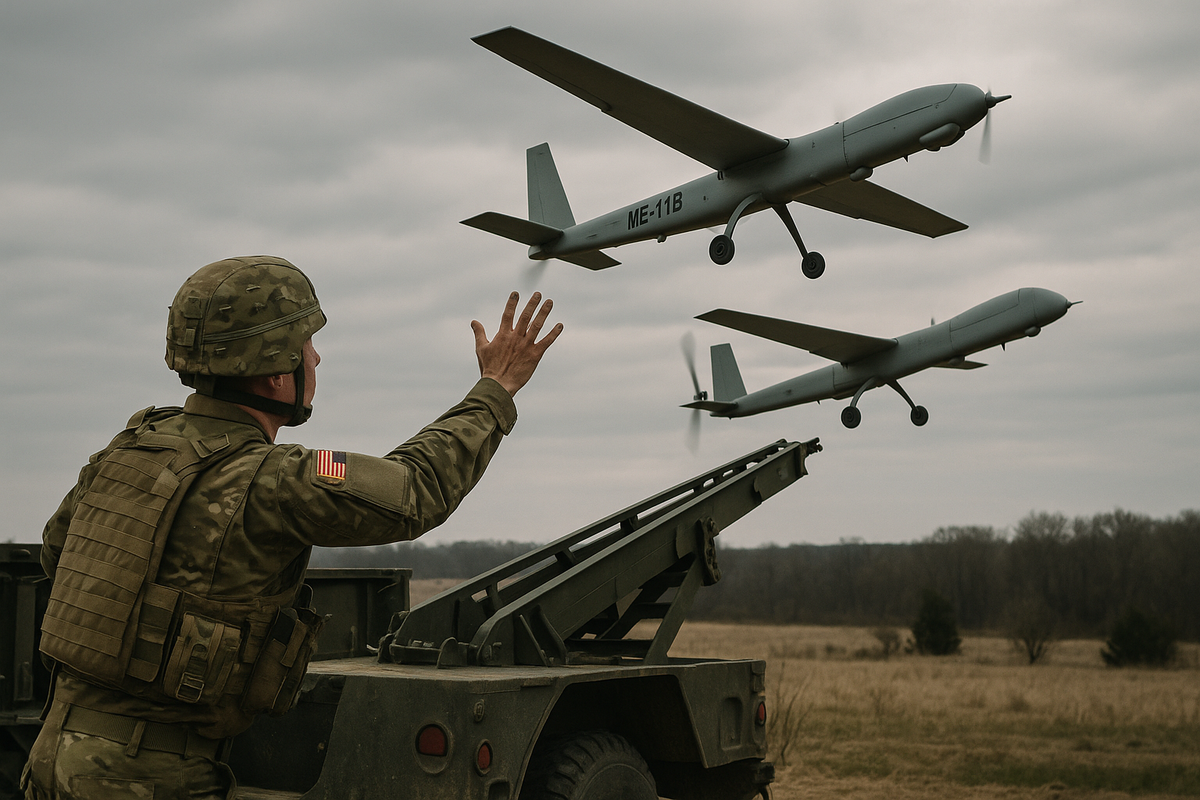
The U.S. Army is positioning air-launched drones from the ME-11B platform as a critical asset for enhancing its surveillance capabilities. This development signals a strategic evolution in how the Army conducts operations in hostile environments, enabling deeper reconnaissance without exposing manned aircraft to significant risks.
The integration of these drones allows for a game-changing boost in the Army's ability to gather intelligence beyond enemy lines. By employing unmanned aerial vehicles (UAVs) that can be launched from the ME-11Bs, the Army aims to mitigate the dangers associated with traditional surveillance jets. This not only improves mission success rates but also preserves valuable resources by reducing the potential for loss of crewed aircraft during reconnaissance missions.
Implications for Future Operations
This shift towards utilizing drones for intelligence-gathering raises important questions about the future of aerial combat and surveillance strategies. The capability to conduct deep reconnaissance from a distance may reshape tactical approaches to engagements in contested areas. Furthermore, the effectiveness of these drones could influence ongoing military investments and research into unmanned systems.
Why it matters: The incorporation of air-launched drones signifies a notable advancement in military technology that could redefine operational protocols. As the Army adapts to evolving threats, analysts will be watching how these drones impact both tactical planning and overall mission effectiveness. The successful deployment of the ME-11B drones may set a precedent for future military capabilities, emphasizing the importance of unmanned systems in modern warfare.
Sources: Twz, The War Zone, Institute for the Study of War, PBS, and The New York Times