B-2 Stealth Bomber to Deploy Anti-Ship Missiles in Strategic Shift

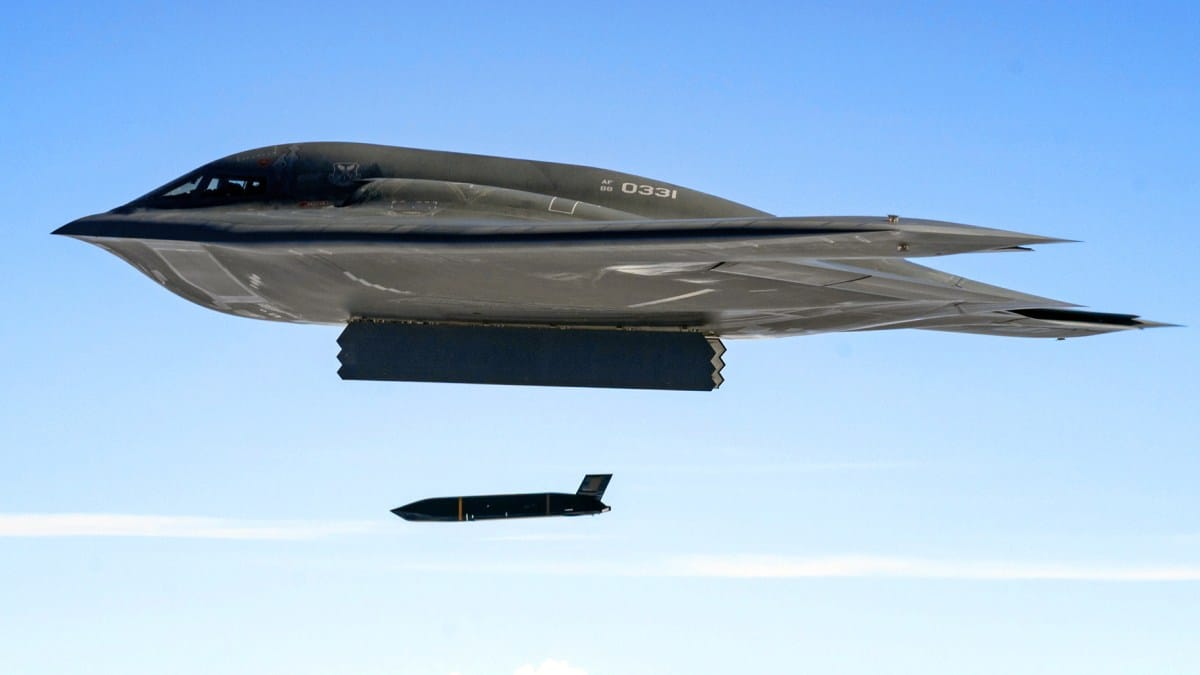
Overview of B-2 Capabilities
In a noteworthy announcement, the Air Force has revealed that the B-2 Spirit stealth bomber is now capable of launching Long Range Anti-Ship Missiles (LRASM). This development enhances the B-2's role in naval warfare, particularly in the expansive regions of the Pacific. The integration of LRASM with the B-2 creates a formidable combination designed to penetrate enemy defenses and target naval fleets effectively.
Strategic Implications
The ability to deploy LRASM from the B-2 allows for a significant increase in the United States’ maritime strike capabilities. As tensions in the Pacific continue to rise, this advancement can serve as a deterrent against potential adversaries who might seek to challenge US naval supremacy. The LRASM’s design focuses on targeting and destroying enemy ships in contested environments, making it a critical asset in modern warfare scenarios.
Furthermore, the stealth characteristics of the B-2 enable it to operate effectively in hostile airspace, reducing the risk of detection. This capability is essential for maintaining operational advantages in future conflicts, where traditional naval engagements may evolve into more complex scenarios involving advanced missile technology.
The implications of this announcement are profound. With the B-2 now equipped to launch LRASM, analysts will be watching how this shift impacts naval strategies and operational planning within the Pacific theater. The combination of stealth and long-range strike capabilities may reshape the dynamics of naval power in the region.
Enhancing Maritime Dominance
This development underscores the US commitment to maintaining a competitive edge in maritime operations. As adversaries enhance their own naval capabilities, the integration of advanced munitions like the LRASM into the B-2's arsenal demonstrates a proactive approach to ensuring the readiness and effectiveness of US forces.
Sources: Twz, afgsc.af.mil, Defence Industry Europe, and CSIS | Center for Strategic and International Studies