Counter-Drone Strategies Intensify: Apache and Typhoon Innovations

As global tensions rise, particularly in the context of drone warfare, defense systems are rapidly evolving to counteract the growing threat posed by unmanned aerial vehicles (UAVs). Recent advancements from the U.S. Army and European defense forces reflect an urgent response to this pressing issue, underscoring a significant pivot in military capabilities.
What Happened
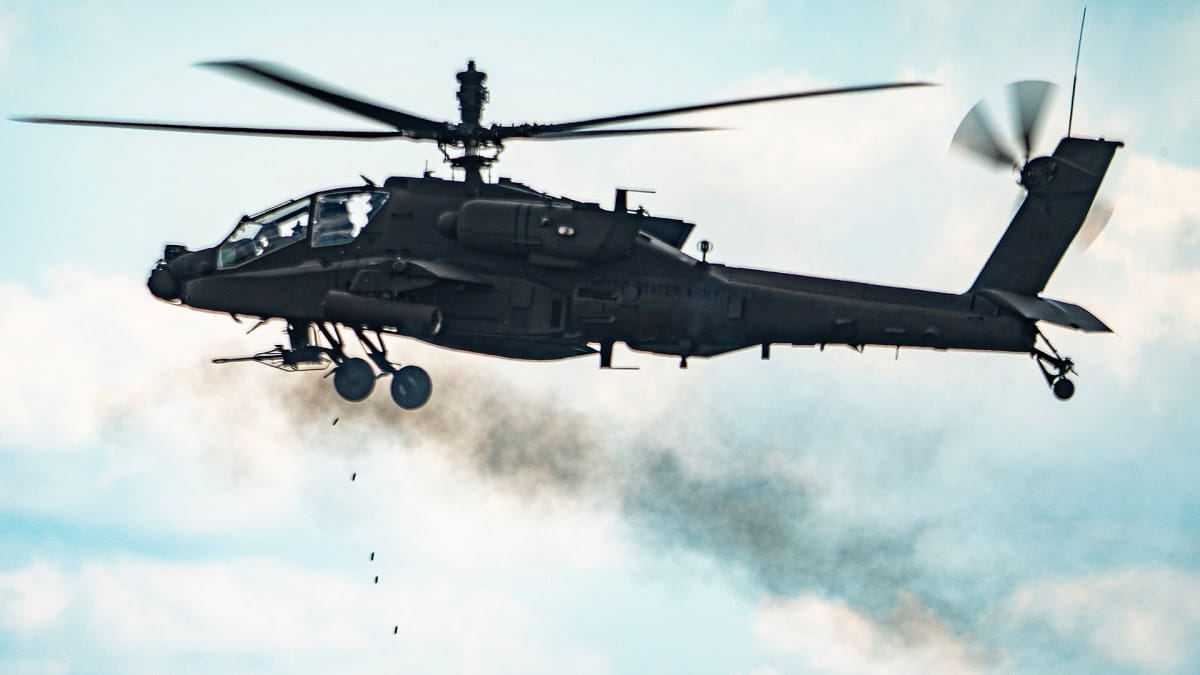
The U.S. Army is set to dramatically enhance its counter-drone capabilities with a projected five-fold increase in the procurement of the XM1225 APEX ammunition, specifically designed for the AH-64 Apache helicopter. This ramp-up in production signifies a strategic shift toward addressing the burgeoning problem of drone incursions, which have been increasingly utilized in modern combat scenarios.
On the other side of the Atlantic, the Eurofighter Typhoon recently conducted successful test firings of laser-guided counter-drone rockets. This development comes at a critical time as Typhoons engage in operations against Iranian drones in the Persian Gulf, highlighting the urgency of effective counter-drone measures in active conflict zones.
The Strategic Calculus
Both developments are reflective of a broader strategic understanding that drones are not merely reconnaissance tools but also potent weapons that can disrupt military operations. The increasing sophistication and frequency of drone attacks have made it imperative for air forces to adapt their tactics and technologies. Consider the following:
- Increased Threat Levels: Drones are being employed by state and non-state actors alike, making them a versatile threat across various theaters.
- Technological Arms Race: The focus on counter-drone technology indicates an ongoing arms race where adversaries are leveraging UAVs for tactical advantages.
- Operational Flexibility: Both the Apache and Typhoon platforms are adapting to enhance their roles in air superiority operations, emphasizing multi-role capabilities.
What Comes Next
Looking ahead, the implications of these developments are significant for defense professionals:
- The Army's commitment to increasing APEX ammunition procurement not only indicates an acknowledgment of drone threats but also signals a potential shift in military procurement priorities.
- The effectiveness of the Eurofighter Typhoon's new counter-drone rockets could lead to further investments in laser-guided munitions across various air forces.
- As drone warfare continues to evolve, we can expect enhanced training and operational doctrines focusing on integrated air defense systems that combine traditional assets with advanced technology.
These advancements are crucial not just for immediate operational needs but also for shaping future defense strategies. The integration of innovative counter-drone technologies into existing platforms like the Apache and Typhoon illustrates a proactive approach to an escalating threat, paving the way for more resilient military responses in an era where UAVs will likely play a central role in warfare.
Sources: Twz, The War Zone, The Aviationist, The Telegraph, and BBC