Images Purportedly Show E-3 Sentry Completely Destroyed by Iranian Strike

Iranian Strike on Prince Sultan Air Base: Implications and Assessment
Overview of the Incident
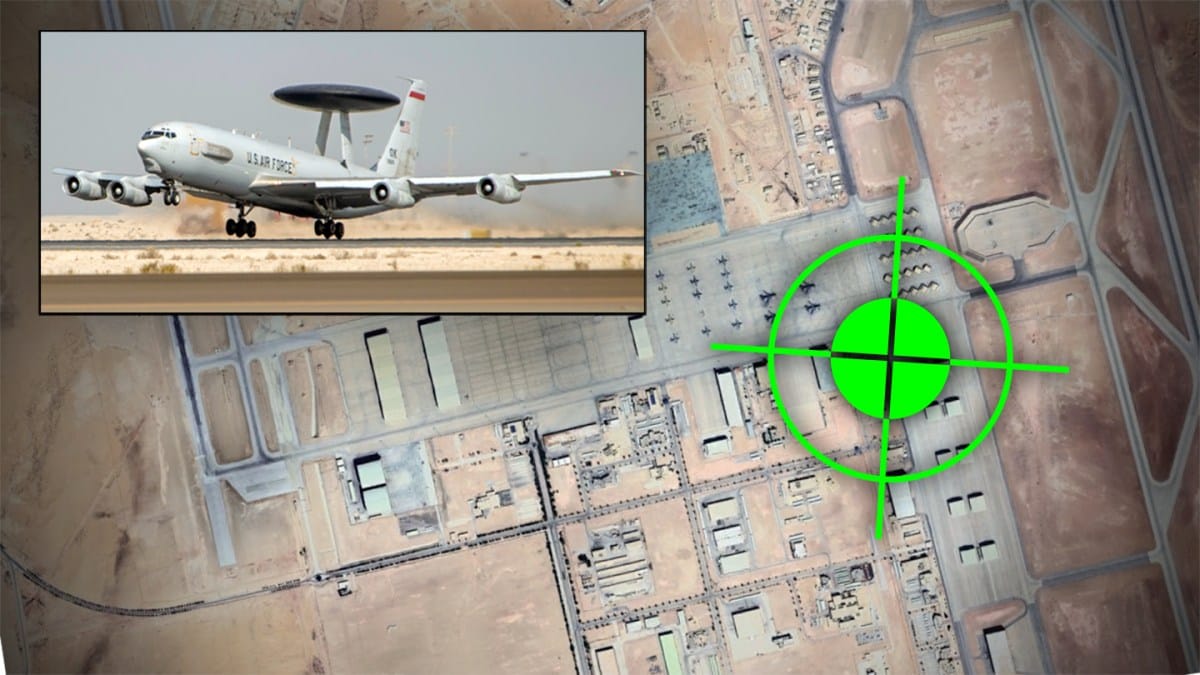
On March 27, Iranian forces executed an attack on Prince Sultan Air Base in Saudi Arabia, resulting in significant damage to multiple U.S. military aircraft. Initial reports indicate that ten U.S. service members sustained injuries, some of which are critical. High-resolution satellite imagery from U.S. companies remains delayed, however, foreign satellite data suggests substantial impact on the main apron of the base, with ground-level photographs purportedly showing one of the U.S. Air Force’s E-3 Airborne Warning and Control System (AWACS) aircraft rendered unusable.
Current Damage Assessment
- Aircraft Damaged: Photographs circulating on social media detail extensive destruction to the E-3 serial #81-0005, indicating total loss of its rear fuselage due to fire damage. Such destruction may stem from direct strikes or shrapnel effects, particularly if ignited fires ensued.
- Assault Methodology: The assault reportedly incorporated long-range one-way attack drones and ballistic missiles, underscoring the evolving nature of regional military capabilities.
Caution: The authenticity of circulating imagery is not yet validated, and further assessments will be provided as information becomes available.
Pre-Attack Aircraft Configuration
Prior to the attack, satellite imagery acquired from commercial providers illustrated strategic parking configurations intended to mitigate damage from Iranian munitions. U.S. forces had relocated aircraft, including high-value assets like the E-3s, to isolated taxiways to complicate targeting efforts.
Consequences of Aircraft Loss
The destruction of the E-3 Sentry is particularly concerning due to its critical role in air surveillance and command and control during operations. Prior to the onset of hostilities, the U.S. deployed six E-3 aircraft to the region, with additional airborne early warning assets possibly being allocated. Of the U.S. Air Force’s remaining fleet of E-3s, only 16 are operational, and historical issues with readiness further limit their availability.
Implications for Operational Readiness
- Strategic Gap: The loss of an E-3 exacerbates existing capability deficiencies, particularly as the U.S. attempts to transition airborne early warning responsibilities to upcoming systems such as the E-7 Wedgetail, which faces implementation delays.
- Infrastructure Vulnerability: Recent circumstances emphasize the pressing need for hardened airbase structures to safeguard against aerial threats, an issue that the Pentagon has been slow to address despite increasing risks highlighted by contemporary conflicts.
Iranian Capabilities and Intelligence Acquisition
Iran has successfully targeted several critical radar installations, undermining the air defense systems of the U.S. and its allies. The targeting of the E-3 aligns with Iran’s ongoing strategy to compromise adversary capabilities. Sources of intelligence for such operations may include satellite data from regional adversaries, as well as traditional human intelligence approaches.
Defense Infrastructure Needs
The evident vulnerability of U.S. aircraft on ground installations accentuates an urgent call for enhanced hardening measures. While there are signs that the Pentagon may begin considering updates to existing airbase infrastructure, the momentum appears insufficient against the backdrop of increasing threats. In light of recent conflicts and emerging tactics, it is imperative for the U.S. military to reassess its defensive strategies, prioritize infrastructure improvements, and ensure the preparedness of its operational capabilities. Future updates will follow as the situation evolves and additional intelligence becomes available. Source link