Enhancing Medical Response in Indo-Pacific Operations

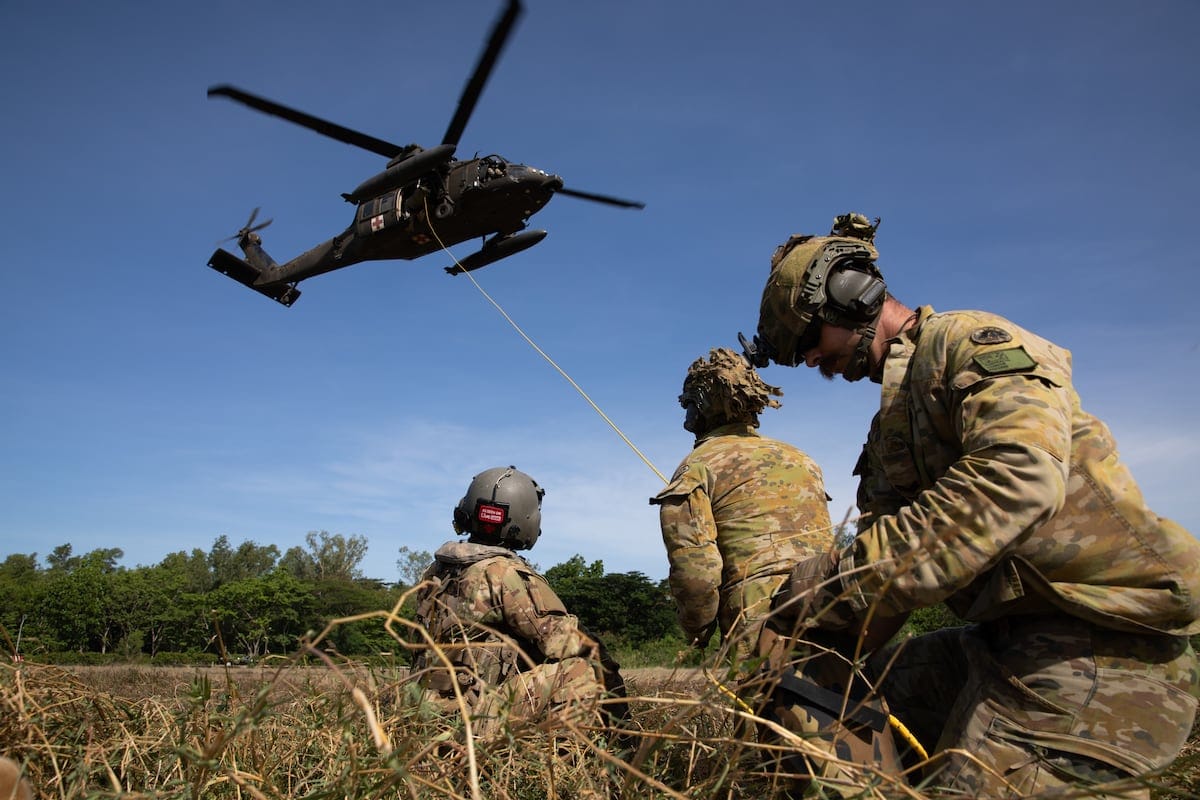
The U.S. Army is taking significant steps to prepare for potential large-scale operations in the Indo-Pacific region, focusing on enhancing medical support capabilities. Two key initiatives are currently underway: addressing the logistical challenges of medical care in contested environments and integrating veterinarians into human combat care.
What happened
As the U.S. Army strategizes for combat scenarios in the Indo-Pacific, it faces specific challenges that could hinder timely access to medical care. Factors such as distance, contested airspace, communication disruptions, adverse weather, and limited evacuation platforms are critical considerations that could affect operational readiness.
In response, the Army is adapting its medical protocols and capabilities to ensure effective care under these challenging conditions. This includes a focus on improving the speed and efficiency of medical responses, which are essential for maintaining troop morale and effectiveness in combat.
The strategic calculus
In a novel approach, the Army is also looking to better utilize veterinarians in combat medicine. This integration aims to leverage the skills of veterinary professionals to enhance human combat care during military operations. The Army recognizes that veterinarians possess valuable medical expertise that can be critical in combat situations, particularly in cases where traditional medical personnel may be stretched thin.
- Veterinarians' roles: Their training in trauma care and surgical procedures can complement the medical teams on the ground.
- Operational flexibility: This integration may provide a broader range of medical support options in remote or isolated locations.
- Resource optimization: By utilizing veterinarians, the Army can maximize available medical resources in complex operational environments.
The implications of these initiatives are significant, as they could reshape how medical care is delivered in future conflicts. The focus on both logistical challenges and innovative integration of veterinary medicine indicates a comprehensive approach to medical readiness.
What comes next
As these strategies are implemented, analysts will be watching closely to see how effectively the Army can overcome the barriers to medical care in the Indo-Pacific. The success of these initiatives will depend on rigorous training, resource allocation, and the ability to adapt to evolving battlefield conditions.
Continued evolution in medical capabilities will be essential for maintaining the operational effectiveness of U.S. forces in increasingly complex and contested environments.
Sources: Defensenews, Military Times, army.mil, Alaska Army National Guard (.mil), and DVIDS