Evolving U.S. Army Capabilities: Anti-Drone Systems, Enhanced Javelins, and Logistics Drones

The U.S. Army is enhancing its operational capabilities in response to evolving threats, particularly around NATO's eastern flank. Recent developments include training with advanced anti-drone systems in Lithuania, the acquisition of new Javelin anti-tank missile command launch units, and trials of a logistics drone capable of firing rockets. These advancements highlight a strategic focus on countering various forms of warfare.
What Happened
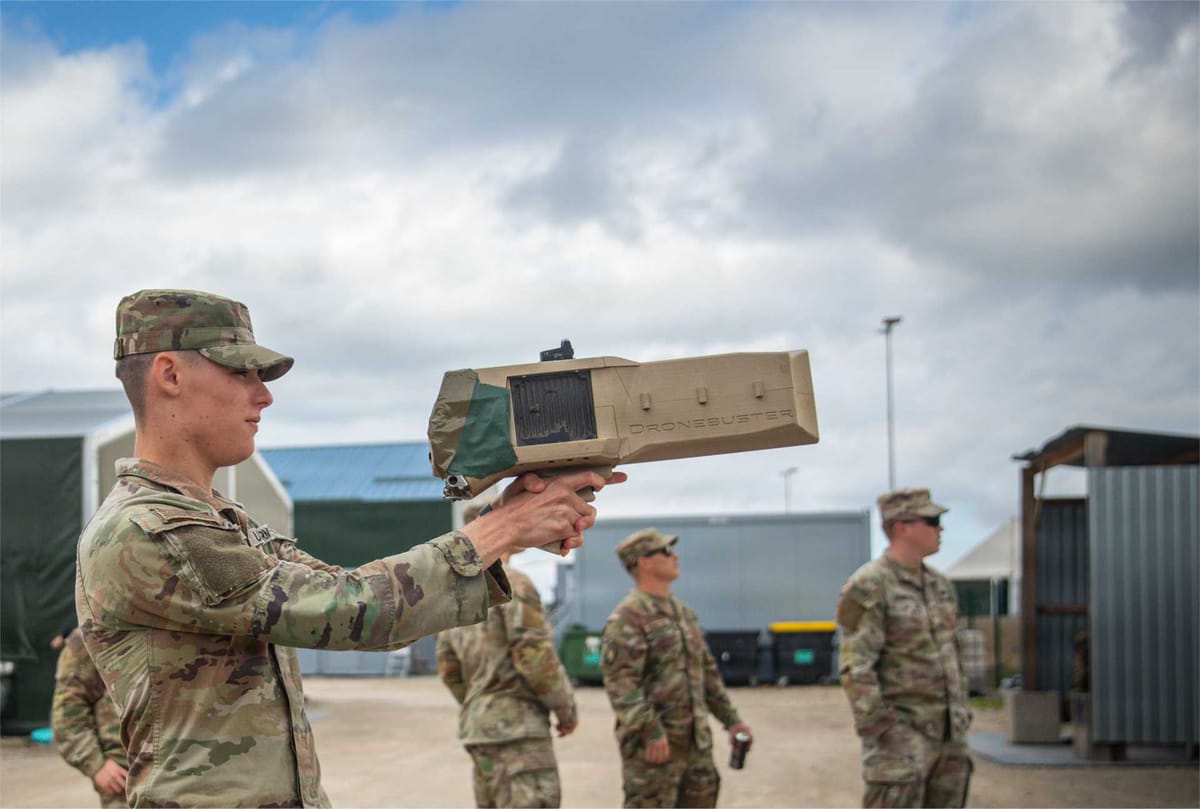
In a significant move to bolster defense readiness, U.S. Army soldiers have tested Drone Buster systems in Lithuania. This training is focused on countering Russian-style drone threats near NATO's border, indicating a proactive approach to emerging aerial threats.
In addition, the Army is now equipped with new Javelin anti-tank missile command launch units, which have been reported to possess twice the target detection and recognition range of previous iterations. This enhancement is expected to improve engagement capabilities against armored threats in the field.
Furthermore, the U.S. Army is trialing a logistics drone integrated with rocket firepower, featuring a three-shot launcher. This innovative approach aims to extend the Army's reach and fire support capabilities in contested environments.
The Strategic Calculus
The integration of these technologies reflects a broader strategy to adapt to modern warfare dynamics. The key elements include:
- Countering Drones: The use of Drone Buster systems is critical in mitigating threats posed by unmanned aerial vehicles (UAVs), particularly from adversaries like Russia.
- Enhanced Anti-Tank Capabilities: The upgraded Javelin systems will allow U.S. forces to detect and engage threats more effectively, ensuring superiority in ground combat.
- Logistics Innovation: The logistics drone trials signify a shift towards using unmanned systems for fire support, which can greatly enhance operational flexibility and responsiveness.
This raises the question of how these advancements will influence U.S. Army doctrine and operational planning in the European theater, particularly as tensions with Russia persist.
What Comes Next
As these technologies are integrated into Army operations, defense professionals will be closely monitoring several factors:
- Potential further enhancements to anti-drone capabilities as battlefield scenarios evolve.
- The effectiveness of new Javelin units during field exercises and their impact on tactical outcomes.
- Results from logistics drone trials and potential scalability for broader Army use.
These developments emphasize a commitment to maintaining technological superiority and operational readiness in a rapidly changing security environment.
Sources: Armyrecognition, Thedefensepost, The Defense Post, 19FortyFive, EL PAÍS English, and Zona Militar