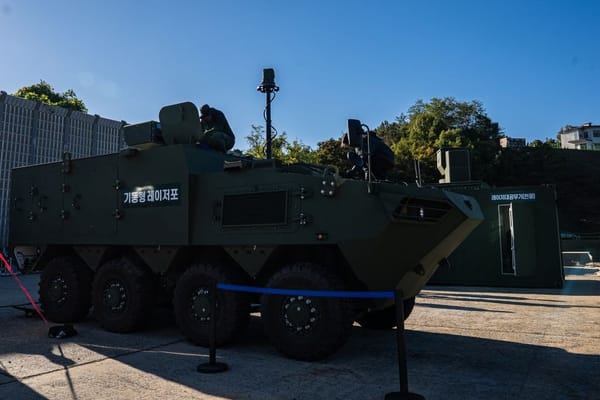
Greece Invests €3 Billion in Israeli Air Defense to Fortify NATO's Southeastern Flank


In a significant move to enhance regional security, Greece has announced plans to invest €3 billion in an Israeli air defense missile shield. This initiative aims to counter growing threats from drones and missiles, reinforcing NATO's southeastern flank amid rising geopolitical tensions.
Strengthening Air Defense Capabilities
The decision to procure the Israeli missile defense system highlights Greece's commitment to enhancing its military capabilities. The air defense shield is expected to provide advanced protection for Greek airspace and critical infrastructure.
- Investment: €3 billion
- Focus: Countering drones and missiles
- Objective: Bolstering NATO’s southeastern flank
Expanding NATO's Precision Strike Options
Meanwhile, the U.S. Army continues to demonstrate its commitment to NATO's operational readiness. Crews operating the M270A2 in Germany recently executed live-fire exercises, showcasing NATO's growing long-range precision strike capabilities. This exercise involved the use of the Extended Range Guided Multiple Launch Rocket System (ER GMLRS) and the Precision Strike Missile (PrSM), both of which are critical for enhancing NATO's deterrence posture.
Progress in Arctic Operations
On another front, U.S. Army Green Berets conducted a demonstration of Special Forces operations in Arctic terrain in Alaska. This event highlighted the Army’s ability to deploy personnel and all-terrain vehicles rapidly, underscoring the importance of arctic readiness in potential future conflicts.
The ongoing modernization of NATO's ground forces is evident in various nations’ initiatives. Finland, for instance, has ordered Saab RBS 70 NG air defense systems in a SEK 1.2 billion deal, aiming to bolster short-range protection on NATO's strategic northern flank. Such developments are indicative of a collective effort among member states to enhance interoperability and defense capabilities.
Additionally, Turkey is advancing its precision strike capabilities with the testing of the ÇAKIR cruise missile. This missile, developed by Roketsan, is designed to hit land and sea targets from a mobile ground launcher, showcasing an evolving military posture in the region.
In a related context, the Polish Armed Forces are currently debating reforms aimed at creating a more responsive military structure. Concepts for an army of 500,000 soldiers, including 300,000 active-duty personnel and 200,000 in reserve, are under consideration to enhance Poland's quick mobilization capabilities.
As NATO member states contribute to strengthening collective defense, the integration of ground forces across various nations is becoming increasingly critical. New Zealand's ground forces are training to better integrate with larger armies, particularly that of Australia, to maximize effectiveness in potential joint operations.
These developments illustrate a robust and evolving defense landscape within NATO, marked by significant investments and strategic collaborations aimed at addressing emerging threats across various fronts.
Sources: Armyrecognition, Defensenews, Defence24, World Socialist Web Site, and SOFX
Edited by Daniel Vazdar, Editor. How DEFCROS News reports, sources and corrects.